Möckel Tina, Beste Christian, Wascher Edmund
Leibniz Research Centre for Working Environment and Human Factors, Ardeystr. 67, 44139 Dortmund, Germany.
Cognitive Neurophysiology, Department of Child and Adolescent Psychiatry, Faculty of Medicine of the TU Dresden, Fetscherstr. 74, 01307 Dresden, Germany.
Sci Rep. 2015 Jun 9;5:10113. doi: 10.1038/srep10113.
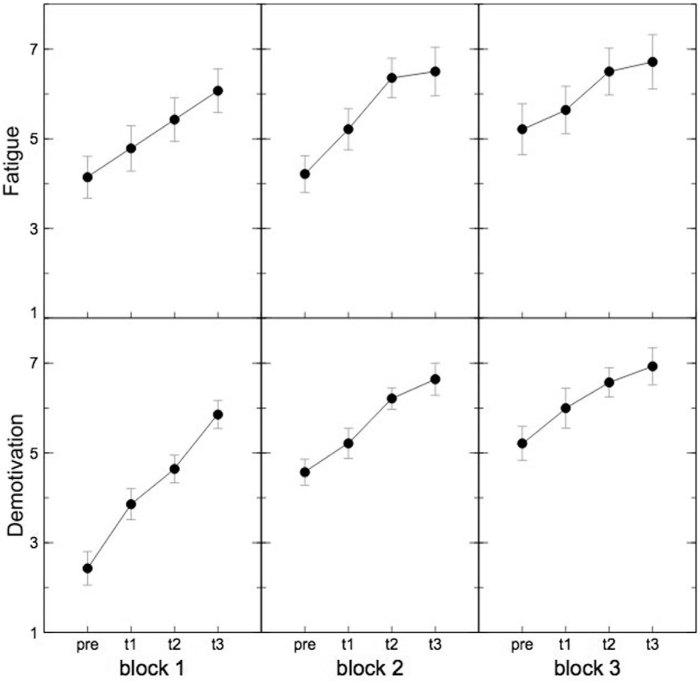
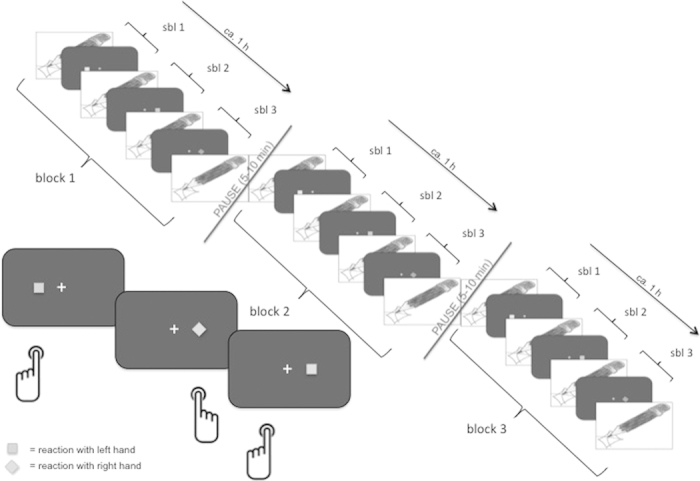
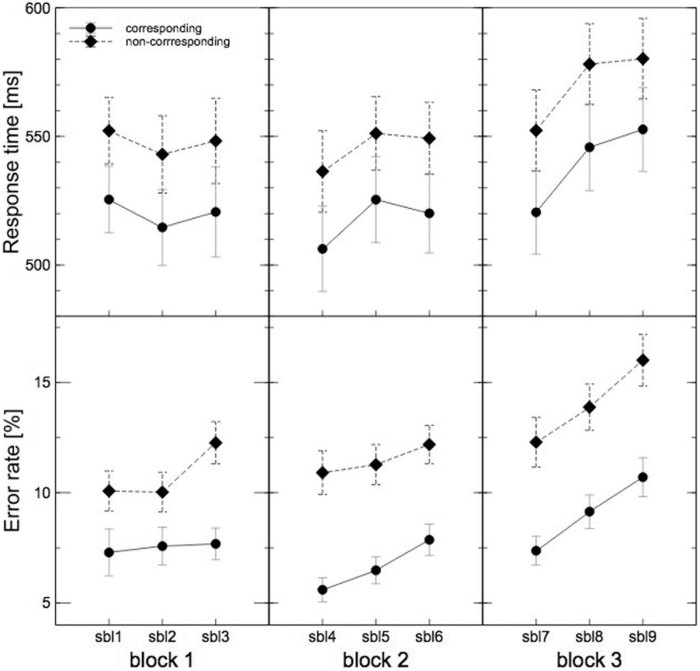
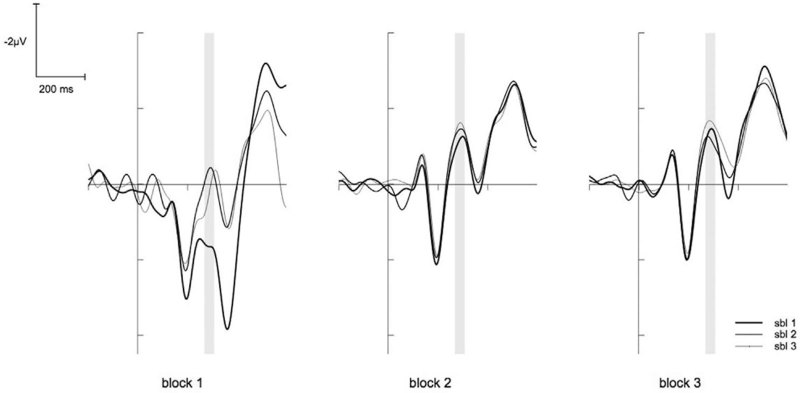
Long lasting involvement in a cognitive task leads to mental fatigue. Substantial efforts have been undertaken to understand this phenomenon. However, it has been demonstrated that some changes with time on task are not only related to mental fatigue. The present study intends to clarify these effects of time on task unrelated to mental fatigue on response selection processes at the behavioural and electrophysiological level (using event-related potentials, ERPs). Participants had to perform a Simon task for more than 3 hours and rated their experienced mental fatigue and motivation to continue with the task at several time points during the experiment. The results show that at the beginning of the experiment some unspecific modulations of training and adaptation are evident. With time on task participants' ability to resolve response conflict appears to become impaired. The results reveal that time on task effects cannot be completely explained by mental fatigue. Instead, it seems that an interplay of adaptation at the beginning and motivational effects in the course of a task modulate performance and neurophysiological parameters. In future studies it will be important to account for the relative contribution of adaptation and motivation parameters when time on task effects are investigated.
长时间参与认知任务会导致精神疲劳。人们已经付出了巨大努力来理解这一现象。然而,研究表明,随着任务时间的推移,一些变化不仅与精神疲劳有关。本研究旨在从行为和电生理层面(使用事件相关电位,即ERP)阐明与精神疲劳无关的任务时间对反应选择过程的影响。参与者必须执行一项西蒙任务超过3小时,并在实验过程中的几个时间点对他们所体验到的精神疲劳以及继续任务的动机进行评分。结果表明,在实验开始时,训练和适应的一些非特异性调节是明显的。随着任务时间的增加,参与者解决反应冲突的能力似乎会受到损害。结果显示,任务时间效应不能完全用精神疲劳来解释。相反,似乎在任务开始时的适应与任务过程中的动机效应之间的相互作用调节了表现和神经生理参数。在未来的研究中,当研究任务时间效应时,考虑适应和动机参数的相对贡献将很重要。