Rice Niamh, Gibbons Helena, McNulty Breige A, Walton Janette, Flynn Albert, Gibney Michael J, Nugent Anne P
Previs Healthcare Ltd, Kilmacanogue, Wicklow, Ireland.
UCD Institute of Food and Health, University College Dublin, Belfield, Dublin 4, Ireland.
Food Nutr Res. 2015 Jun 8;59:27912. doi: 10.3402/fnr.v59.27912. eCollection 2015.
Although imbalances in dietary intakes can have short and longer term influences on the health of preschool children, few tools exist to quickly and easily identify nutritional risk in otherwise healthy young children.
To develop and test the validity of a parent-administered questionnaire (NutricheQ) as a means of evaluating dietary risk in young children (12-36 months).
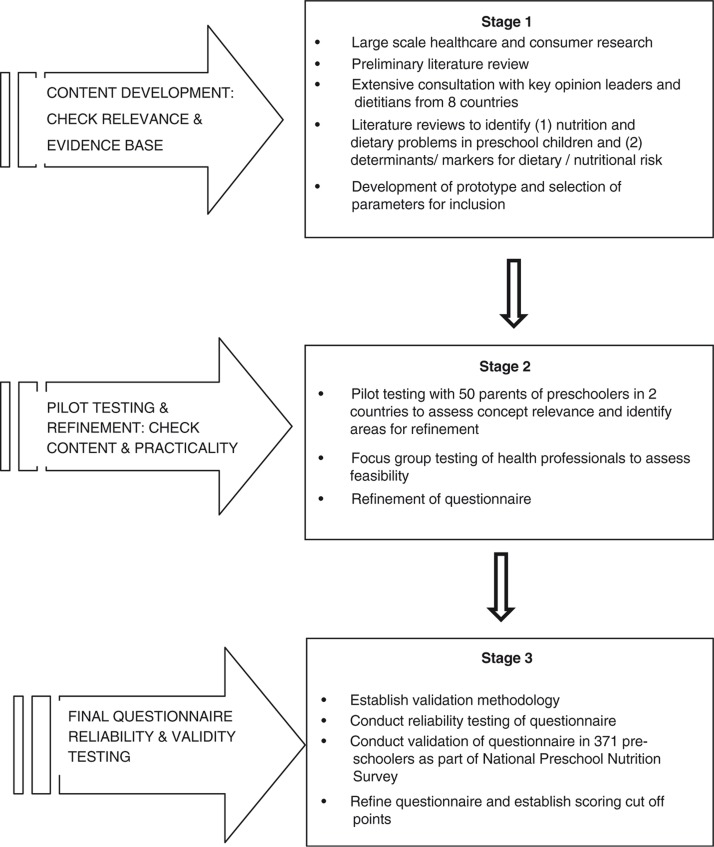
Following a comprehensive development process and internal reliability assessment, the NutricheQ questionnaire was validated in a cohort of 371 Irish preschool children as part of the National Preschool Nutrition Survey. Dietary risk was rated on a scale ranging from 0 to 22 from 11 questions, with a higher score indicating higher risk.
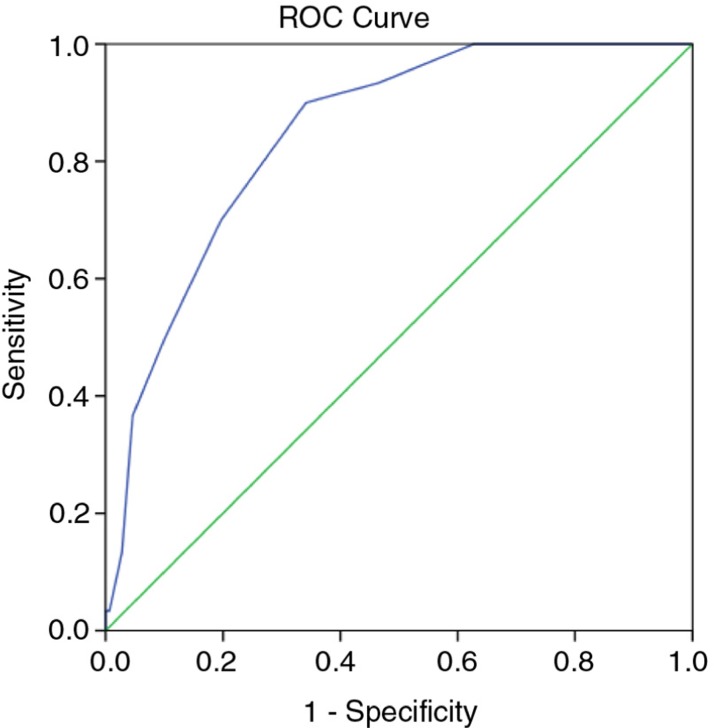
Children with higher NutricheQ scores had significantly (p<0.05) lower mean daily intakes of key nutrients such as iron, zinc, vitamin D, riboflavin, niacin, folate, phosphorous, potassium, carotene, retinol, and dietary fibre. They also had lower (p<0.05) intakes of vegetables, fish and fish dishes, meat and infant/toddler milks and higher intakes of processed foods and non-milk beverages, confectionery, sugars and savoury snack foods indicative of poorer dietary quality. Areas under the curve values of 84.7 and 75.6% were achieved for 'medium' and 'high' dietary risk when compared with expert risk ratings indicating good consistency between the two methods.
NutricheQ is a valid method of quickly assessing dietary quality in preschoolers and in identifying those at increased nutritional risk.
尽管饮食摄入不均衡会对学龄前儿童的健康产生短期和长期影响,但几乎没有工具能快速简便地识别原本健康的幼儿的营养风险。
开发并测试一种由家长填写的问卷(NutricheQ)作为评估幼儿(12 - 36个月)饮食风险手段的有效性。
经过全面的开发过程和内部信度评估后,作为全国学龄前儿童营养调查的一部分,NutricheQ问卷在371名爱尔兰学龄前儿童队列中进行了验证。根据11个问题将饮食风险按0至22分进行评分,分数越高表明风险越高。
NutricheQ得分较高的儿童,铁、锌、维生素D、核黄素、烟酸、叶酸、磷、钾、胡萝卜素、视黄醇和膳食纤维等关键营养素的平均每日摄入量显著较低(p<0.05)。他们的蔬菜、鱼类及鱼类菜肴、肉类和婴幼儿配方奶的摄入量也较低(p<0.05),而加工食品、非乳类饮料、糖果、糖和咸味零食的摄入量较高,这表明饮食质量较差。与专家风险评级相比,“中度”和“高度”饮食风险的曲线下面积值分别为84.7%和75.6%,表明两种方法之间具有良好的一致性。
NutricheQ是一种快速评估学龄前儿童饮食质量和识别营养风险增加儿童的有效方法。