Inoue Mai, Sasaki Masaya, Takaoka Azusa, Kurihara Mika, Iwakawa Hiromi, Bamba Shigeki, Ban Hiromitsu, Andoh Akira
Division of Clinical Nutrition,Shiga University of Medical Science, Seta-Tsukinowa, Otsu-shi, Shiga 520-2192, Japan.
Department of Gastroenterology, Shiga University of Medical Science, Seta-Tsukinowa, Otsu-shi, Shiga 520-2192, Japan.
J Clin Biochem Nutr. 2015 May;56(3):215-9. doi: 10.3164/jcbn.14-100. Epub 2015 Mar 28.
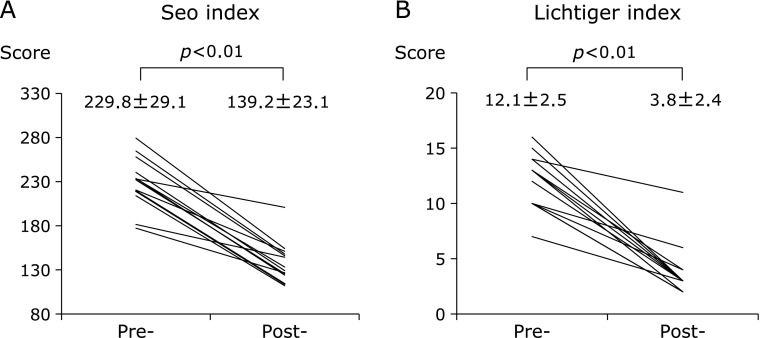
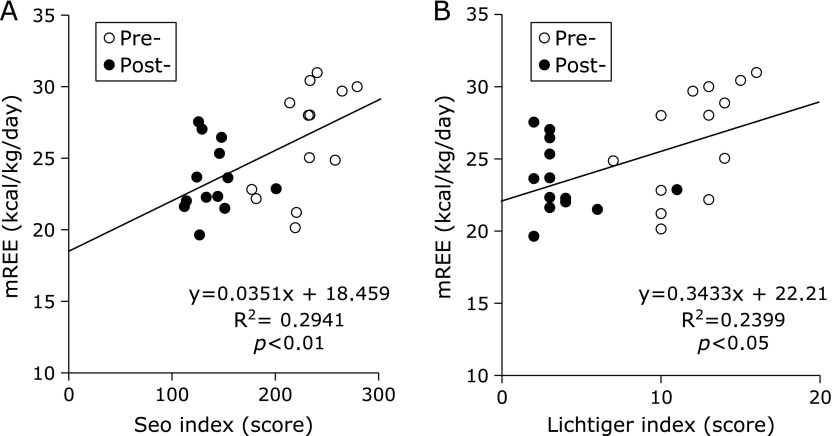
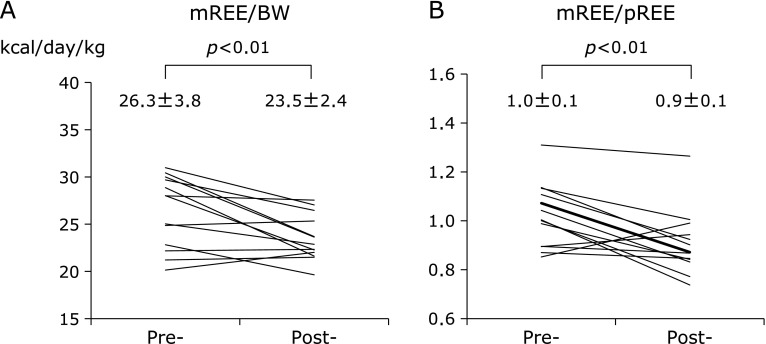
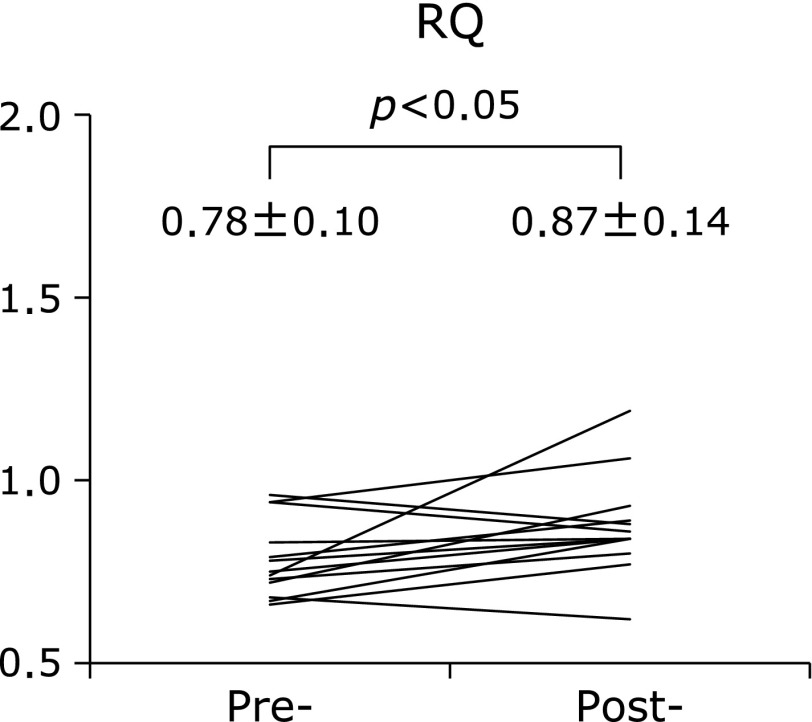
We investigated the changes in energy expenditure during induction therapy in patients with severe or moderate ulcerative colitis. Thirteen patients (10 men, 3 women; mean age, 36.5 years) with ulcerative colitis admitted to the Shiga University Hospital were enrolled in this study. We measured the resting energy expenditure and respiratory quotients of these patients before and after induction therapy with indirect calorimetry. We analyzed the changes of nutritional status and serum inflammatory cytokine levels and also evaluated the relationship between energy metabolism and disease activity by using the Seo index and Lichtiger index. The resting energy expenditure was 26.3 ± 3.8 kcal/kg/day in the active stage and significantly decreased to 23.5 ± 2.4 kcal/kg/day after induction therapy (p<0.01). The resting energy expenditure changed in parallel with the disease activity index and C-reactive protein and inflammatory cytokine levels. The respiratory quotient significantly increased after induction therapy. Thus, moderate to severe ulcerative colitis patients had a hyper-metabolic status, and the energy metabolism of these patients significantly changed after induction therapy. Therefore, we recommend that nutritional management with 30-34 kcal/kg/day (calculated as measured resting energy expenditure × activity factor, 1.3) may be optimal for hospitalized ulcerative colitis patients.
我们研究了重度或中度溃疡性结肠炎患者诱导治疗期间的能量消耗变化。本研究纳入了13例入住滋贺大学医院的溃疡性结肠炎患者(10例男性,3例女性;平均年龄36.5岁)。我们采用间接测热法测量了这些患者诱导治疗前后的静息能量消耗和呼吸商。我们分析了营养状况和血清炎症细胞因子水平的变化,并使用Seo指数和Lichtiger指数评估了能量代谢与疾病活动之间的关系。活动期静息能量消耗为26.3±3.8千卡/千克/天,诱导治疗后显著降至23.5±2.4千卡/千克/天(p<0.01)。静息能量消耗与疾病活动指数、C反应蛋白和炎症细胞因子水平平行变化。诱导治疗后呼吸商显著升高。因此,中度至重度溃疡性结肠炎患者处于高代谢状态,诱导治疗后这些患者的能量代谢发生了显著变化。因此,我们建议,对于住院的溃疡性结肠炎患者,以30 - 34千卡/千克/天(计算方法为测量的静息能量消耗×活动系数,1.3)进行营养管理可能是最佳的。