Kim JinJoo, Kim Chang-Hoon, Youn Seok-Hyun, Choi Tae-Jin
Fishery and Ocean Information Division, National Fisheries Research & Development Institute, Busan 619-705, Korea.
Department of Marine Bio-materials and Aquaculture, Pukyong National University, Busan 608-737, Korea.
Plant Pathol J. 2015 Jun;31(2):186-91. doi: 10.5423/PPJ.NT.03.2015.0029. Epub 2015 Jun 30.
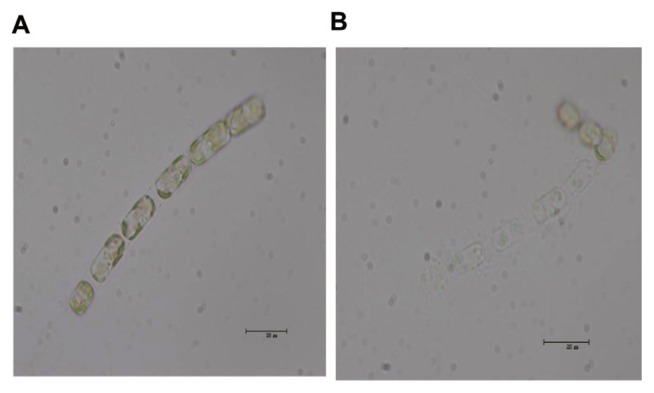
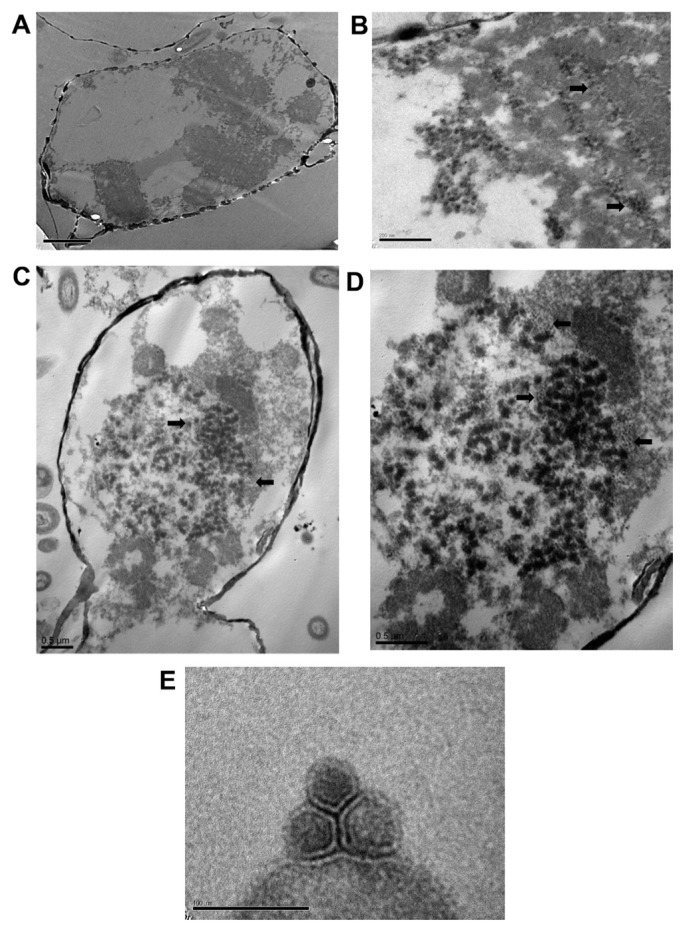
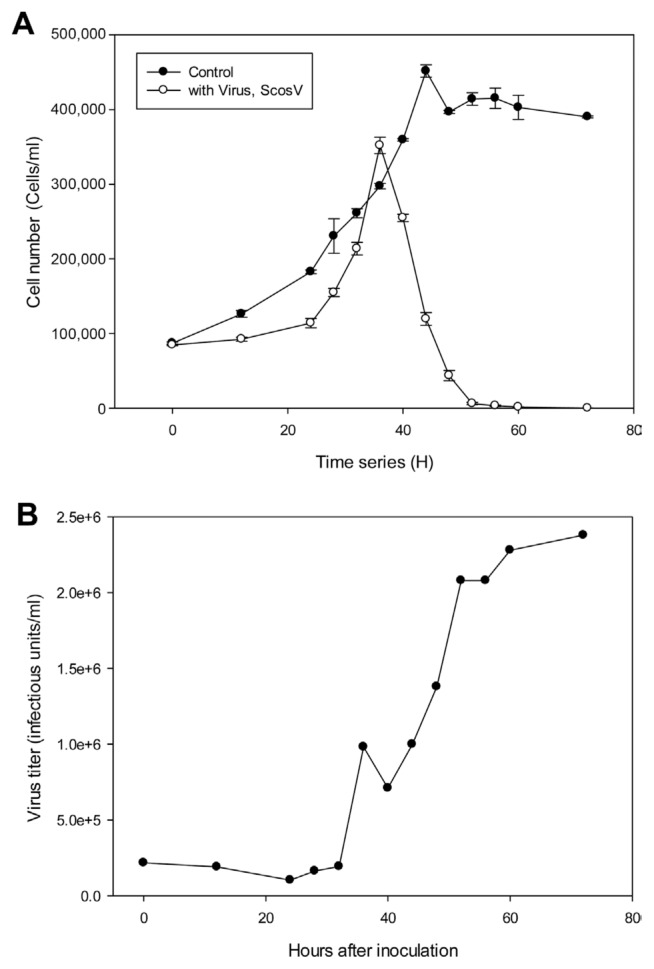
Diatoms are a major component of the biological community, serving as the principal primary producers in the food web and sustaining oxygen levels in aquatic environments. Among marine planktonic diatoms, the cosmopolitan Skeletonema costatum is one of the most abundant and widespread species in the world's oceans. Here, we report the basic characteristics of a new diatom-infecting S. costatum virus (ScosV) isolated from Jaran Bay, Korea, in June 2008. ScosV is a polyhedral virus (45-50 nm in diameter) that propagates in the cytoplasm of host cells and causes lysis of S. costatum cultures. The infectivity of ScosV was determined to be strain- rather than species-specific, similar to other algal viruses. The burst size and latent period were roughly estimated at 90-250 infectious units/cell and <48 h, respectively.
硅藻是生物群落的主要组成部分,作为食物网中的主要初级生产者,并维持水生环境中的氧气水平。在海洋浮游硅藻中,世界性的中肋骨条藻是世界海洋中最丰富和分布最广的物种之一。在这里,我们报告了2008年6月从韩国珍岛湾分离出的一种新的感染中肋骨条藻的病毒(ScosV)的基本特征。ScosV是一种多面体病毒(直径45-50纳米),在宿主细胞的细胞质中繁殖,并导致中肋骨条藻培养物裂解。与其他藻类病毒相似,ScosV的感染性被确定为菌株特异性而非物种特异性。裂解量和潜伏期大致估计分别为90-250个感染单位/细胞和<48小时。