Sand Claire A, Starr Anna, Nandi Manasi, Grant Andrew D
William Harvey Research Institute, Barts and The London School of Medicine, Queen Mary University of London, London, EC1M 6BQ, UK.
Institute of Pharmaceutical Science, King's College London, London, SE1 9NH, UK.
F1000Res. 2015 Apr 20;4:93. doi: 10.12688/f1000research.6298.1. eCollection 2015.
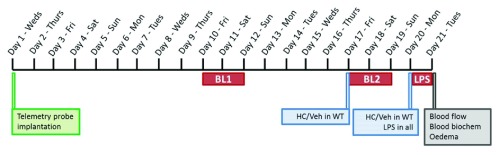
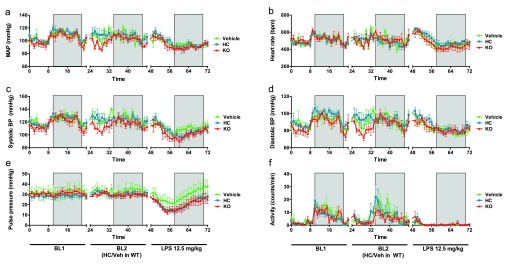
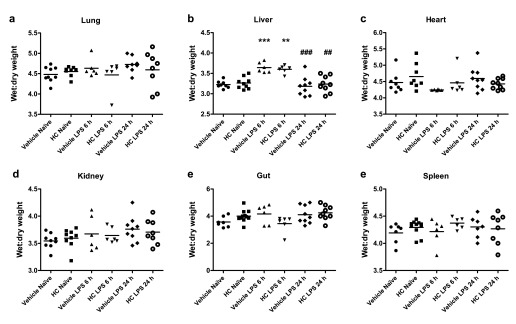
Sepsis is a systemic inflammatory response triggered by microbial infection that can cause cardiovascular collapse, insufficient tissue perfusion and multi-organ failure. The cation channel transient receptor potential vanilloid 4 (TRPV4) is expressed in vascular endothelium and causes vasodilatation, but excessive TRPV4 activation leads to profound hypotension and circulatory collapse - key features of sepsis pathogenesis. We hypothesised that loss of TRPV4 signaling would protect against cardiovascular dysfunction in a mouse model of sepsis (endotoxaemia). Multi-parameter monitoring of conscious systemic haemodynamics (by radiotelemetry probe), mesenteric microvascular blood flow (laser speckle contrast imaging) and blood biochemistry (iSTAT blood gas analysis) was carried out in wild type (WT) and TRPV4 knockout (KO) mice. Endotoxaemia was induced by a single intravenous injection of lipopolysaccharide (LPS; 12.5 mg/kg) and systemic haemodynamics monitored for 24 h. Blood flow recording was then conducted under terminal anaesthesia after which blood was obtained for haematological/biochemical analysis. No significant differences were observed in baseline haemodynamics or mesenteric blood flow. Naïve TRPV4 KO mice were significantly acidotic relative to WT counterparts. Following induction of sepsis, all mice became significantly hypotensive, though there was no significant difference in the degree of hypotension between TRPV4 WT and KO mice. TRPV4 KO mice exhibited a higher sepsis severity score. While septic WT mice became significantly hypernatraemic relative to the naïve state, this was not observed in septic KO mice. Mesenteric blood flow was inhibited by topical application of the TRPV4 agonist GSK1016790A in naïve WT mice, but enhanced 24 h following LPS injection. Contrary to the initial hypothesis, loss of TRPV4 signaling (either through gene deletion or pharmacological antagonism) did not attenuate sepsis-induced cardiovascular dysfunction: in fact, pathology appeared to be modestly exaggerated in mice lacking TRPV4. Local targeting of TRPV4 signalling may be more beneficial than global inhibition in sepsis treatment.
脓毒症是由微生物感染引发的全身性炎症反应,可导致心血管功能衰竭、组织灌注不足和多器官功能衰竭。阳离子通道瞬时受体电位香草酸亚型4(TRPV4)在血管内皮中表达并引起血管舒张,但TRPV4过度激活会导致严重低血压和循环衰竭,这是脓毒症发病机制的关键特征。我们推测,在脓毒症(内毒素血症)小鼠模型中,TRPV4信号缺失可预防心血管功能障碍。对野生型(WT)和TRPV4基因敲除(KO)小鼠进行清醒状态下全身血流动力学(通过无线电遥测探头)、肠系膜微血管血流(激光散斑对比成像)和血液生化(iSTAT血气分析)的多参数监测。通过单次静脉注射脂多糖(LPS;12.5 mg/kg)诱导内毒素血症,并监测全身血流动力学24小时。然后在终末麻醉下进行血流记录,之后取血进行血液学/生化分析。在基线血流动力学或肠系膜血流方面未观察到显著差异。与WT小鼠相比,未经处理的TRPV4 KO小鼠存在明显的酸中毒。脓毒症诱导后,所有小鼠均出现明显低血压,尽管TRPV4野生型和基因敲除小鼠之间的低血压程度无显著差异。TRPV4 KO小鼠的脓毒症严重程度评分更高。与未经处理的状态相比,脓毒症野生型小鼠出现明显的高钠血症,而脓毒症基因敲除小鼠未观察到这种情况。在未经处理的野生型小鼠中,局部应用TRPV4激动剂GSK1016790A可抑制肠系膜血流,但在注射LPS后24小时血流增强。与最初的假设相反,TRPV4信号缺失(通过基因缺失或药物拮抗)并未减轻脓毒症诱导的心血管功能障碍:事实上缺乏TRPV4的小鼠病理表现似乎略有加重。在脓毒症治疗中,局部靶向TRPV4信号可能比整体抑制更有益。