Medina Indira, Cougoule Céline, Drechsler Maik, Bermudez Beatriz, Koenen Rory R, Sluimer Judith, Wolfs Ine, Döring Yvonne, Herias Veronica, Gijbels Marjon, Bot Ilze, de Jager Saskia, Weber Christian, Cleutjens Jack, van Berkel Theo J C, Sikkink Kees-Jan, Mócsai Atilla, Maridonneau-Parini Isabelle, Soehnlein Oliver, Biessen Erik A L
Experimental Vascular Pathology group, Department of Pathology, CARIM, Maastricht University Medical Center, Maastricht, the Netherlands.
Division of Biopharmaceutics, Leiden Academic Center for Drug Research, Leiden University, Leiden, the Netherlands.
Circulation. 2015 Aug 11;132(6):490-501. doi: 10.1161/CIRCULATIONAHA.114.012316. Epub 2015 Jun 11.
Leukocyte migration is critical for the infiltration of monocytes and accumulation of monocyte-derived macrophages in inflammation. Considering that Hck and Fgr are instrumental in this process, their impact on atherosclerosis and on lesion inflammation and stability was evaluated.
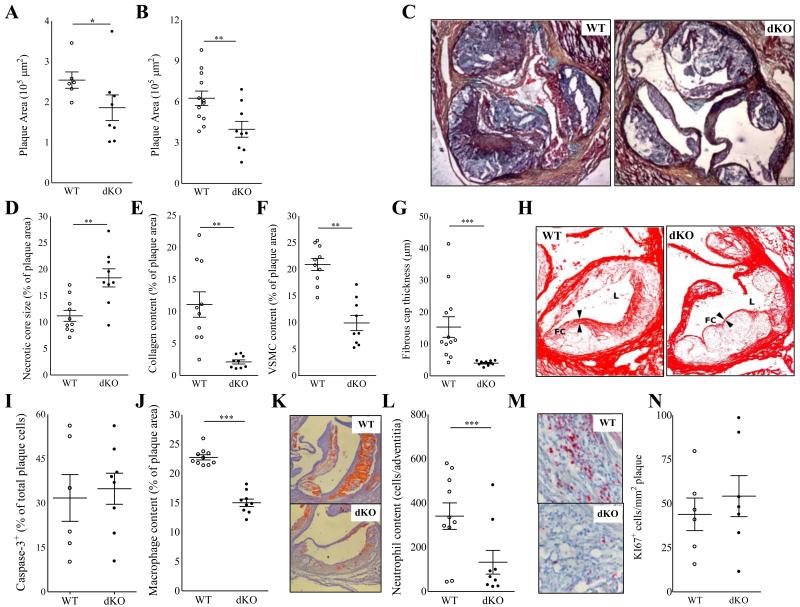
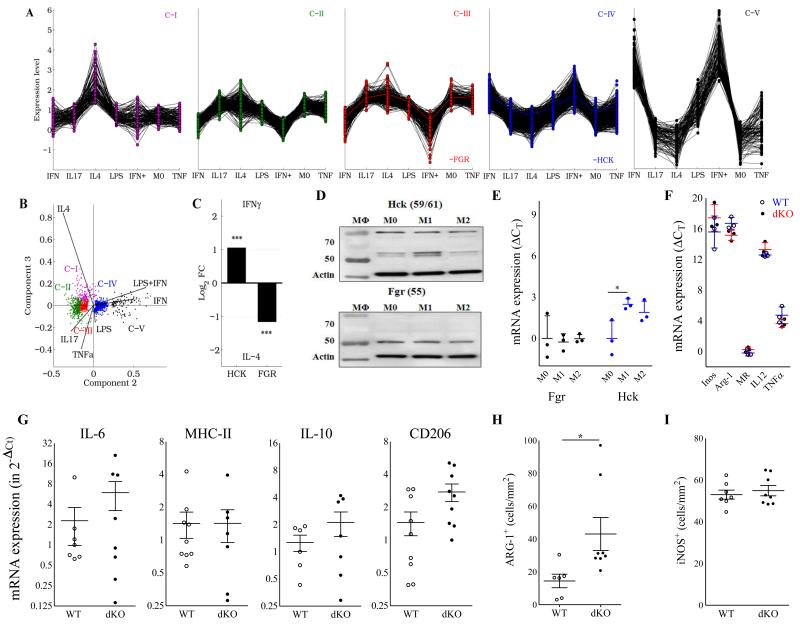
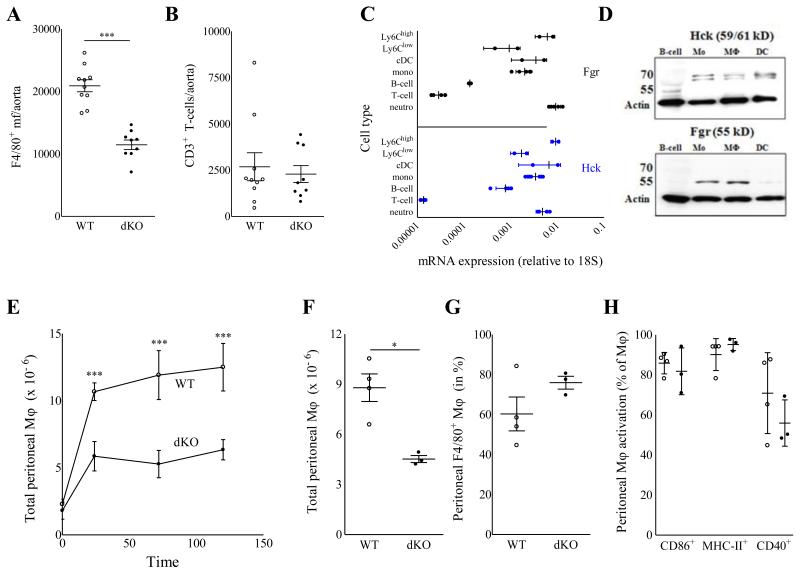
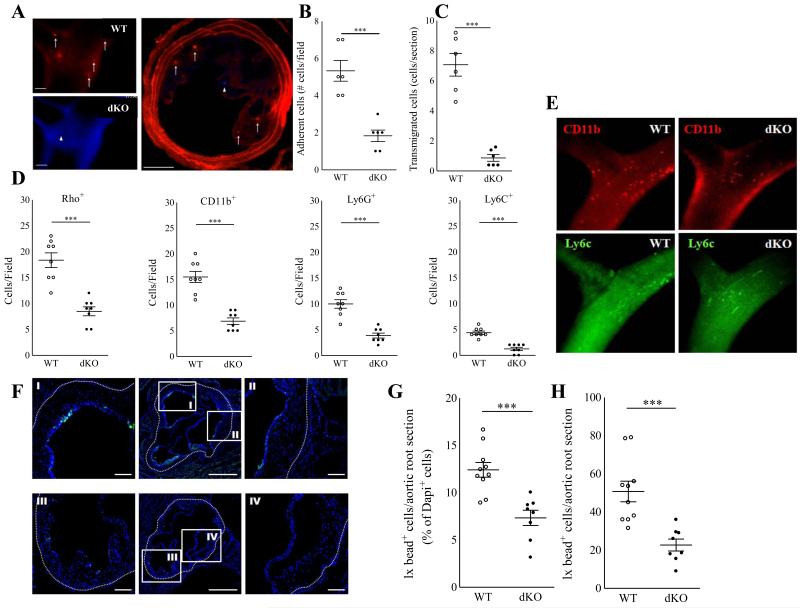
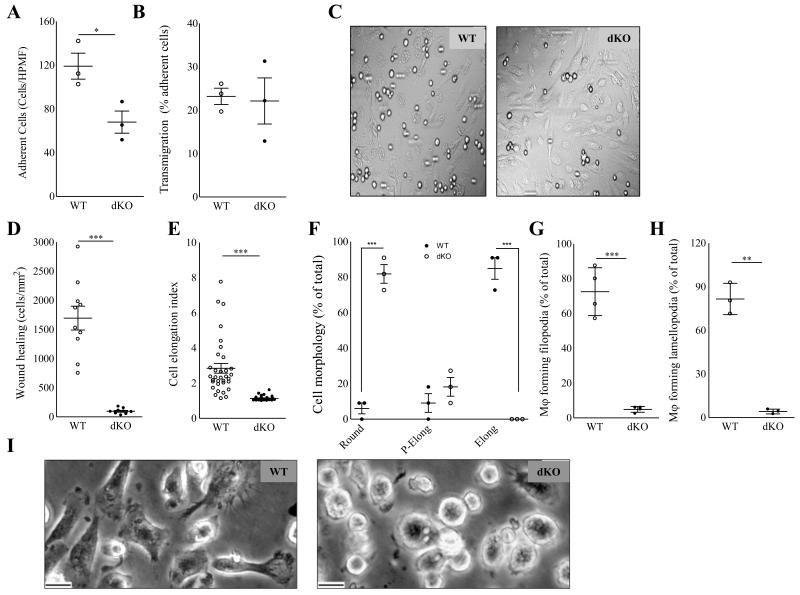
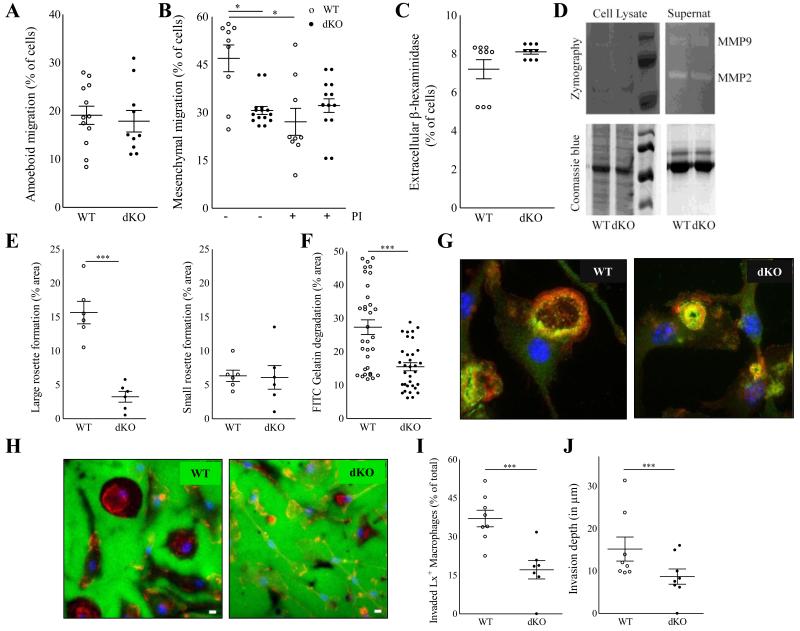
Hematopoietic Hck/Fgr-deficient, LDLr(-/-) chimeras, obtained by bone marrow transplantation, had smaller but, paradoxically, less stable lesions with reduced macrophage content, overt cap thinning, and necrotic core expansion as the most prominent features. Despite a Ly6C(high)-skewed proinflammatory monocyte phenotype, Hck/Fgr deficiency led to disrupted adhesion of myeloid cells to and transmigration across endothelial monolayers in vitro and atherosclerotic plaques in vivo, as assessed by intravital microscopy, flow cytometry, and histological examination of atherosclerotic arteries. Moreover, Hck/Fgr-deficient macrophages showed blunted podosome formation and mesenchymal migration capacity. In consequence, transmigrated double-knockout macrophages were seen to accumulate in the fibrous cap, potentially promoting its focal erosion, as observed for double-knockout chimeras.
The hematopoietic deficiency of Hck and Fgr led to attenuated atherosclerotic plaque formation by abrogating endothelial adhesion and transmigration; paradoxically, it also promoted plaque instability by causing monocyte subset imbalance and subendothelial accumulation, raising a note of caution regarding src kinase-targeted intervention in plaque inflammation.
白细胞迁移对于炎症中单核细胞的浸润和单核细胞衍生巨噬细胞的聚集至关重要。鉴于Hck和Fgr在这一过程中发挥作用,评估了它们对动脉粥样硬化以及病变炎症和稳定性的影响。
通过骨髓移植获得的造血Hck/Fgr缺陷型、LDLr(-/-)嵌合体具有较小但矛盾的是不太稳定的病变,其巨噬细胞含量减少、明显的帽变薄和坏死核心扩大是最突出的特征。尽管具有Ly6C(高)偏向的促炎单核细胞表型,但通过活体显微镜检查、流式细胞术和动脉粥样硬化动脉的组织学检查评估,Hck/Fgr缺陷导致体外骨髓细胞与内皮单层以及体内动脉粥样硬化斑块的粘附和迁移受损。此外,Hck/Fgr缺陷的巨噬细胞显示出减弱的足体形成和间充质迁移能力。因此,如在双敲除嵌合体中观察到的,迁移的双敲除巨噬细胞在纤维帽中积累,可能促进其局灶性侵蚀。
Hck和Fgr的造血缺陷通过消除内皮粘附和迁移导致动脉粥样硬化斑块形成减弱;矛盾的是,它还通过引起单核细胞亚群失衡和内皮下积累促进斑块不稳定,这对src激酶靶向干预斑块炎症提出了警示。