Li Wen-Xue, Chen Li-Ping, Sun Min-Ying, Li Jun-Tao, Liu Hua-Zhang, Zhu Wei
Dearpartmant of Toxicology, Guangzhou Center for Disease Control and Prevention, Guangzhou, China.
Faculty of Toxicology, School of Public Health, Sun Yet-sen University, Guangzhou, China.
Oncotarget. 2015 Sep 15;6(27):23776-92. doi: 10.18632/oncotarget.4196.
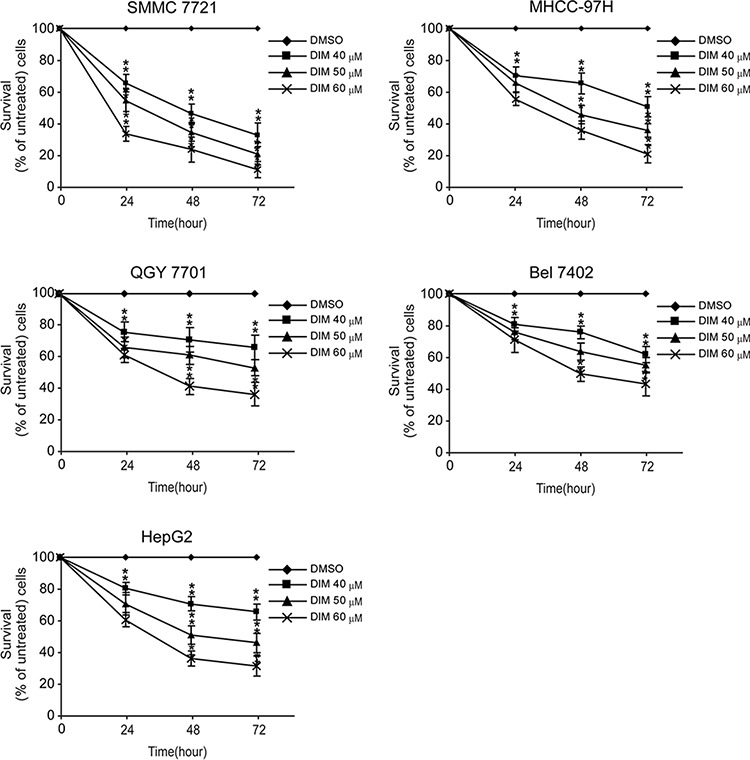
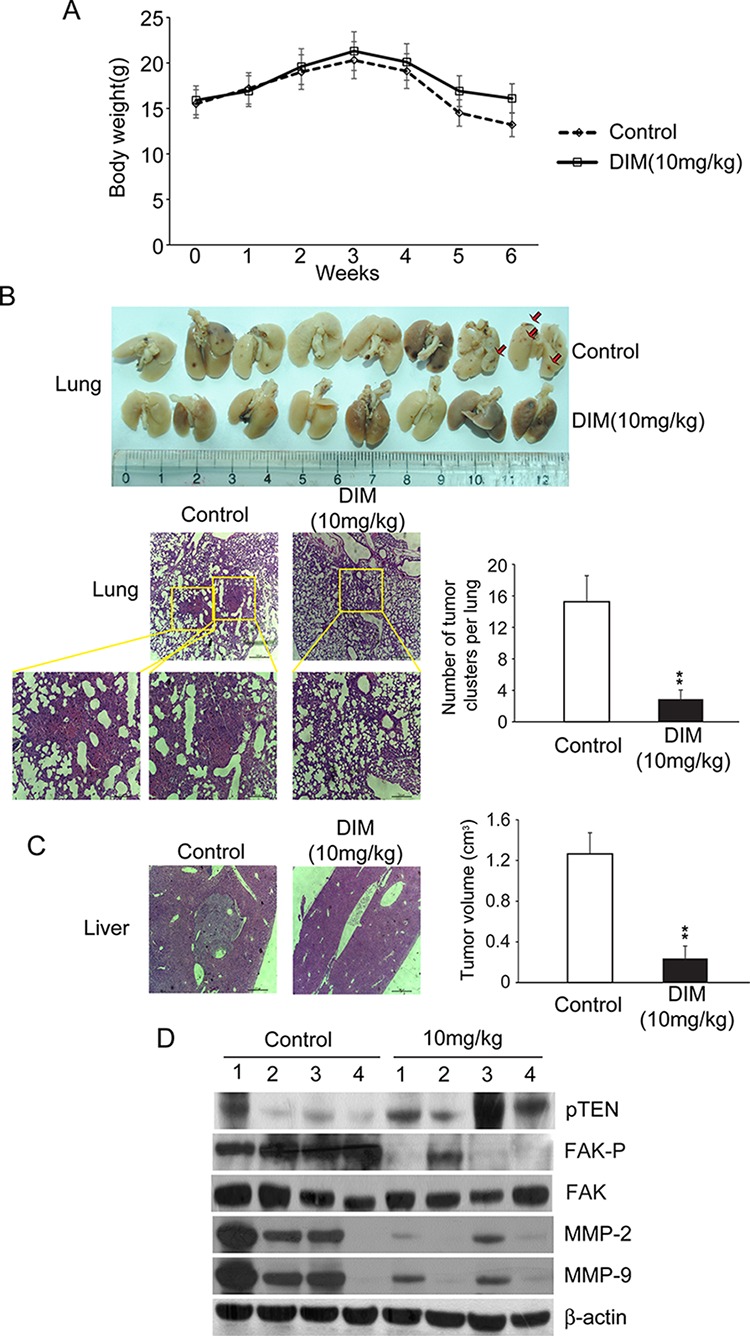
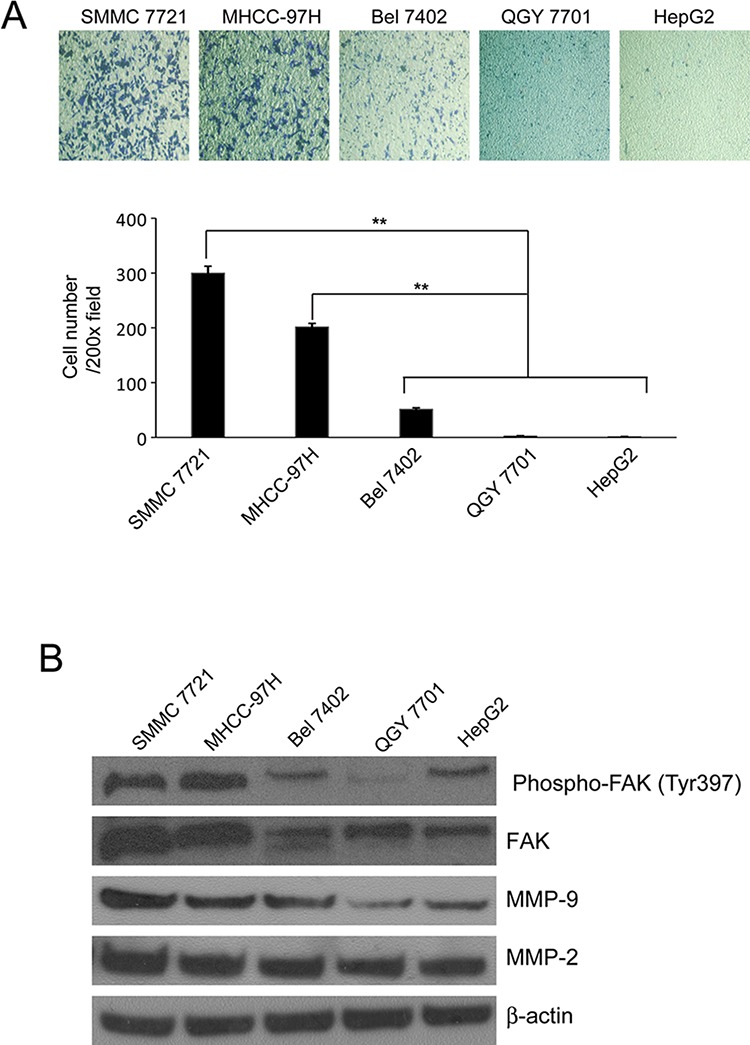
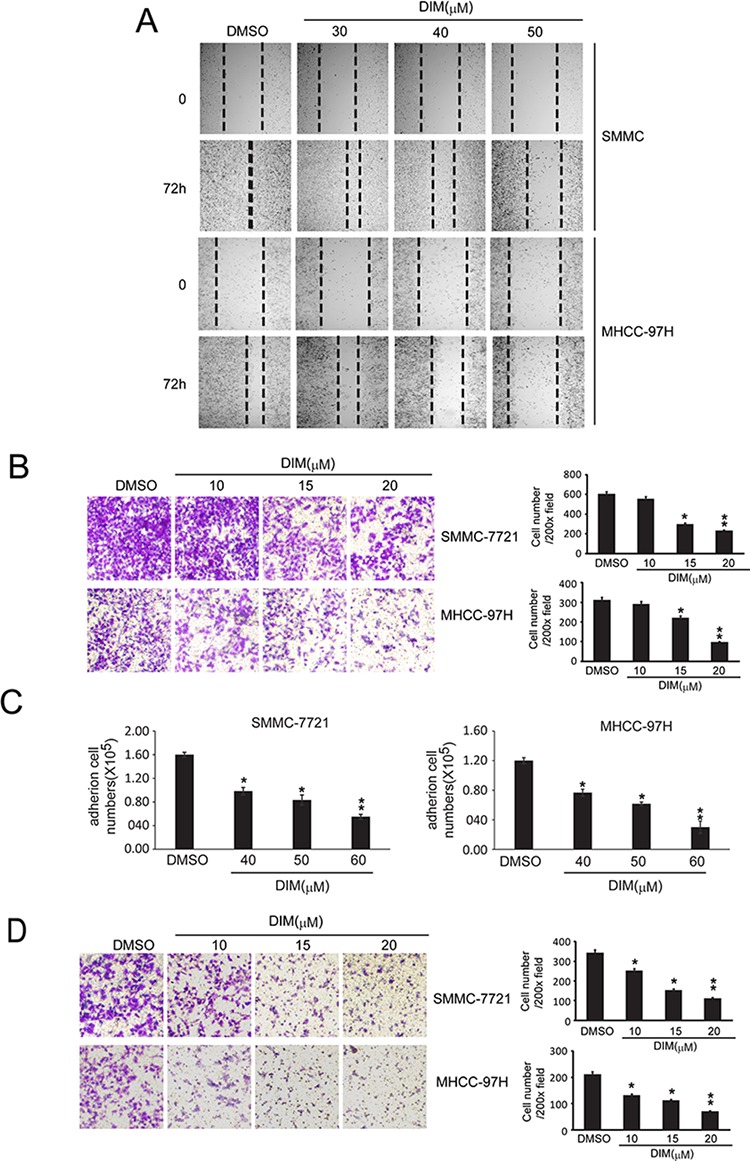
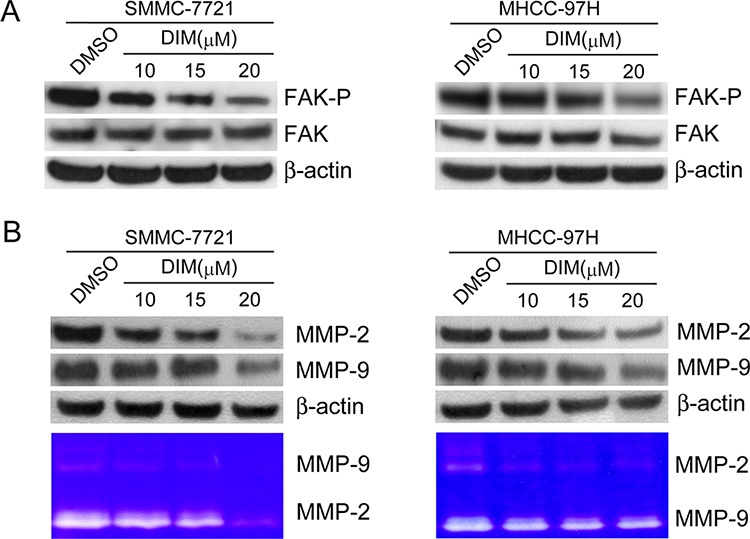
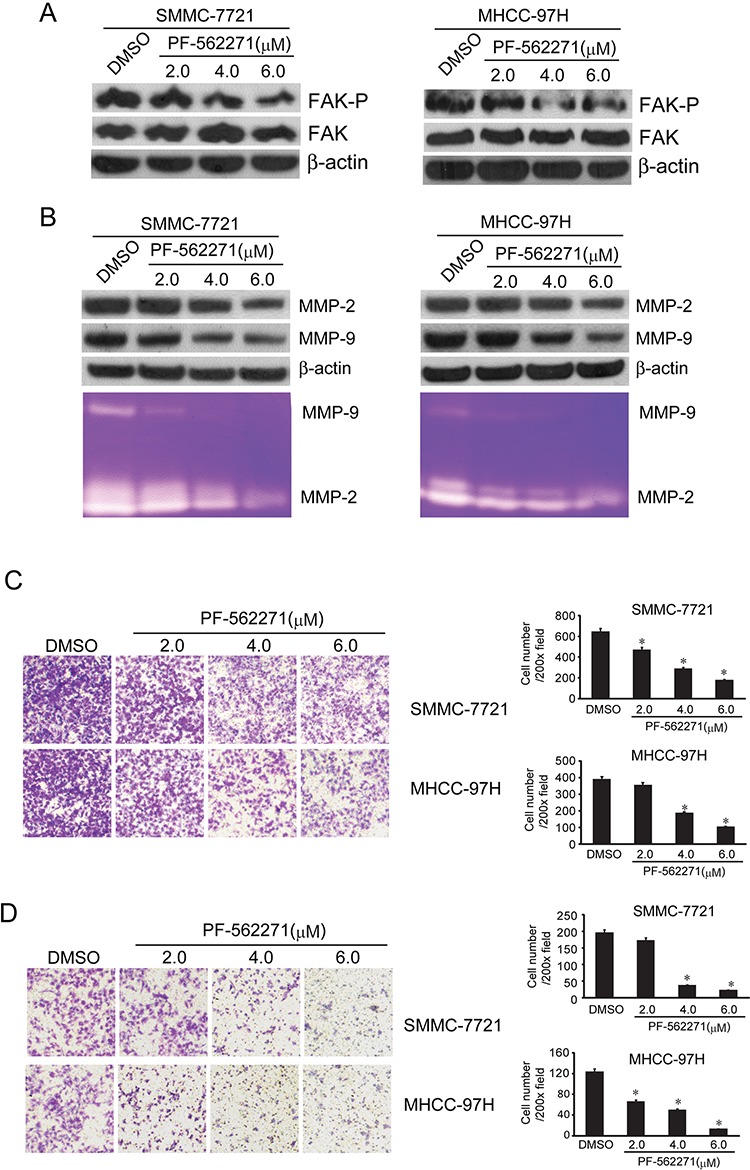
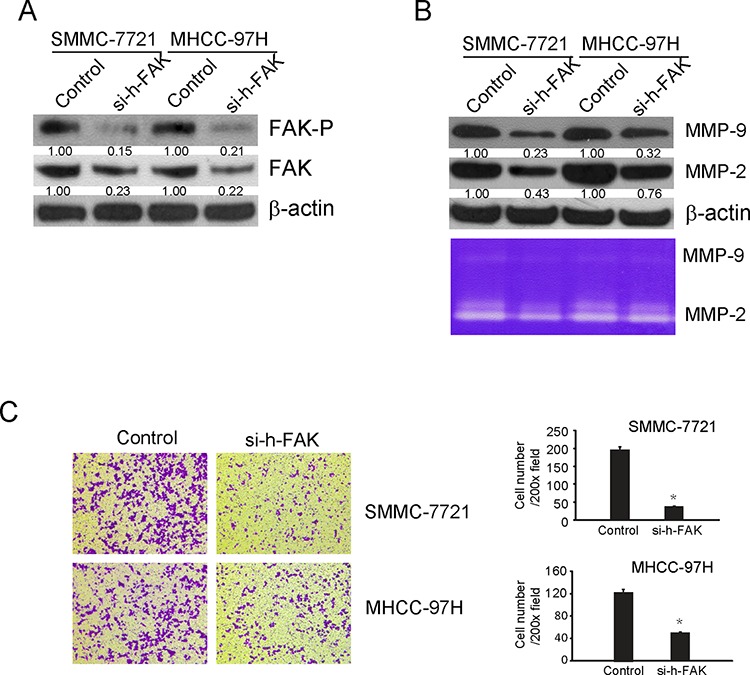
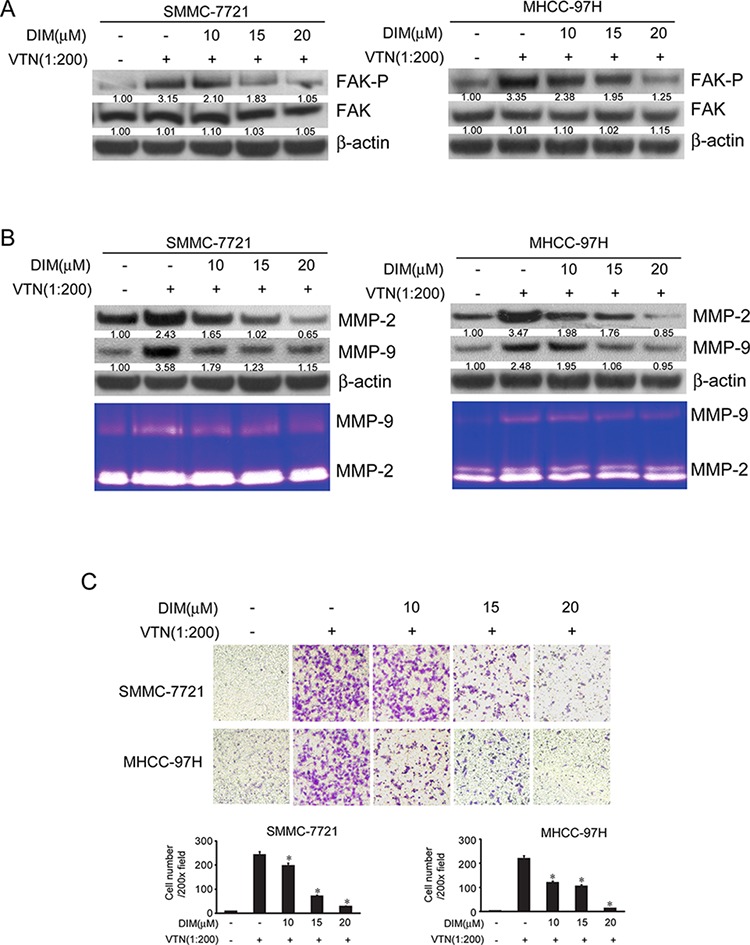
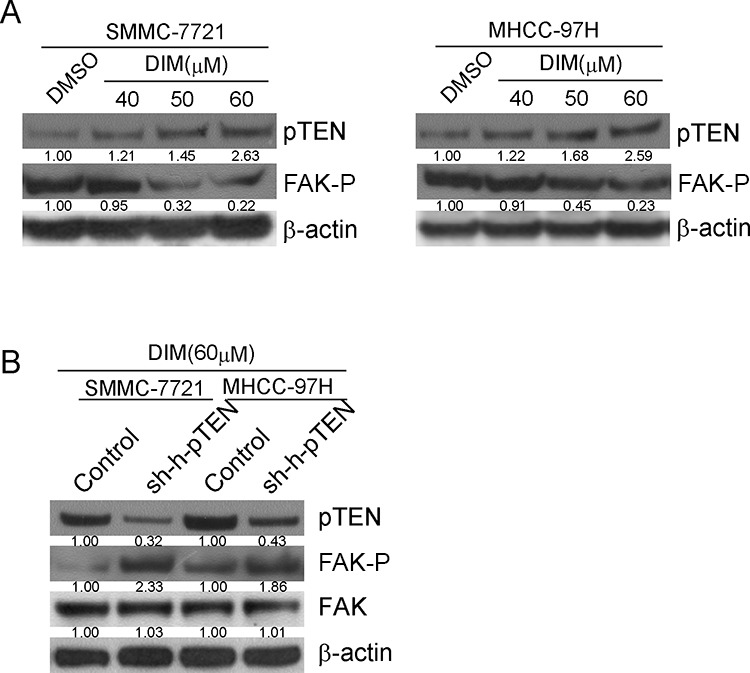
Late stage hepatocellular carcinoma (HCC) usually has a low survival rate because it has high potential of metastases and there is no effective cure. 3'3-Diindolylmethane (DIM) is the major product of the acid-catalyzed oligomerization of indole-3-carbinol present in cruciferous vegetables. DIM has been proved to exhibit anticancer properties. In this study, we explored the effects and molecular mechanisms of anti-metastasis of DIM on HCC cells both in vitro and in vivo. We chose two HCC cell lines SMMC-7721 and MHCC-97H that have high potential of invasion. The results showed that DIM inhibited the proliferation, migration and invasion of these two cell lines in vitro. In addition, in vivo study demonstrated that DIM significantly decreased the volumes of SMMC-7721 orthotopic liver tumor and suppressed lung metastasis in nude mice. Focal Adhesion Kinase (FAK) is found over activated in HCC cells. We found that DIM decreased the level of phospho-FAK (Tyr397) both in vitro and in vivo. DIM inhibition of phospho-FAK (Tyr397) led to down-regulation of MMP2/9 and decreased potential of metastasis. DIM also repressed the migration and invasion induced by vitronectin through inactivation of FAK pathway and down-regulation of MMP2/9 in vitro. We also found that pTEN plays a role in down-regulation of FAK by DIM. These results demonstrated that DIM blocks HCC cell metastasis by suppressing tumor cell migration and invasion. The anti-metastasis effect of DIM could be explained to be its down-regulated expression and activation of MMP2/9 partly induced by up-regulation of pTEN and inhibition of phospho-FAK (Tyr397).
晚期肝细胞癌(HCC)通常生存率较低,因为其转移潜力高且没有有效的治愈方法。3'3 - 二吲哚甲烷(DIM)是十字花科蔬菜中存在的吲哚 - 3 - 甲醇酸催化寡聚化的主要产物。已证明DIM具有抗癌特性。在本研究中,我们在体外和体内探讨了DIM对HCC细胞抗转移的作用及其分子机制。我们选择了两种具有高侵袭潜力的HCC细胞系SMMC - 7721和MHCC - 97H。结果表明,DIM在体外抑制了这两种细胞系的增殖、迁移和侵袭。此外,体内研究表明,DIM显著减小了SMMC - 7721原位肝肿瘤的体积,并抑制了裸鼠的肺转移。在HCC细胞中发现粘着斑激酶(FAK)过度激活。我们发现DIM在体外和体内均降低了磷酸化FAK(Tyr397)的水平。DIM对磷酸化FAK(Tyr397)的抑制导致MMP2/9下调并降低转移潜力。在体外,DIM还通过使FAK通路失活和下调MMP2/9来抑制玻连蛋白诱导的迁移和侵袭。我们还发现pTEN在DIM下调FAK中发挥作用。这些结果表明,DIM通过抑制肿瘤细胞迁移和侵袭来阻断HCC细胞转移。DIM的抗转移作用可以解释为其通过上调pTEN和抑制磷酸化FAK(Tyr397)部分诱导MMP2/9的表达下调和激活受到抑制。