Sjögersten Sofie, van der Wal René, Loonen Maarten J J E, Woodin Sarah J
School of Biosciences, University of Nottingham, University Park, Nottingham, NG7 2RD UK.
Aberdeen Centre for Environmental Sustainability (ACES), School of Biological Sciences, University of Aberdeen, Auris, 23 St. Machar Drive, Aberdeen, AB24 3UU UK.
Biogeochemistry. 2011;106(3):357-370. doi: 10.1007/s10533-010-9516-4. Epub 2011 Jan 7.
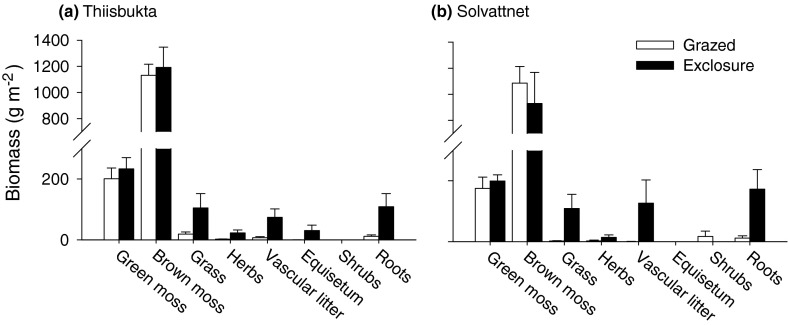
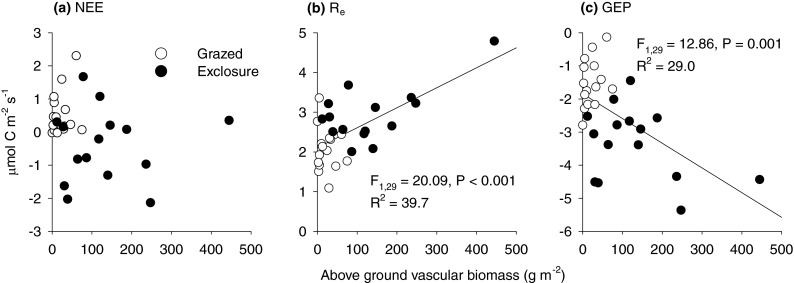
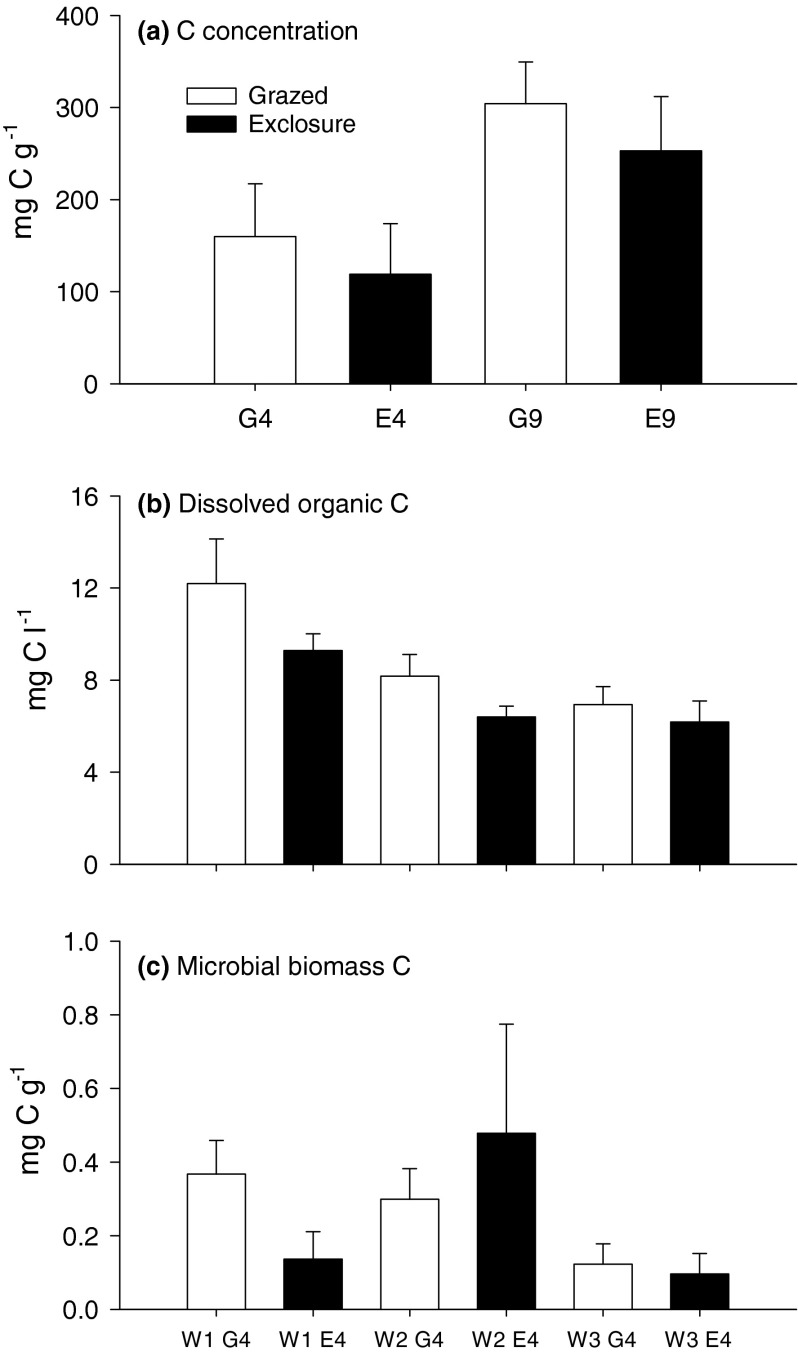
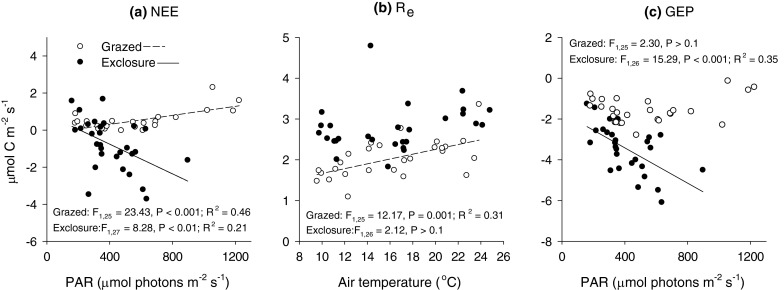
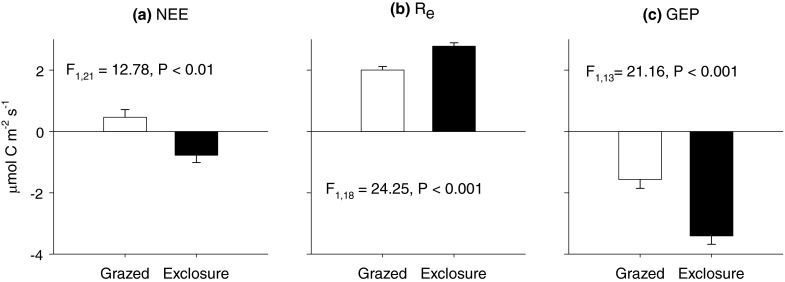
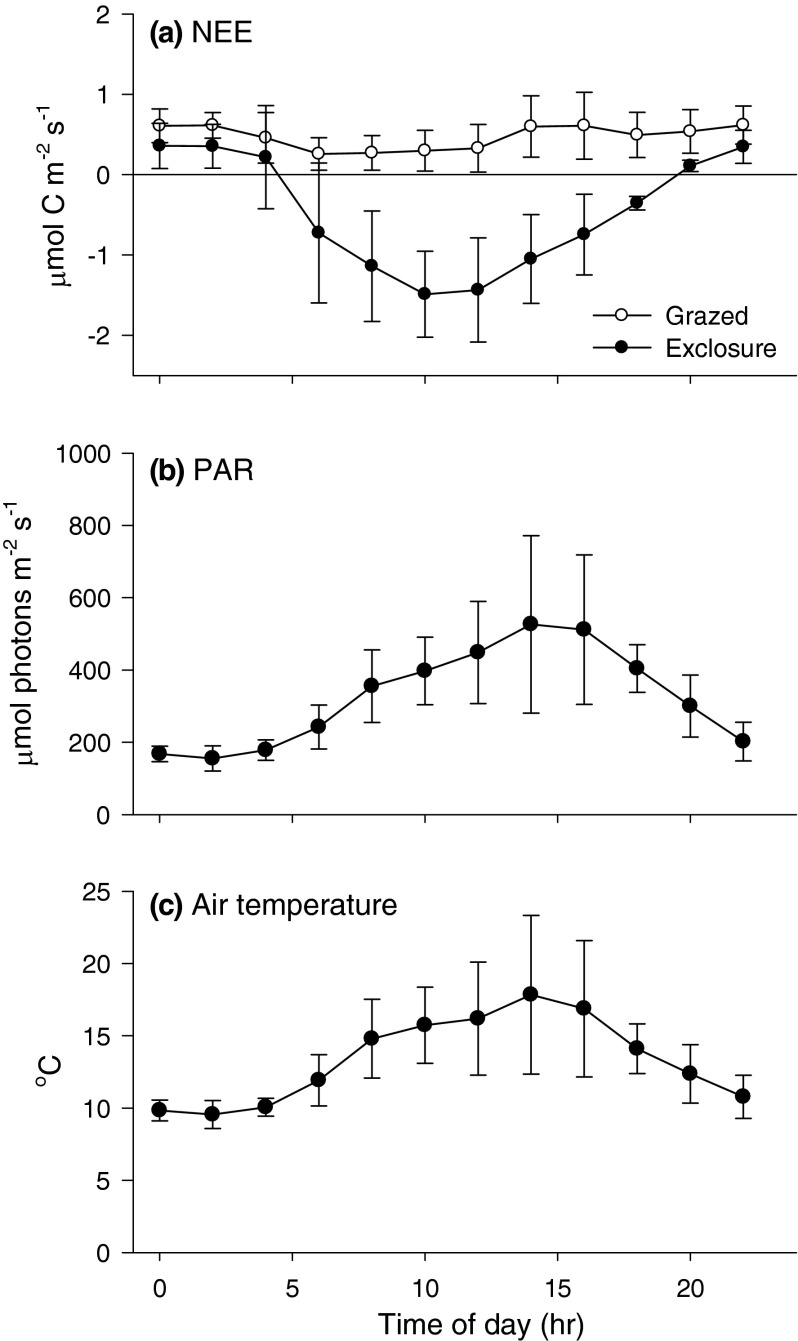
The carbon (C) sink strength of arctic tundra is under pressure from increasing populations of arctic breeding geese. In this study we examined how CO and CH fluxes, plant biomass and soil C responded to the removal of vertebrate herbivores in a high arctic wet moss meadow that has been intensively used by barnacle geese () for ca. 20 years. We used 4 and 9 years old grazing exclosures to investigate the potential for recovery of ecosystem function during the growing season (July 2007). The results show greater above- and below-ground vascular plant biomass within the grazing exclosures with graminoid biomass being most responsive to the removal of herbivory whilst moss biomass remained unchanged. The changes in biomass switched the system from net emission to net uptake of CO (0.47 and -0.77 μmol m s in grazed and exclosure plots, respectively) during the growing season and doubled the C storage in live biomass. In contrast, the treatment had no impact on the CH fluxes, the total litter C pool or the soil C concentration. The rapid recovery of the above ground biomass and CO fluxes demonstrates the plasticity of this high arctic ecosystem in terms of response to changing herbivore pressure.
北极苔原的碳(C)汇强度正受到北极繁殖鹅数量增加的压力。在本研究中,我们调查了在一个被黑雁()密集利用了约20年的高北极湿苔藓草甸中,去除脊椎动物食草动物后,CO和CH通量、植物生物量及土壤碳是如何响应的。我们利用4年和9年的放牧围栏来研究生长季(2007年7月)期间生态系统功能恢复的潜力。结果表明,放牧围栏内地上和地下维管植物生物量更大,其中禾本科植物生物量对去除食草动物的响应最为明显,而苔藓生物量保持不变。生物量的变化使该系统在生长季从CO的净排放转变为净吸收(放牧区和围栏区分别为0.47和-0.77 μmol m s),并使活生物量中的碳储量增加了一倍。相比之下,该处理对CH通量、总凋落物碳库或土壤碳浓度没有影响。地上生物量和CO通量的快速恢复表明,这个高北极生态系统在应对不断变化的食草动物压力方面具有可塑性。