Fujii Atsuko, Shearer Thomas R, Azuma Mitsuyoshi
Laboratory of Ocular Sciences, Senju Pharmaceutical Corporation Limited, 4640 SW Macadam Ave., Suite 200C, Portland, OR 97239, USA; Department of Integrative Biosciences, Oregon Health & Science University, 2730 SW Moody Ave., Portland, OR 97201, USA.
Department of Integrative Biosciences, Oregon Health & Science University, 2730 SW Moody Ave., Portland, OR 97201, USA.
Exp Eye Res. 2015 Aug;137:71-8. doi: 10.1016/j.exer.2015.06.010. Epub 2015 Jun 10.
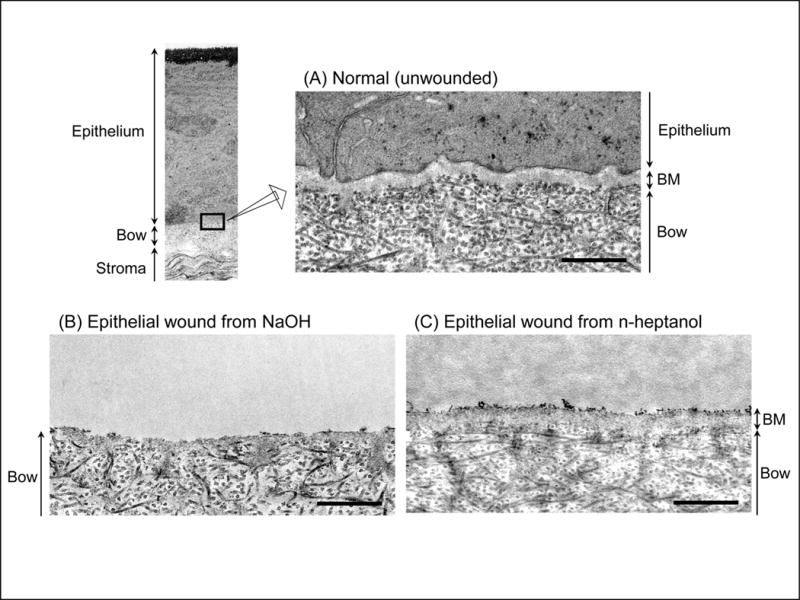
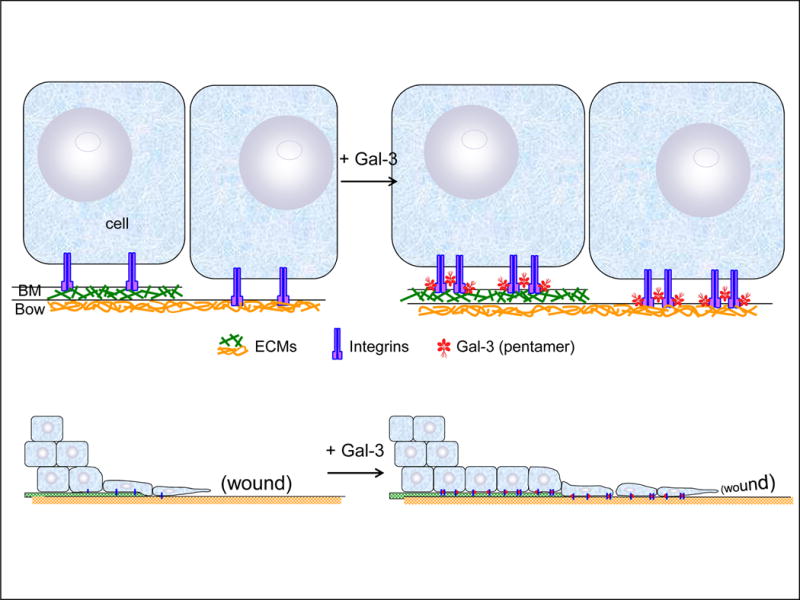
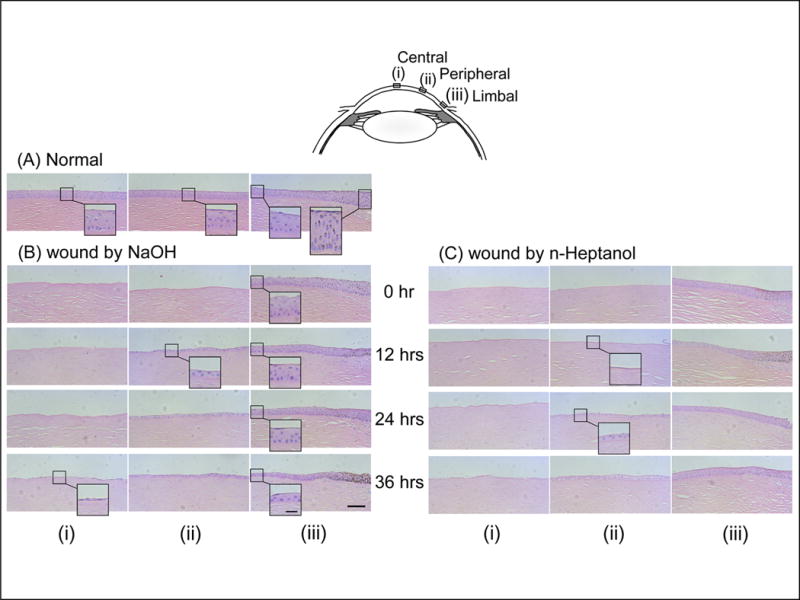
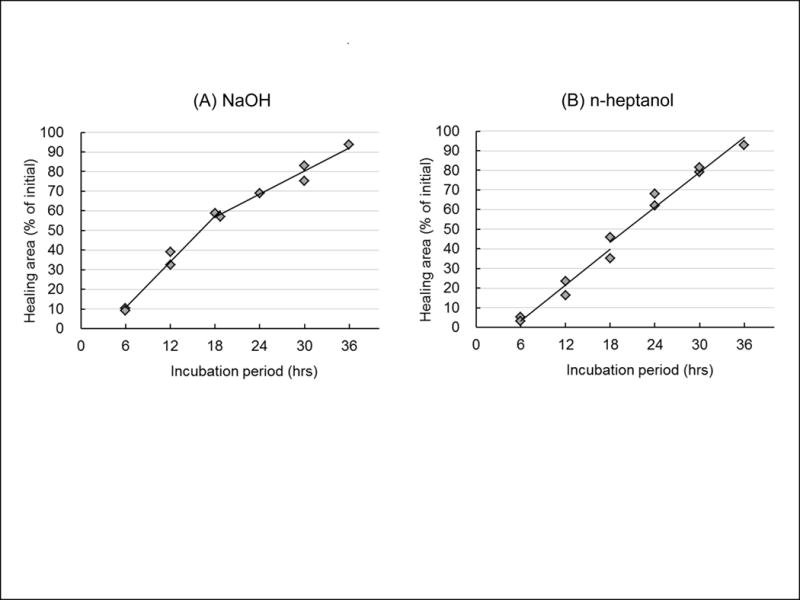
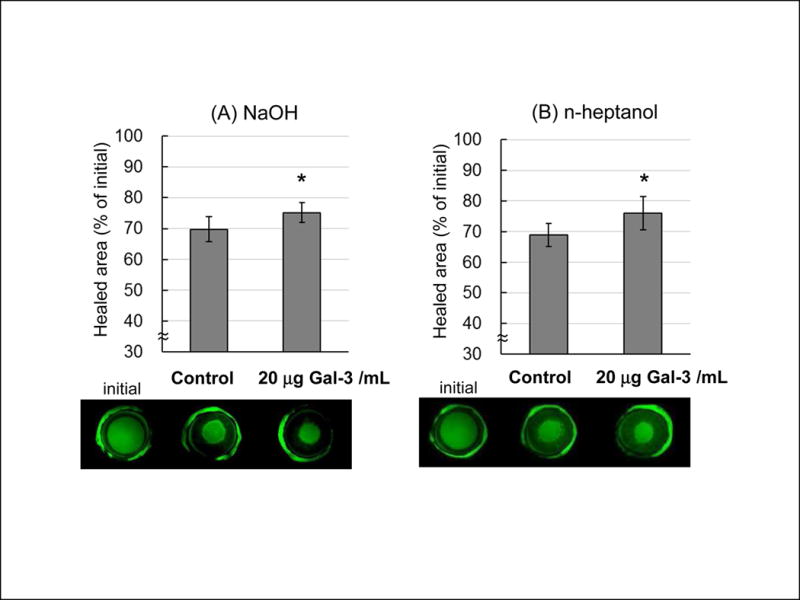
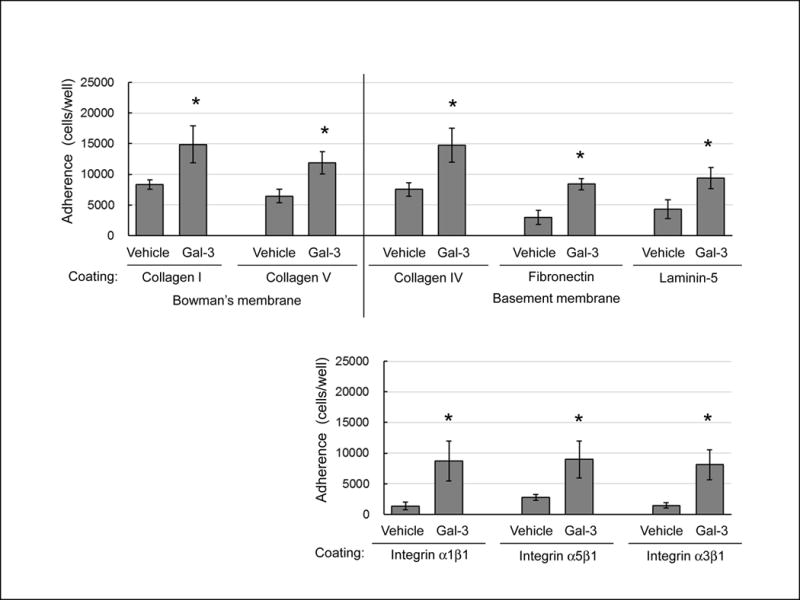
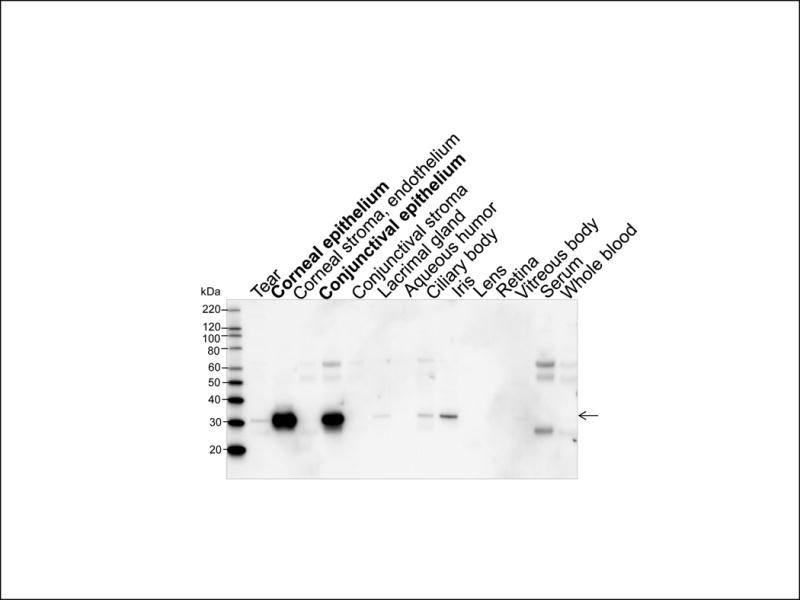
Poor healing of epithelial wounds in cornea is a major clinical problem, leading to persistent epithelial defects and ulceration. The primary cause is poor cell migration over the wound. Carbohydrate-binding protein galectin-3 binds to extracellular matrixes (ECMs) and promotes lamellipodia formation by cross-linking to α3 integrin. Recombinant galectin-3 also facilitates wound healing in the rodent cornea. The purposes of the present experiments were to: (1) establish epithelial wound healing models in monkey corneal explant culture, the models more relevant to human, (2) evaluate the healing effect of galectin-3 in our models, and (3) determine if galectin-3 enhances cell adhesion by interacting with ECMs on corneal surface and their ligand integrins. Monkey corneas with central wounds produced by sodium hydroxide (NaOH) or n-heptanol were incubated with or without recombinant galectin-3. The defected area was stained with sodium fluorescein. Primary isolated corneal epithelial cells from monkey were cultured with or without galectin-3 on plates coated with ECMs or integrins, and the number of adhering cells was counted. Galectin-3 expression in various eye tissues was visualized by immunoblotting. NaOH caused loss of epithelial cells and basement membrane. n-Heptanol removed epithelial cells, but the basement membrane was retained. These corneal defects spontaneously became smaller in a time-dependent manner. Exogenous galectin-3 enhanced wound healing in both NaOH and n-heptanol models. Galectin-3 also enhanced cell adhesion onto the major ECMs found in the basement and Bowman's membranes and onto integrins. Relatively high levels of galectin-3 were detected in corneal and conjunctival epithelium, but tear fluid contained negligible galactin-3. These results suggested that the enhanced binding of epithelial cells to ECMs and integrins caused by galectin-3 might promote cell migration over wounded corneal surfaces. Since tear fluid contained relatively low levels of galectin-3, exogenous galectin-3 may be a beneficial drug to enhance re-epithelialization in human corneal diseases.
角膜上皮伤口愈合不良是一个主要的临床问题,会导致持续性上皮缺损和溃疡。主要原因是伤口处细胞迁移能力差。碳水化合物结合蛋白半乳糖凝集素-3与细胞外基质(ECM)结合,并通过与α3整合素交联促进片状伪足形成。重组半乳糖凝集素-3也有助于啮齿动物角膜的伤口愈合。本实验的目的是:(1)在猴角膜外植体培养中建立上皮伤口愈合模型,该模型与人类情况更相关;(2)在我们的模型中评估半乳糖凝集素-3的愈合效果;(3)确定半乳糖凝集素-3是否通过与角膜表面的ECM及其配体整合素相互作用来增强细胞黏附。用氢氧化钠(NaOH)或正庚醇造成中央伤口的猴角膜,分别在添加或不添加重组半乳糖凝集素-3的情况下进行孵育。缺损区域用荧光素钠染色。将从猴分离的原代角膜上皮细胞,在包被有ECM或整合素的培养板上,分别在添加或不添加半乳糖凝集素-3的条件下培养,并计数黏附细胞的数量。通过免疫印迹观察半乳糖凝集素-3在各种眼组织中的表达情况。NaOH导致上皮细胞和基底膜缺失。正庚醇去除了上皮细胞,但基底膜保留。这些角膜缺损会随时间自发变小。外源性半乳糖凝集素-3在NaOH和正庚醇模型中均能促进伤口愈合。半乳糖凝集素-3还增强了细胞与基底膜和Bowman膜中主要ECM以及整合素的黏附。在角膜和结膜上皮中检测到相对较高水平的半乳糖凝集素-3,但泪液中半乳糖凝集素-3含量可忽略不计。这些结果表明,半乳糖凝集素-3引起的上皮细胞与ECM和整合素结合增强,可能促进细胞在受伤角膜表面的迁移。由于泪液中半乳糖凝集素-3水平相对较低,外源性半乳糖凝集素-3可能是一种有助于增强人类角膜疾病中上皮再形成的有益药物。