Lourenço Dos Santos Sofia, Baraibar Martin A, Lundberg Staffan, Eeg-Olofsson Orvar, Larsson Lars, Friguet Bertrand
Sorbonne Universités, UPMC Univ Paris 06, UMR 8256, Biological Adaptation and Ageing-IBPS, Paris F-75005, France; CNRS UMR-8256, Paris F-75005, France; Inserm U1164, Paris F-75005, France.
Department of Women's and Children's Health, Uppsala University, Uppsala SE-751 82, Sweden.
Redox Biol. 2015 Aug;5:267-274. doi: 10.1016/j.redox.2015.05.006. Epub 2015 Jun 3.
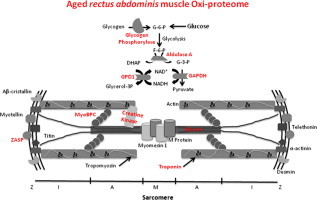
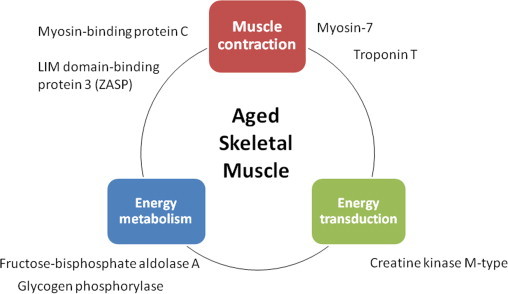
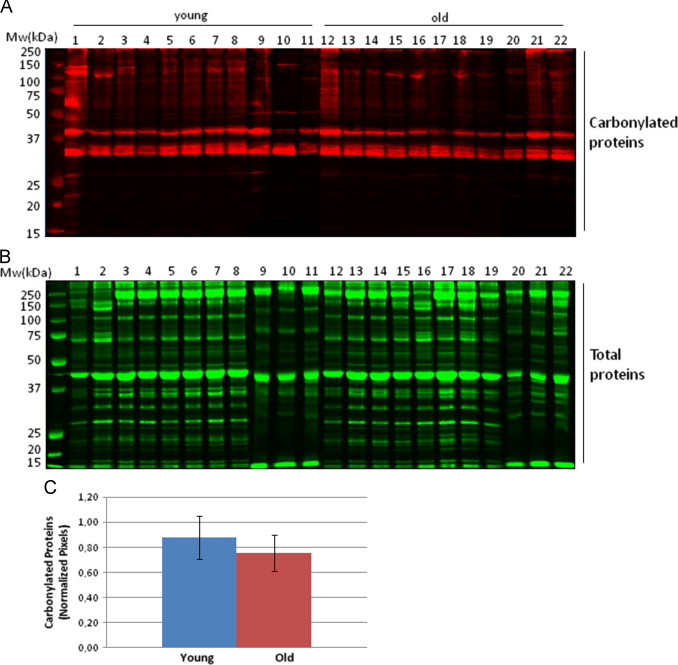
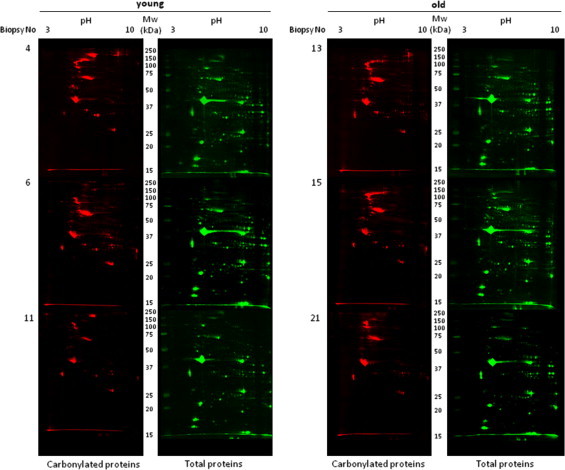
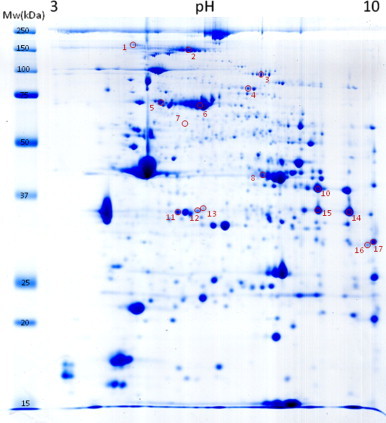
Sarcopenia corresponds to the degenerative loss of skeletal muscle mass, quality, and strength associated with ageing and leads to a progressive impairment of mobility and quality of life. However, the cellular and molecular mechanisms involved in this process are not completely understood. A hallmark of cellular and tissular ageing is the accumulation of oxidatively modified (carbonylated) proteins, leading to a decreased quality of the cellular proteome that could directly impact on normal cellular functions. Although increased oxidative stress has been reported during skeletal muscle ageing, the oxidized protein targets, also referred as to the 'oxi-proteome' or 'carbonylome', have not been characterized yet. To better understand the mechanisms by which these damaged proteins build up and potentially affect muscle function, proteins targeted by these modifications have been identified in human rectus abdominis muscle obtained from young and old healthy donors using a bi-dimensional gel electrophoresis-based proteomic approach coupled with immunodetection of carbonylated proteins. Among evidenced protein spots, 17 were found as increased carbonylated in biopsies from old donors comparing to young counterparts. These proteins are involved in key cellular functions such as cellular morphology and transport, muscle contraction and energy metabolism. Importantly, impairment of these pathways has been described in skeletal muscle during ageing. Functional decline of these proteins due to irreversible oxidation may therefore impact directly on the above-mentioned pathways, hence contributing to the generation of the sarcopenic phenotype.
肌肉减少症是指与衰老相关的骨骼肌质量、质量和力量的退行性丧失,并导致行动能力和生活质量的逐渐受损。然而,这一过程中涉及的细胞和分子机制尚未完全了解。细胞和组织衰老的一个标志是氧化修饰(羰基化)蛋白质的积累,导致细胞蛋白质组质量下降,这可能直接影响正常细胞功能。尽管在骨骼肌衰老过程中已报道氧化应激增加,但氧化蛋白质靶点,也称为“氧化蛋白质组”或“羰基蛋白质组”,尚未得到表征。为了更好地理解这些受损蛋白质积累并可能影响肌肉功能的机制,使用基于二维凝胶电泳的蛋白质组学方法结合羰基化蛋白质的免疫检测,在从年轻和年老健康供体获得的人腹直肌中鉴定了这些修饰靶向的蛋白质。在已证实的蛋白质斑点中,与年轻供体相比,在老年供体的活检中发现17种蛋白质的羰基化增加。这些蛋白质参与关键的细胞功能,如细胞形态和运输、肌肉收缩和能量代谢。重要的是,在衰老过程中,骨骼肌中已描述了这些途径的损伤。因此,这些蛋白质由于不可逆氧化而导致的功能下降可能直接影响上述途径,从而导致肌肉减少症表型的产生。