Goncharova K, Skibo G, Kovalenko T, Osadchenko I, Ushakova G, Vovchanskii M, Pierzynowski S G
1] Department of Biology, Lund University, Lund, Sweden [2] Department of Cytology, Bogomoletz Institute of Physiology, Kiev, Ukraine.
1] Department of Cytology, Bogomoletz Institute of Physiology, Kiev, Ukraine [2] Key State Laboratory, Bogomoletz Institute of Physiology, Kiev, Ukraine.
Nutr Diabetes. 2015 Jun 15;5(6):e163. doi: 10.1038/nutd.2015.13.
BACKGROUND/OBJECTIVES: Aging is associated with many physiological alterations such as changes in metabolism, food intake and brain dysfunction. Possible ways to correct age-related brain dysfunction using dietary treatments still remains undeveloped. The aim of our research was to investigate whether long-term dietary treatment with 2-oxoglutarate (2-OX), which is involved in many regulatory pathways, together with pancreatic-like enzymes of microbial origin (PLEM), which ensure appropriate digestion and absorption of nutrients, affects age-related changes in the brain morphology and cognitive function in old Mongolian gerbils.
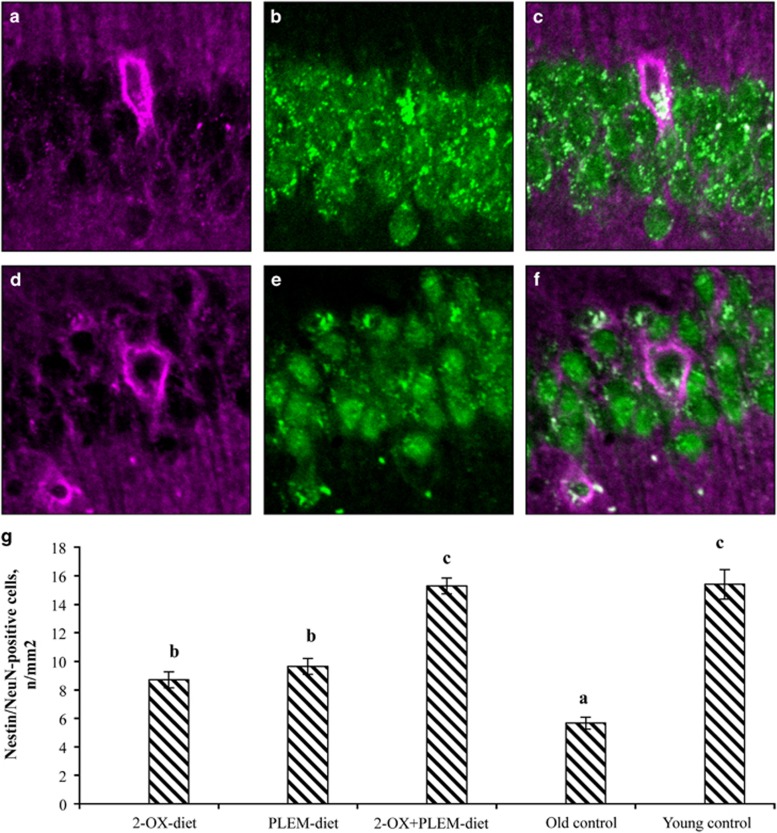
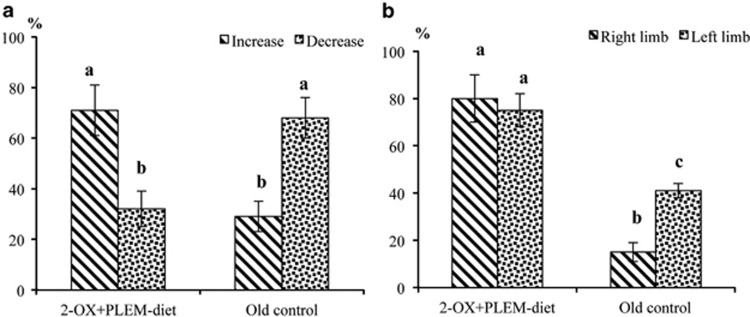
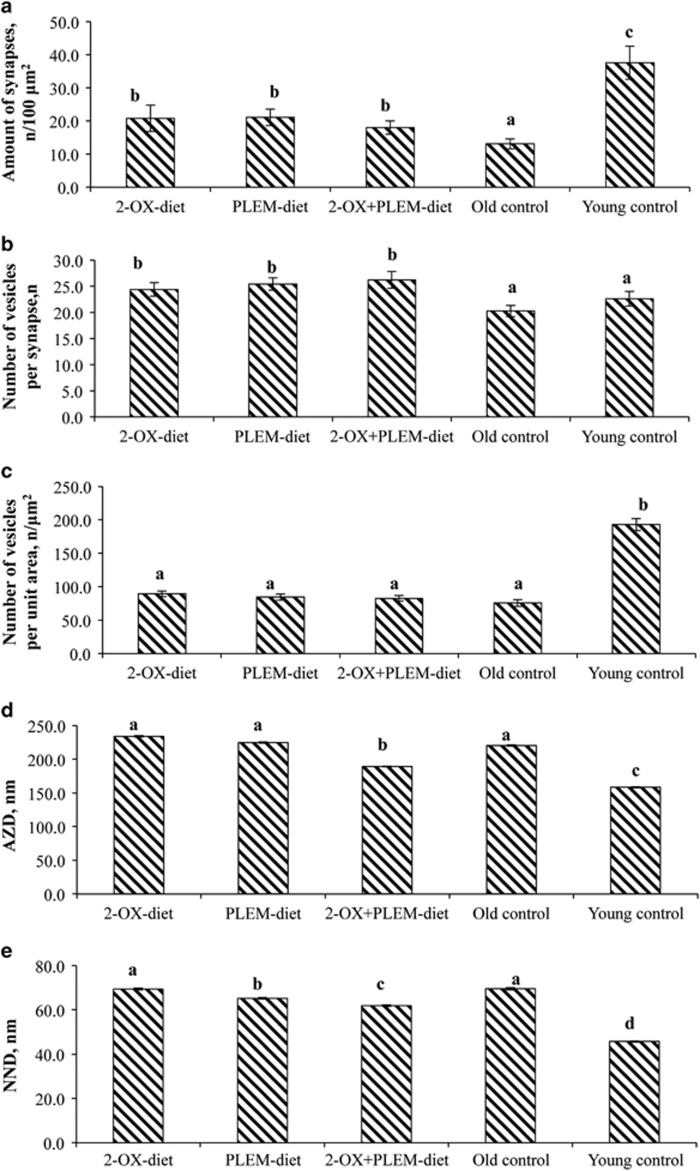
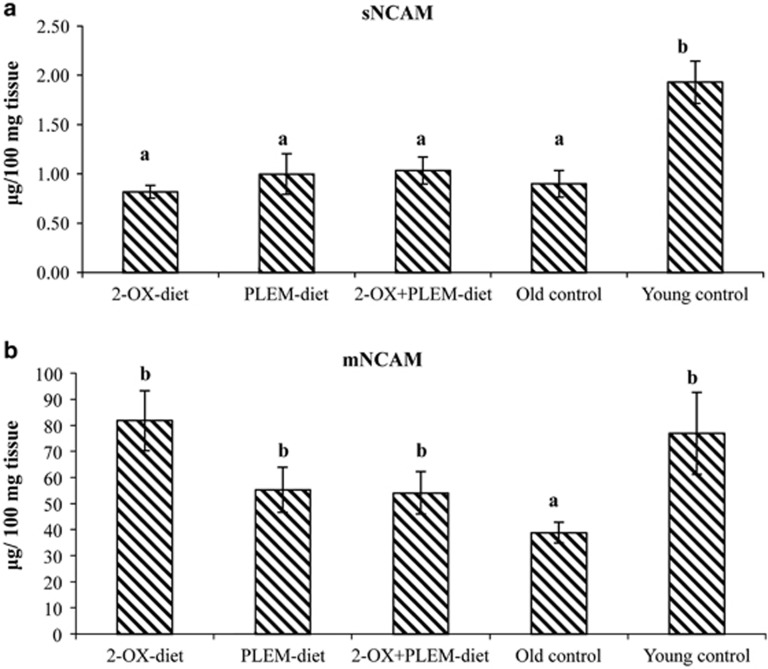
MATERIALS/METHODS: Experiment was comprised of two separate studies. Samples of the hippocampus were obtained from male Mongolian gerbils of different ages (n=63 in the first study, n=74 in the second study). Immunohistochemistry was used for visualization of the nestin/NeuN-positive neuronal progenitors. Changes in amount of neural cell adhesion molecules (NCAMs) were estimated using enzyme-linked immunosorbent assay. For assessment of cognitive and sensorimotor functions, the T-maze spontaneous alternation test and the adhesive removal test (ART) were used. The ultrastructure of the CA1 hippocampal area was visualized using transmission electron microscopy.
Long-term treatment with 2-OX+PLEM led to a significantly increased amount of nestin/NeuN-positive cells in the CA1 hippocampal area and positive changes in learning and sensorimotor functions. As for synaptic transmission, changes in the spatial distribution of synaptic vesicles, as well as the redistribution of NCAM forms, were observed in the hippocampal synapses of the old gerbils.
Taken together, our data show that dietary supplementation with 2-OX+PLEM not only enhances the proliferation and differentiation of neuronal progenitors, but also improves age-related deficits in the morphological and functional state of the brain of old gerbils. Thus, suggesting that a 2-OX+PLEM-enriched diet could also improve brain functions that have deteriorated with age.
背景/目的:衰老与许多生理变化相关,如新陈代谢、食物摄入和脑功能障碍的改变。利用饮食疗法纠正与年龄相关的脑功能障碍的可能方法仍未得到开发。我们研究的目的是调查长期使用参与多种调节途径的2-氧代戊二酸(2-OX)以及确保营养物质适当消化和吸收的微生物源类胰酶(PLEM)进行饮食治疗,是否会影响老年蒙古沙鼠大脑形态和认知功能的年龄相关变化。
材料/方法:实验由两项独立研究组成。从不同年龄的雄性蒙古沙鼠获取海马样本(第一项研究中n = 63,第二项研究中n = 74)。免疫组织化学用于可视化巢蛋白/神经元核抗原(NeuN)阳性神经元祖细胞。使用酶联免疫吸附测定法估计神经细胞粘附分子(NCAM)数量的变化。为了评估认知和感觉运动功能,使用了T迷宫自发交替试验和粘附去除试验(ART)。使用透射电子显微镜观察海马CA1区的超微结构。
2-OX + PLEM的长期治疗导致海马CA1区巢蛋白/NeuN阳性细胞数量显著增加,学习和感觉运动功能出现积极变化。至于突触传递,在老年沙鼠的海马突触中观察到突触小泡空间分布的变化以及NCAM形式的重新分布。
综上所述,我们的数据表明,补充2-OX + PLEM的饮食不仅能增强神经元祖细胞的增殖和分化,还能改善老年沙鼠大脑形态和功能状态的年龄相关缺陷。因此,表明富含2-OX + PLEM的饮食也可以改善随年龄而恶化的脑功能。