Chous A Paul, Richer Stuart P, Gerson Jeffry D, Kowluru Renu A
Private Practice, Tacoma, Washington, USA.
Captain James A Lovell Federal Heath Care Center, North Chicago, Illinois, USA.
Br J Ophthalmol. 2016 Feb;100(2):227-34. doi: 10.1136/bjophthalmol-2014-306534. Epub 2015 Jun 18.
Diabetes is known to affect visual function before onset of retinopathy (diabetic retinopathy (DR)). Protection of visual function may signal disruption of mechanisms underlying DR.
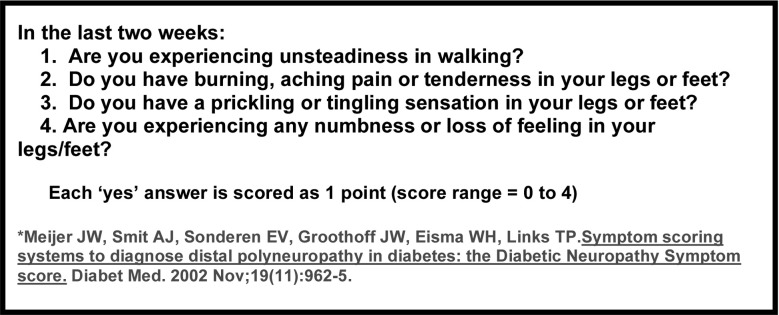
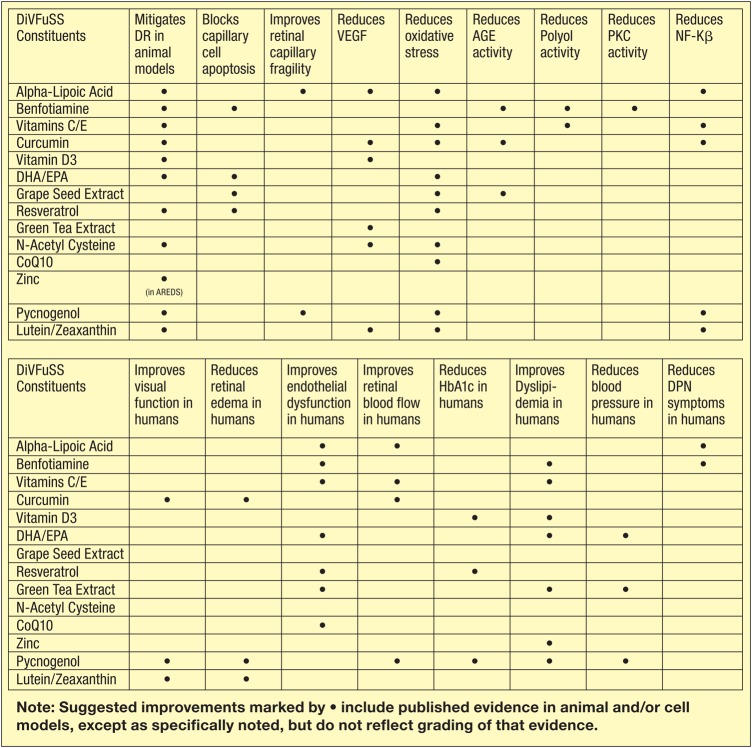
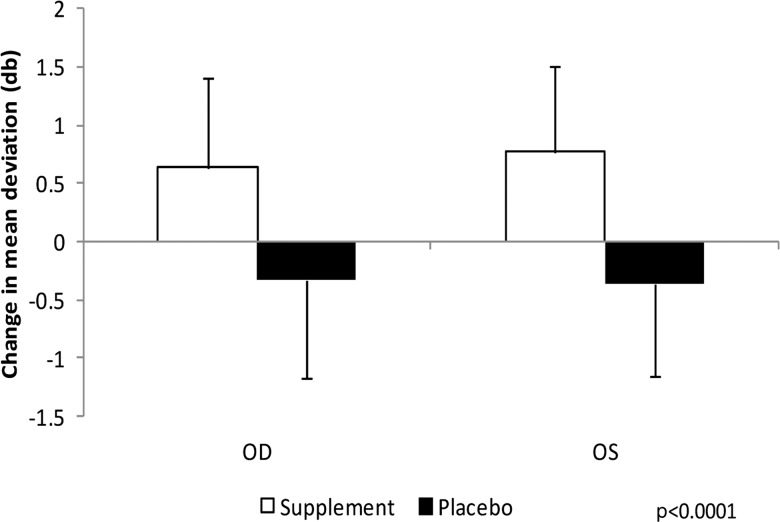
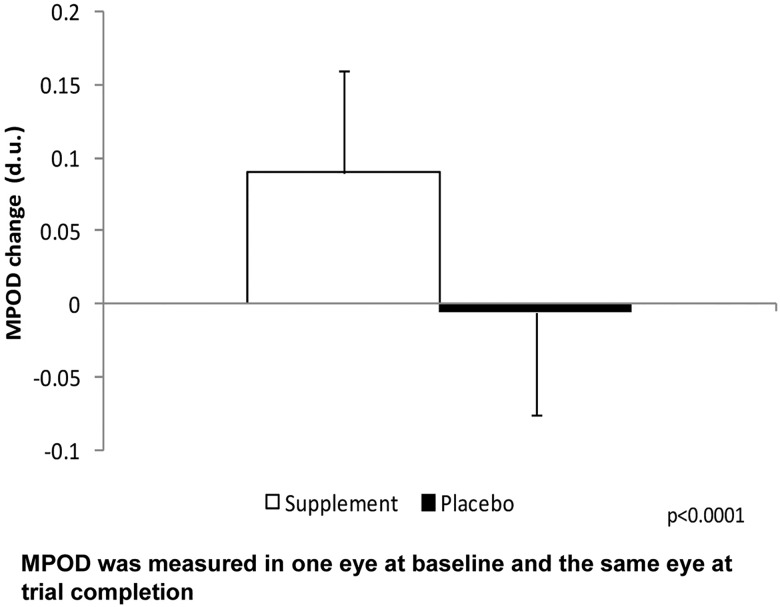
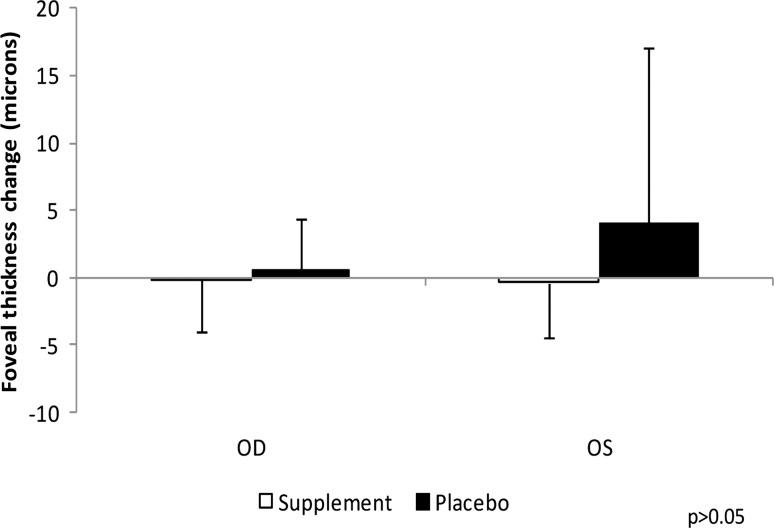
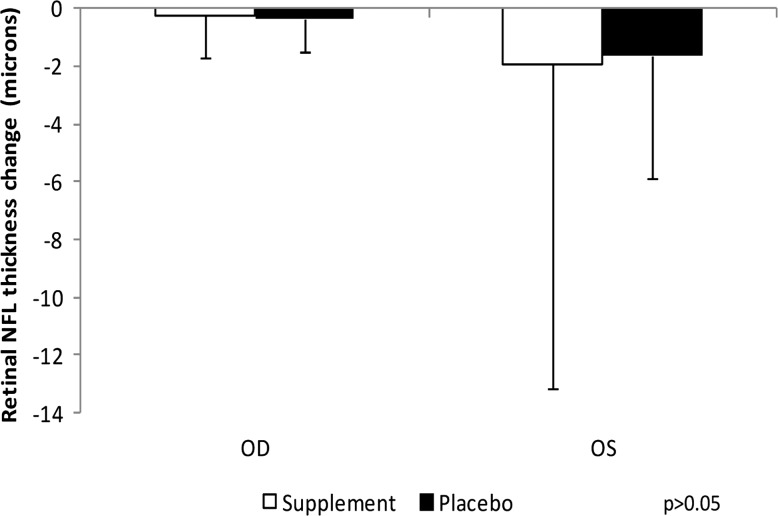
This was a 6-month randomised, controlled clinical trial of patients with type 1 and type 2 diabetes with no retinopathy or mild to moderate non-proliferative retinopathy assigned to twice daily consumption of placebo or a novel, multi-component formula containing xanthophyll pigments, antioxidants and selected botanical extracts. Measurement of contrast sensitivity, macular pigment optical density, colour discrimination, 5-2 macular threshold perimetry, Diabetic Peripheral Neuropathy Symptoms, foveal and retinal nerve fibre layer thickness, glycohaemoglobin (HbA1c), serum lipids, 25-OH-vitamin D, tumour necrosis factor α (TNF-a) and high-sensitivity C reactive protein (hsCRP) were taken at baseline and 6 months. Outcomes were assessed by differences between and within groups at baseline and at study conclusion using meand ± SDs and t tests (p<0.05) for continuous variables.
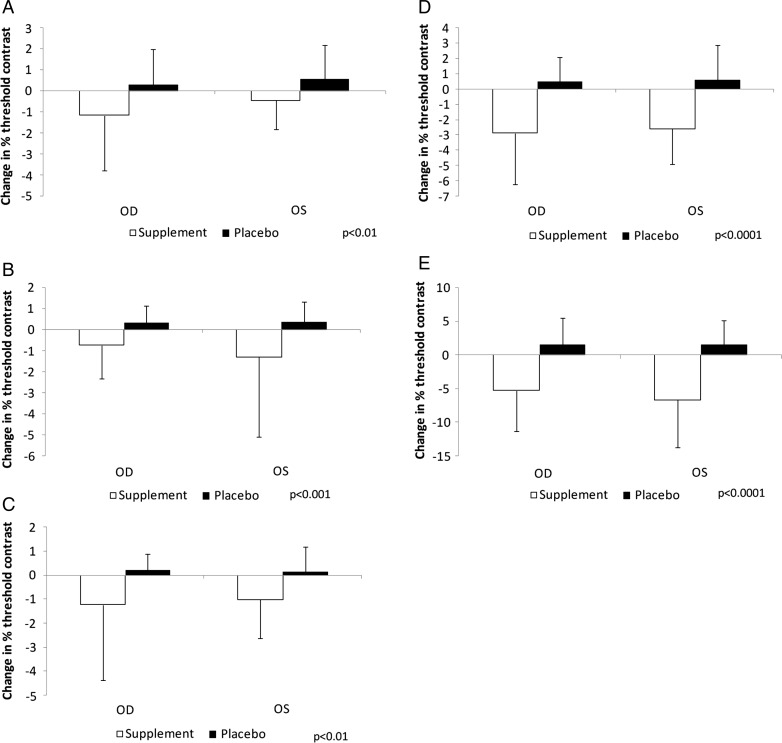
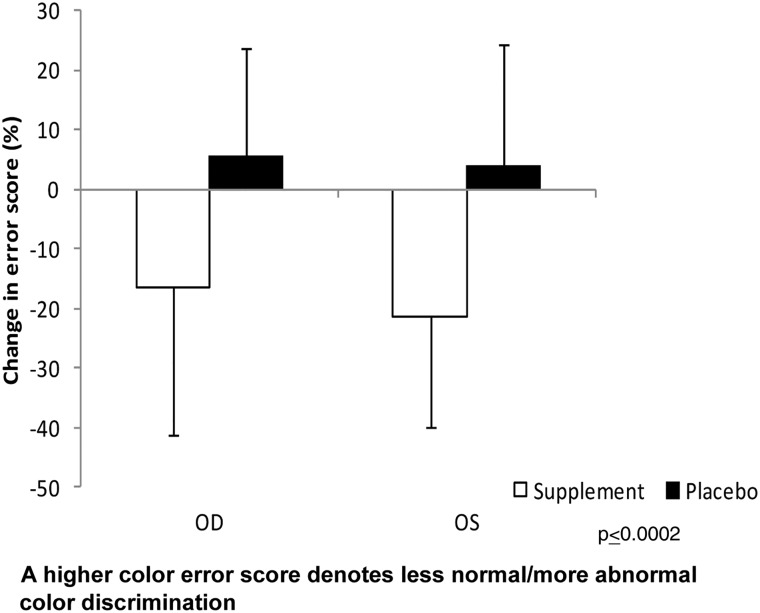
There were no significant intergroup differences at baseline. At 6 months, subjects on active supplement compared with placebo had significantly better visual function on all measures (p values ranging from 0.008 to <0.0001), significant improvements in most serum lipids (p values ranging from 0.01 to 0.0004), hsCRP (p=0.01) and diabetic peripheral neuropathy (Fisher's exact test, p=0.0024) No significant changes in retinal thickness, HbA1c, total cholesterol or TNF-α were found between the groups.
This study provides strong evidence of clinically meaningful improvements in visual function, hsCRP and peripheral neuropathy in patients with diabetes, both with and without retinopathy, and without affecting glycaemic control.
www.ClinicalTrials.gov Identifier: NCT01646047.
已知糖尿病在视网膜病变(糖尿病性视网膜病变,DR)发作之前就会影响视觉功能。视觉功能的保护可能预示着DR潜在机制的破坏。
这是一项为期6个月的随机对照临床试验,纳入1型和2型糖尿病患者,这些患者无视网膜病变或轻度至中度非增殖性视网膜病变,被分配为每日两次服用安慰剂或一种新型多成分配方产品,该配方含有叶黄素色素、抗氧化剂和精选植物提取物。在基线和6个月时测量对比敏感度、黄斑色素光密度、颜色辨别、5-2黄斑阈值视野检查、糖尿病周围神经病变症状、中央凹和视网膜神经纤维层厚度、糖化血红蛋白(HbA1c)、血脂、25-羟基维生素D、肿瘤坏死因子α(TNF-α)和高敏C反应蛋白(hsCRP)。使用均值±标准差和t检验(p<0.05)对连续变量在基线和研究结束时的组间和组内差异进行评估。
基线时组间无显著差异。在6个月时,与安慰剂组相比,服用活性补充剂的受试者在所有测量指标上的视觉功能均显著更好(p值范围为0.008至<0.0001),大多数血脂指标(p值范围为0.01至0.0004)、hsCRP(p=0.01)和糖尿病周围神经病变均有显著改善(Fisher精确检验,p=0.0024)。两组之间视网膜厚度、HbA1c、总胆固醇或TNF-α无显著变化。
本研究提供了有力证据,表明糖尿病患者无论有无视网膜病变,其视觉功能、hsCRP和周围神经病变均有具有临床意义的改善,且未影响血糖控制。