Liu Qing, Li Jianping, Hartstone-Rose Adam, Wang Jing, Li Jiqiang, Janicki Joseph S, Fan Daping
Department of Cell Biology and Anatomy, University of South Carolina School of Medicine, 6439 Garners Ferry Road, Columbia, SC 29208, USA ; Guangdong Provincial Hospital of Chinese Medicine, The Second Clinical School of Medicine, Guangzhou University of Chinese Medicine, Guangzhou 510405, China.
Department of Cell Biology and Anatomy, University of South Carolina School of Medicine, 6439 Garners Ferry Road, Columbia, SC 29208, USA.
Evid Based Complement Alternat Med. 2015;2015:752610. doi: 10.1155/2015/752610. Epub 2015 May 18.
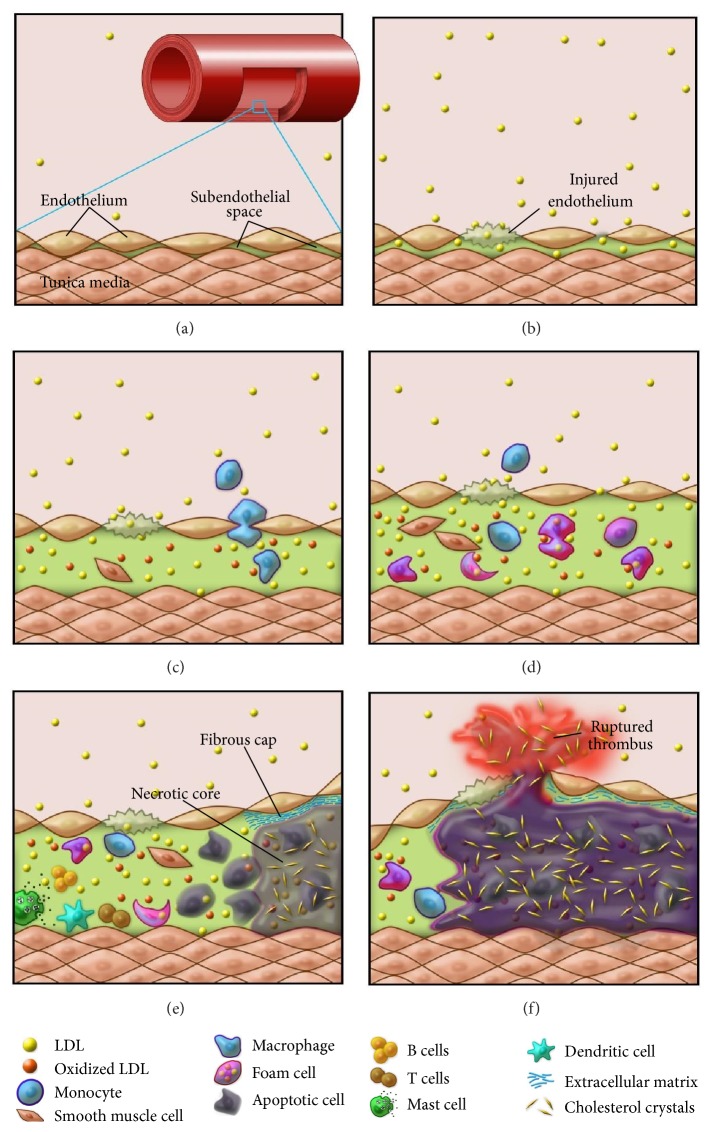
Atherosclerosis is a leading cause of disability and death worldwide. Research into the disease has led to many compelling hypotheses regarding the pathophysiology of atherosclerotic lesion formation and the resulting complications such as myocardial infarction and stroke. Herbal medicine has been widely used in China as well as other Asian countries for the treatment of cardiovascular diseases for hundreds of years; however, the mechanisms of action of Chinese herbal medicine in the prevention and treatment of atherosclerosis have not been well studied. In this review, we briefly describe the mechanisms of atherogenesis and then summarize the research that has been performed in recent years regarding the effectiveness and mechanisms of antiatherogenic Chinese herbal compounds in an attempt to build a bridge between traditional Chinese medicine and cellular and molecular cardiovascular medicine.
动脉粥样硬化是全球致残和致死的主要原因。对该疾病的研究催生了许多关于动脉粥样硬化病变形成的病理生理学以及诸如心肌梗死和中风等并发症的令人信服的假说。数百年来,草药在中国以及其他亚洲国家被广泛用于治疗心血管疾病;然而,中草药在预防和治疗动脉粥样硬化方面的作用机制尚未得到充分研究。在本综述中,我们简要描述动脉粥样硬化的发病机制,然后总结近年来关于抗动脉粥样硬化中草药化合物的有效性和作用机制的研究,以期在传统中医与细胞和分子心血管医学之间架起一座桥梁。