McCurry Matthew R, Mahony Michael, Clausen Phillip D, Quayle Michelle R, Walmsley Christopher W, Jessop Tim S, Wroe Stephen, Richards Heather, McHenry Colin R
Department of Anatomy and Developmental Biology, Monash University, Melbourne, Australia; School of Environmental and Life Science, University of Newcastle, Newcastle, Australia; Geosciences, Museum Victoria, Melbourne, Australia.
School of Environmental and Life Science, University of Newcastle, Newcastle, Australia.
PLoS One. 2015 Jun 24;10(6):e0130625. doi: 10.1371/journal.pone.0130625. eCollection 2015.
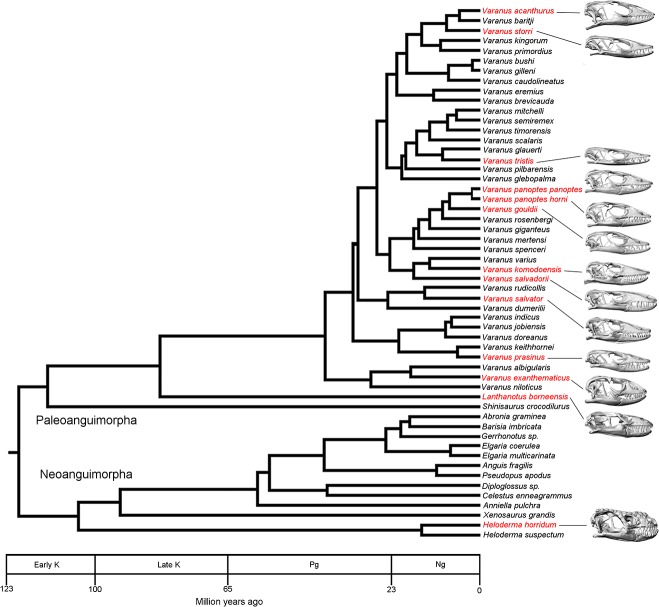
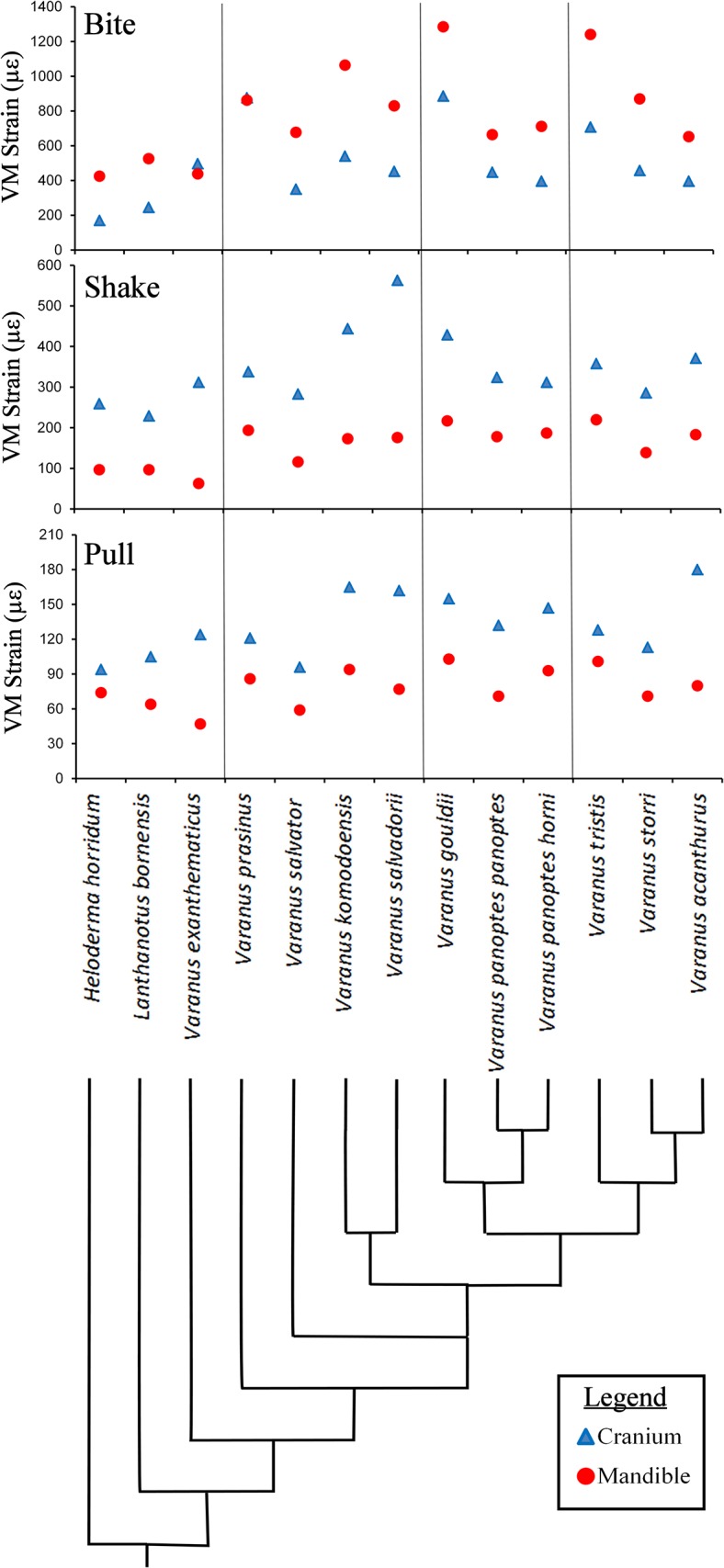
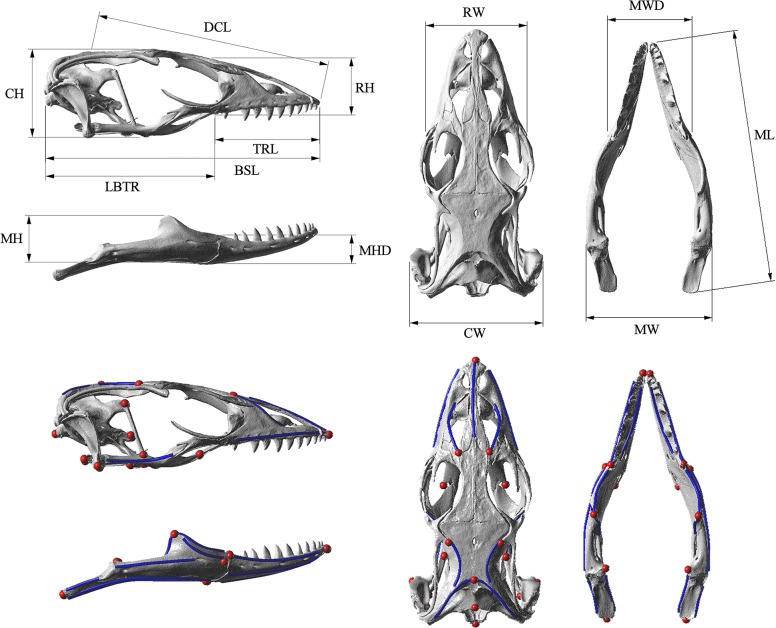
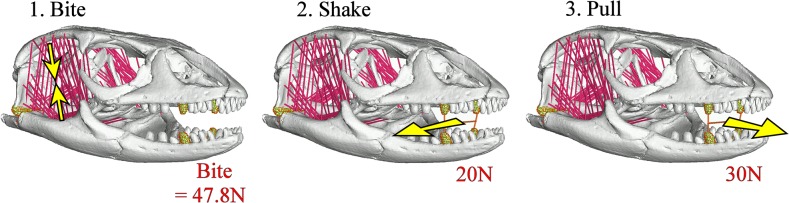
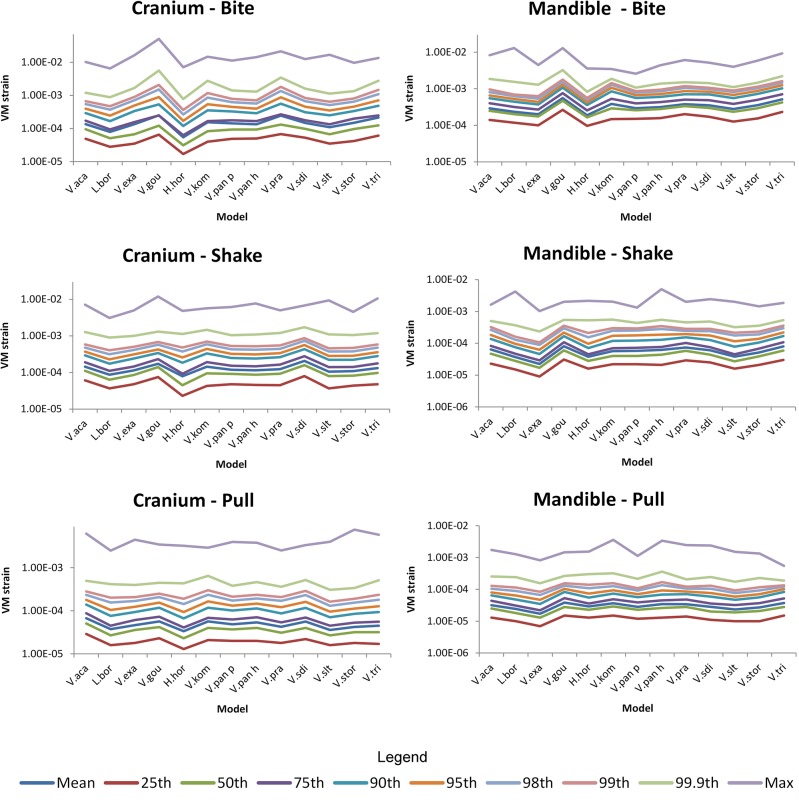
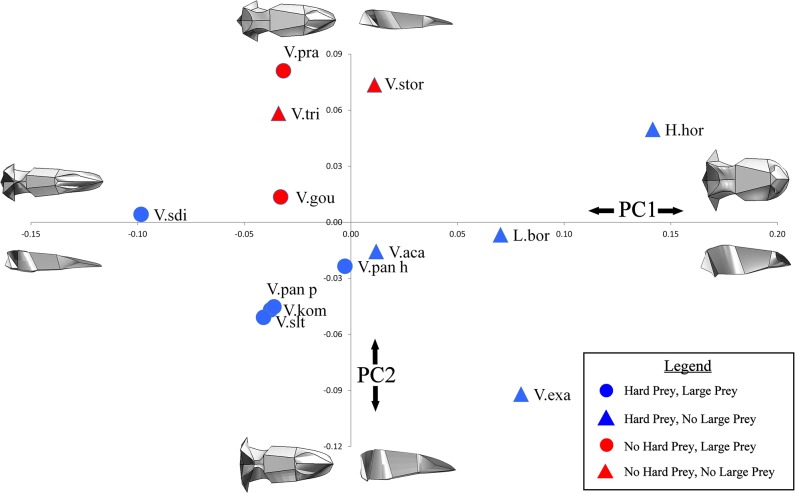
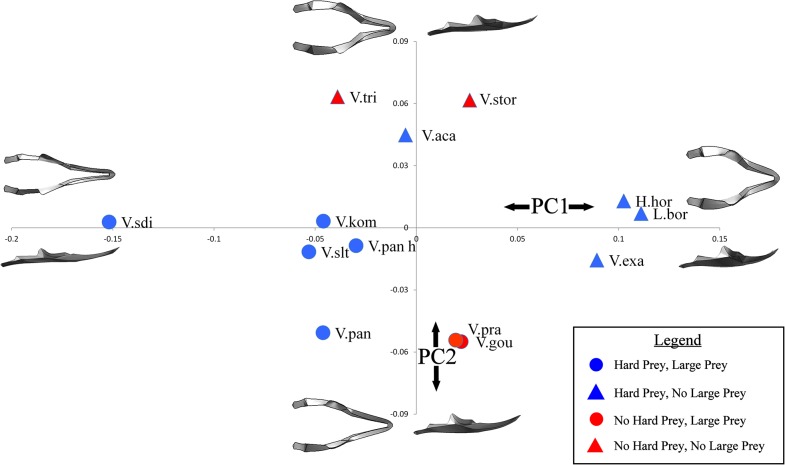
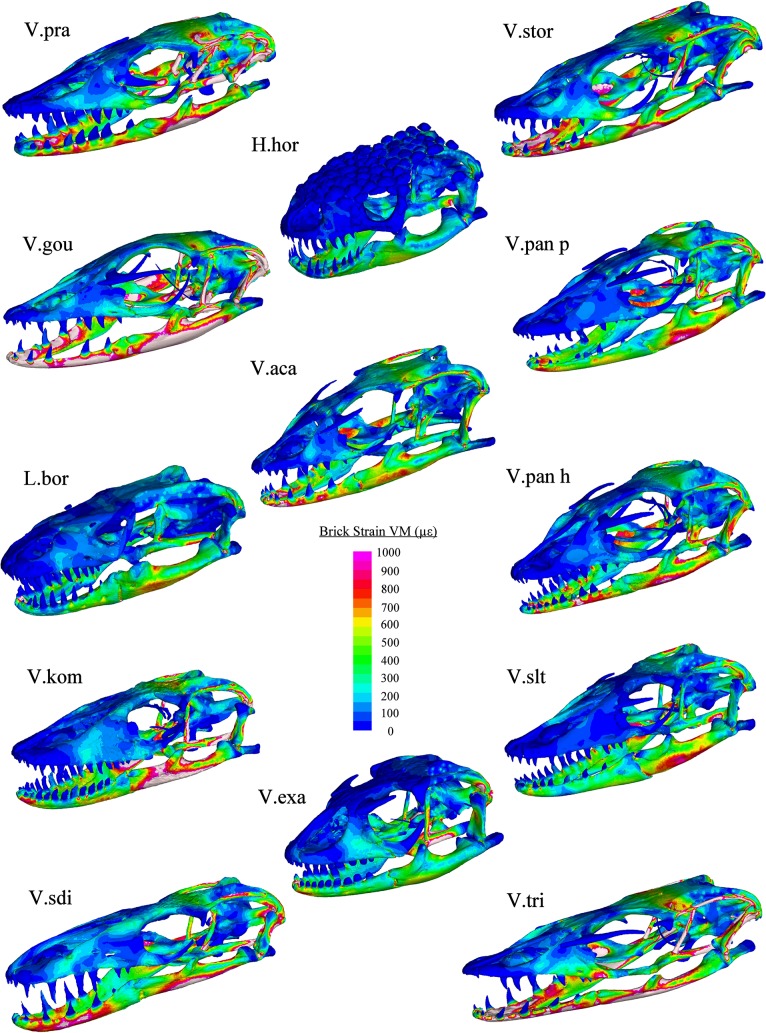
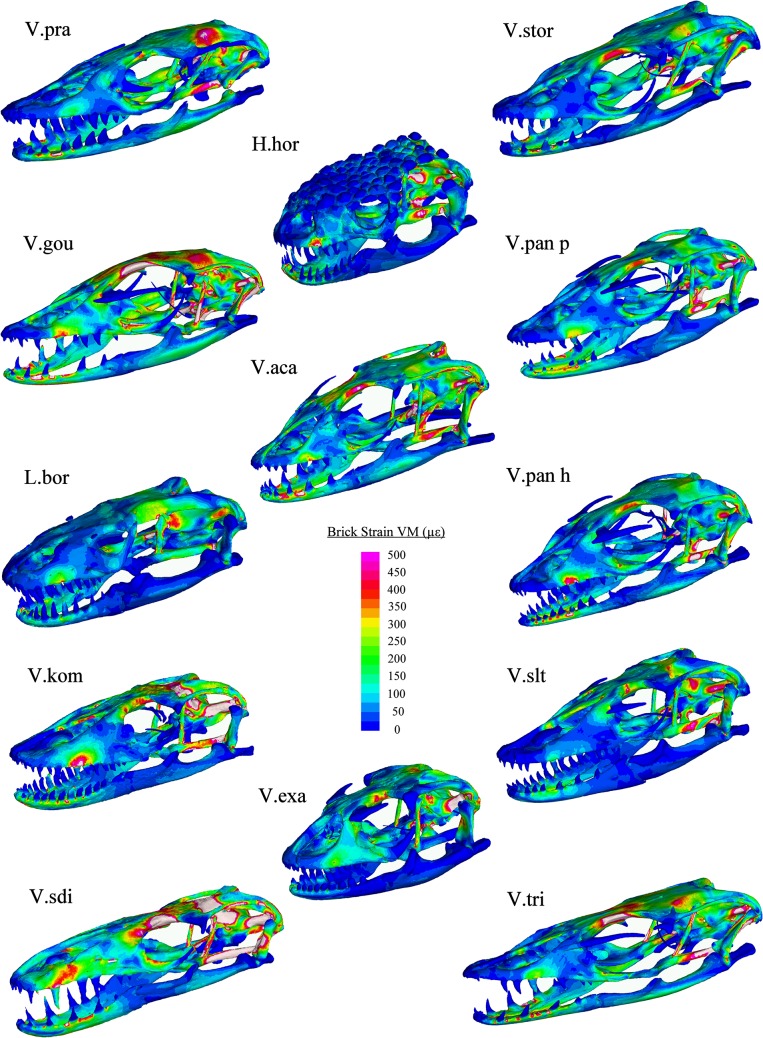
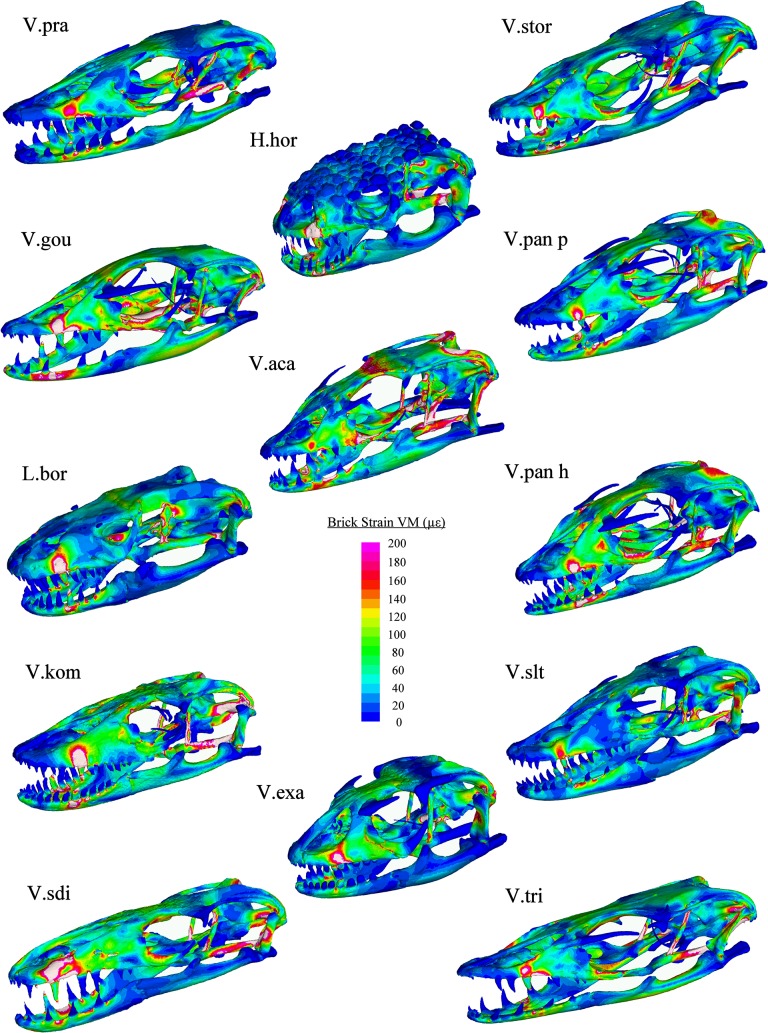
Skull structure is intimately associated with feeding ability in vertebrates, both in terms of specific performance measures and general ecological characteristics. This study quantitatively assessed variation in the shape of the cranium and mandible in varanoid lizards, and its relationship to structural performance (von Mises strain) and interspecific differences in feeding ecology. Geometric morphometric and linear morphometric analyses were used to evaluate morphological differences, and finite element analysis was used to quantify variation in structural performance (strain during simulated biting, shaking and pulling). This data was then integrated with ecological classes compiled from relevant scientific literature on each species in order to establish structure-function relationships. Finite element modelling results showed that variation in cranial morphology resulted in large differences in the magnitudes and locations of strain in biting, shaking and pulling load cases. Gracile species such as Varanus salvadorii displayed high strain levels during shaking, especially in the areas between the orbits. All models exhibit less strain during pull back loading compared to shake loading, even though a larger force was applied (pull =30N, shake = 20N). Relationships were identified between the morphology, performance, and ecology. Species that did not feed on hard prey clustered in the gracile region of cranial morphospace and exhibited significantly higher levels of strain during biting (P = 0.0106). Species that fed on large prey clustered in the elongate area of mandible morphospace. This relationship differs from those that have been identified in other taxonomic groups such as crocodiles and mammals. This difference may be due to a combination of the open 'space-frame' structure of the varanoid lizard skull, and the 'pull back' behaviour that some species use for processing large prey.
颅骨结构与脊椎动物的进食能力密切相关,无论是在特定的性能指标还是一般的生态特征方面。本研究定量评估了巨蜥科蜥蜴颅骨和下颌骨形状的变异,及其与结构性能(冯·米塞斯应变)和进食生态学种间差异的关系。采用几何形态测量和线性形态测量分析来评估形态差异,并用有限元分析来量化结构性能的变异(模拟咬、摇和拉时的应变)。然后将这些数据与根据各物种相关科学文献汇编的生态类别相结合,以建立结构-功能关系。有限元建模结果表明,颅骨形态的变异导致在咬、摇和拉载荷情况下应变的大小和位置存在很大差异。像 Salvadori 巨蜥这样的纤弱物种在摇晃时表现出高应变水平,尤其是在眼眶之间的区域。与摇晃加载相比,所有模型在回拉加载时的应变都较小,尽管施加了更大的力(拉 = 30N,摇 = 20N)。确定了形态、性能和生态学之间的关系。不以硬猎物为食的物种聚集在颅骨形态空间的纤弱区域,并且在咬时表现出显著更高的应变水平(P = 0.0106)。以大型猎物为食的物种聚集在下颌骨形态空间的细长区域。这种关系与在其他分类群如鳄鱼和哺乳动物中所确定的关系不同。这种差异可能是由于巨蜥科蜥蜴颅骨开放的“空间框架”结构以及一些物种用于处理大型猎物的“回拉”行为共同作用的结果。