Eder Stefan, Lamkowski Andreas, Priller Markus, Port Matthias, Steinestel Konrad
Bundeswehr Institute of Radiobiology, 80937 Munich, Germany.
Gerhard-Domagk-Institute of Pathology, University Hospital Muenster, 48149 Muenster, Germany.
Oncotarget. 2015 Jul 10;6(19):17178-91. doi: 10.18632/oncotarget.3935.
Heterogeneous nuclear ribonucleoprotein K (hnRNP K) is an important cofactor in the p53-mediated DNA damage response pathway upon ionizing radiation (IR) and exerts anti-apoptotic effects also independent of p53 pathway activation. Furthermore, hnRNP K is overexpressed in various neoplasms including malignant melanoma (MM). Here, we investigate the role of hnRNP K in the radioresistance of MM cells.
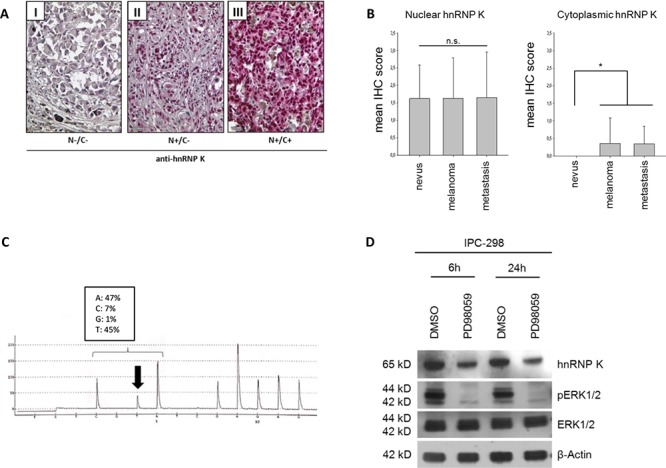
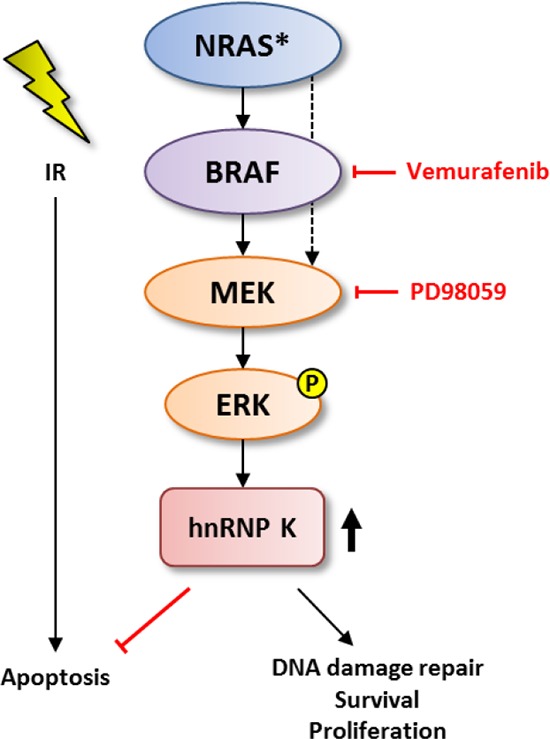
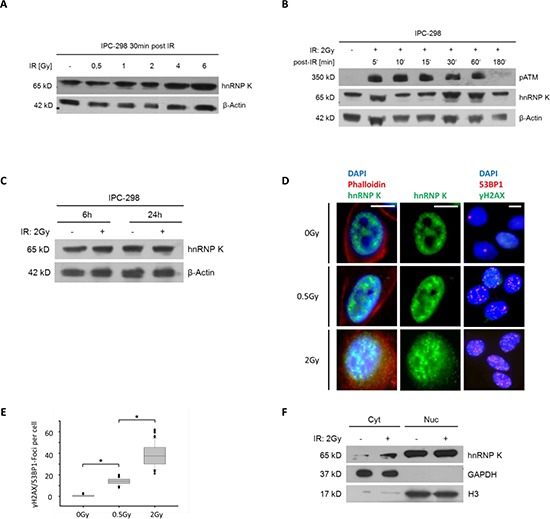
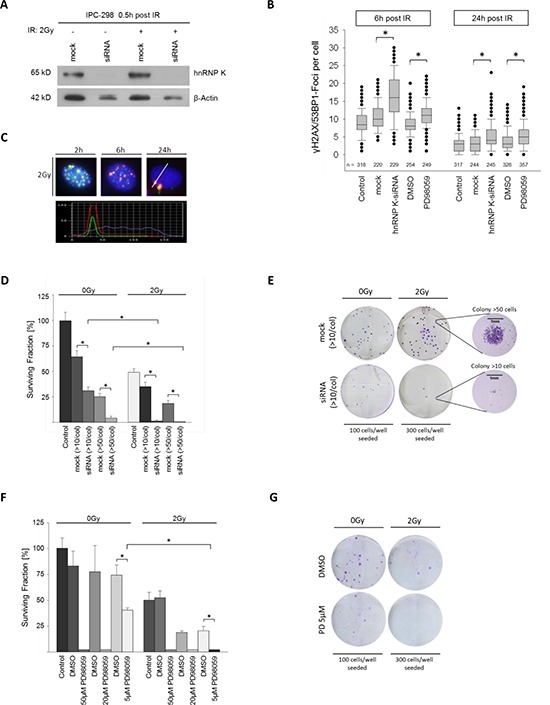
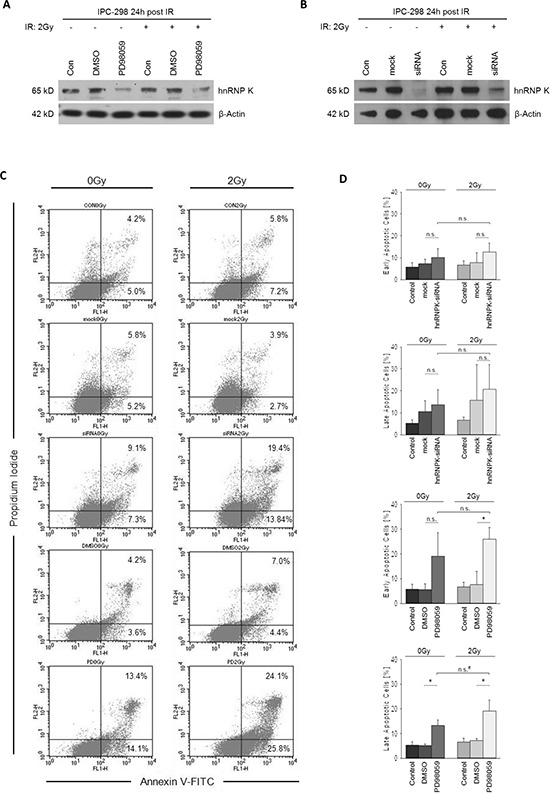
Our results show cytoplasmic expression of hnRNP K in human MM surgical specimens, but not in benign nevi, and a quick dose- and time-dependent upregulation in response to IR accompanied by cytoplasmic redistribution of the protein in the IPC-298 cellular tumor model carrying an activating NRAS mutation (p.Q61L). SiRNA-based knockdown of hnRNP K induced a delayed decline in γH2AX/53BP1-positive DNA repair foci upon IR. Pharmacological interference with MAPK signaling abrogated ERK phosphorylation, diminished cellular hnRNP K levels, impaired γH2AX/53BP1-foci repair and proliferative capability and increased apoptosis comparable to the observed hnRNP K knockdown phenotype in IPC-298 cells.
Our results indicate that pharmacological interference with MAPK signaling increases vulnerability of NRAS-mutant malignant melanoma cells to ionizing radiation along with downregulation of endogenous hnRNP K and point towards a possible use for combined MEK inhibition and localized radiation therapy of MM in the NRAS-mutant setting where BRAF inhibitors offer no clinical benefit.
异质性核糖核蛋白K(hnRNP K)是电离辐射(IR)后p53介导的DNA损伤反应途径中的重要辅助因子,并且在不依赖p53途径激活的情况下也发挥抗凋亡作用。此外,hnRNP K在包括恶性黑色素瘤(MM)在内的各种肿瘤中过表达。在此,我们研究hnRNP K在MM细胞放射抗性中的作用。
我们的结果显示,hnRNP K在人MM手术标本中呈细胞质表达,但在良性痣中不表达,并且在携带激活型NRAS突变(p.Q61L)的IPC-298细胞肿瘤模型中,对IR的反应呈剂量和时间依赖性快速上调,同时蛋白质发生细胞质重新分布。基于小干扰RNA(siRNA)敲低hnRNP K可导致IR后γH2AX/53BP1阳性DNA修复灶延迟减少。对丝裂原活化蛋白激酶(MAPK)信号通路的药理学干扰消除了细胞外信号调节激酶(ERK)磷酸化,降低了细胞hnRNP K水平,损害了γH2AX/53BP1灶的修复和增殖能力,并增加了细胞凋亡,这与在IPC-298细胞中观察到的hnRNP K敲低表型相当。
我们的结果表明,对MAPK信号通路的药理学干扰增加了NRAS突变型恶性黑色素瘤细胞对电离辐射的敏感性,同时下调了内源性hnRNP K,这表明在NRAS突变背景下,当BRAF抑制剂无临床益处时,联合MEK抑制和MM局部放射治疗可能具有潜在应用价值。