Sheng Hong, Nakamura Keisuke, Kanno Taro, Sasaki Keiichi, Niwano Yoshimi
Division of Advanced Prosthetic Dentistry, Tohoku University Graduate School of Dentistry, Sendai, Miyagi, Japan.
Laboratory for Redox Regulation, Tohoku University Graduate School of Dentistry, Sendai, Miyagi, Japan.
PLoS One. 2015 Jul 6;10(7):e0132445. doi: 10.1371/journal.pone.0132445. eCollection 2015.
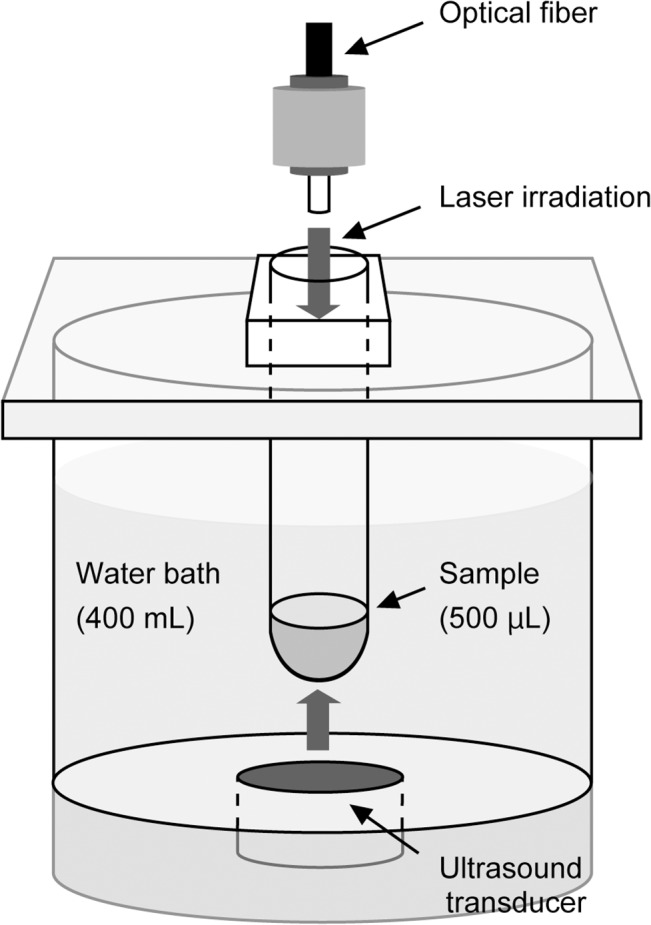
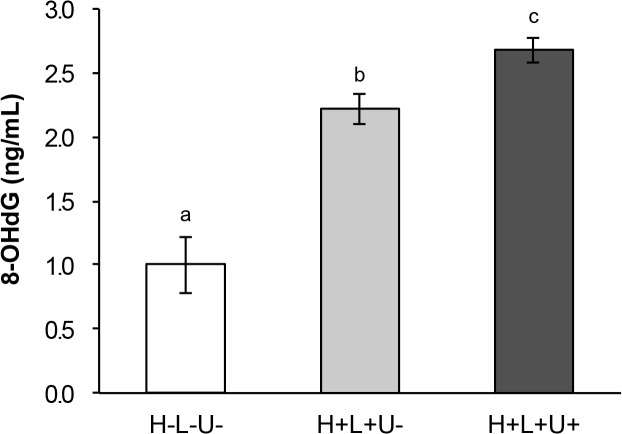
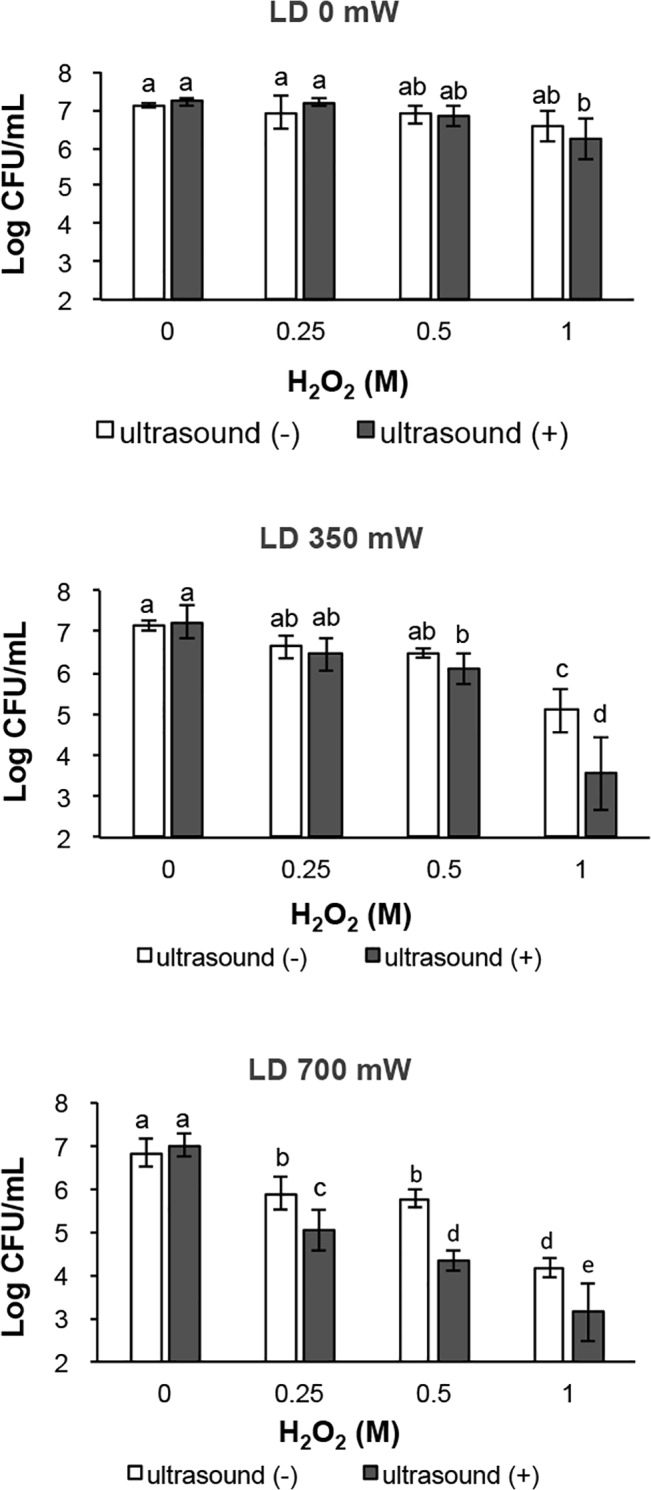
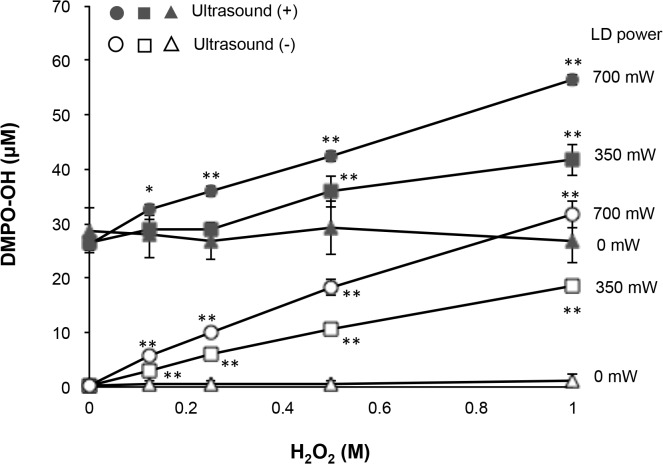
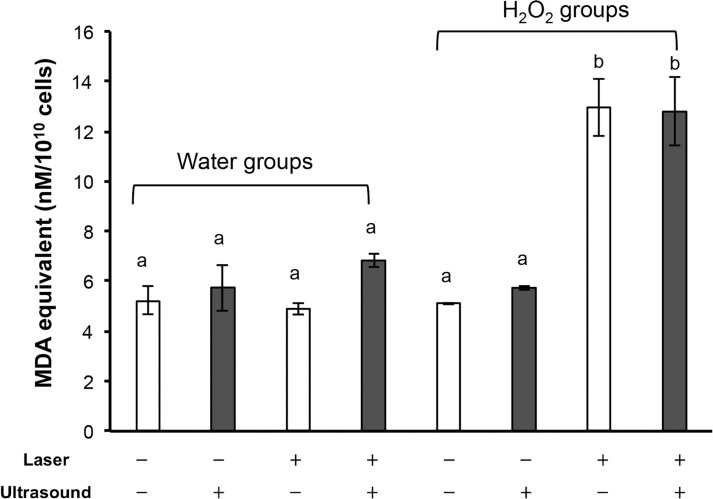
The bactericidal effect of hydroxyl radical (·OH) generated by combination of photolysis of hydrogen peroxide (H2O2) and sonolysis of water was examined under the condition in which the yield of ·OH increased additively when H2O2 aqueous solution was concomitantly irradiated with laser and ultrasound. The suspension of Staphylococcus aureus mixed with the different concentrations of H2O2 was irradiated simultaneously with a laser light (wavelength: 405 nm, irradiance: 46 and 91 mW/cm2) and ultrasound (power: 30 w, frequency: 1.65 MHz) at 20 ± 1°C of the water bulk temperature for 2 min. The combination of laser and ultrasound irradiation significantly reduced the viable bacterial count in comparison with the laser irradiation of H2O2 alone. By contrast, the ultrasound irradiation alone exerted almost no bactericidal effect. These results suggested that the combination effect of photolysis of H2O2 and sonolysis of water on bactericidal activity was synergistic. A multi-way analysis of variance also revealed that the interaction of H2O2 concentration, laser power and ultrasound irradiation significantly affected the bactericidal activity. Since the result of oxidative DNA damage evaluation demonstrated that the combination of laser and ultrasound irradiation significantly induced oxidative damage of bacterial DNA in comparison with the laser irradiation of H2O2 alone, it was suggested that the combination effect of photolysis of H2O2 and sonolysis of water on bactericidal activity would be exerted via oxidative damage of cellular components such as DNA.
在过氧化氢(H₂O₂)水溶液同时受到激光和超声辐照时,羟基自由基(·OH)产率呈累加增加的条件下,研究了过氧化氢光解与水的声解联合产生的·OH的杀菌效果。将不同浓度H₂O₂与金黄色葡萄球菌的混悬液在水体温度20±1°C下,同时用激光(波长:405nm,辐照度:46和91mW/cm²)和超声(功率:30w,频率:1.65MHz)辐照2分钟。与单独对H₂O₂进行激光辐照相比,激光和超声联合辐照显著降低了活菌数。相比之下,单独超声辐照几乎没有杀菌作用。这些结果表明,H₂O₂光解与水的声解对杀菌活性的联合作用是协同的。多因素方差分析还显示,H₂O₂浓度、激光功率和超声辐照之间的相互作用显著影响杀菌活性。由于氧化DNA损伤评估结果表明,与单独对H₂O₂进行激光辐照相比,激光和超声联合辐照显著诱导了细菌DNA的氧化损伤,因此提示H₂O₂光解与水的声解对杀菌活性的联合作用可能是通过对DNA等细胞成分的氧化损伤来实现的。