Cunningham E L, McGuinness B, Herron B, Passmore A P
Centre for Public Health, Queen's University Belfast.
Centre for Public Health, Queen's University Belfast ; Belfast Health and Social Care Trust.
Ulster Med J. 2015 May;84(2):79-87.
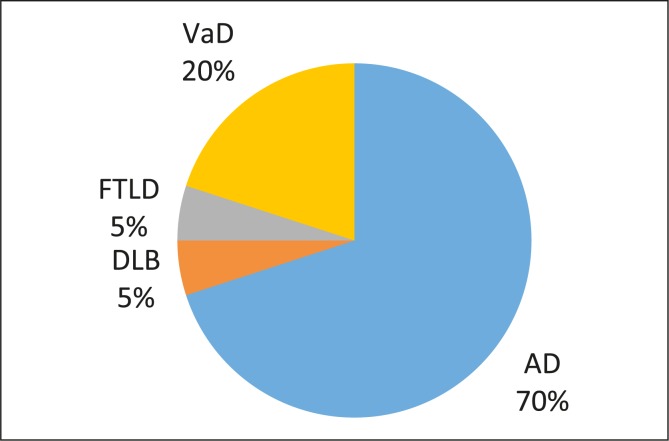
Dementia is a clinical diagnosis requiring new functional dependence on the basis of progressive cognitive decline. It is estimated that 1.3% of the entire UK population, or 7.1% of those aged 65 or over, have dementia. Applying these to 2013 population estimates gives an estimated number of 19,765 people living with dementia in Northern Ireland. The clinical syndrome of dementia can be due to a variety of underlying pathophysiological processes. The most common of these is Alzheimer's disease (50-75%) followed by vascular dementia (20%), dementia with Lewy bodies (5%) and frontotemporal lobar dementia (5%). The clinical symptoms and pathophysiological processes of these diseases overlap significantly. Biomarkers to aid diagnosis and prognosis are emerging. Acetylcholinesterase inhibitors and memantine are the only medications currently licensed for the treatment of dementia. The nature of symptoms mean people with dementia are more dependent and vulnerable, both socially and in terms of physical and mental health, presenting evolving challenges to society and to our healthcare systems.
痴呆症是一种临床诊断,需要基于进行性认知衰退出现新的功能依赖。据估计,英国总人口的1.3%,即65岁及以上人群的7.1%患有痴呆症。将这些比例应用于2013年的人口估计数,得出北爱尔兰约有19,765名痴呆症患者。痴呆症的临床综合征可能由多种潜在的病理生理过程引起。其中最常见的是阿尔茨海默病(50 - 75%),其次是血管性痴呆(20%)、路易体痴呆(5%)和额颞叶痴呆(5%)。这些疾病的临床症状和病理生理过程有很大重叠。有助于诊断和预后的生物标志物正在出现。乙酰胆碱酯酶抑制剂和美金刚是目前仅有的被批准用于治疗痴呆症的药物。症状的性质意味着痴呆症患者在社会以及身心健康方面更加依赖他人且易受伤害,这给社会和我们的医疗系统带来了不断演变的挑战。