
人类免疫缺陷病毒感染者中的鸟分枝杆菌复合体骨髓炎:病例系列及文献复习。
Mycobacterium avium Complex Osteomyelitis in Persons With Human Immunodeficiency Virus: Case Series and Literature Review.
机构信息
Division of Allergy and Infectious Diseases , University of Washington , Seattle.
Division of Health Sciences , Idaho State University , Pocatello.
出版信息
Open Forum Infect Dis. 2015 Jun 15;2(3):ofv090. doi: 10.1093/ofid/ofv090. eCollection 2015 Sep.
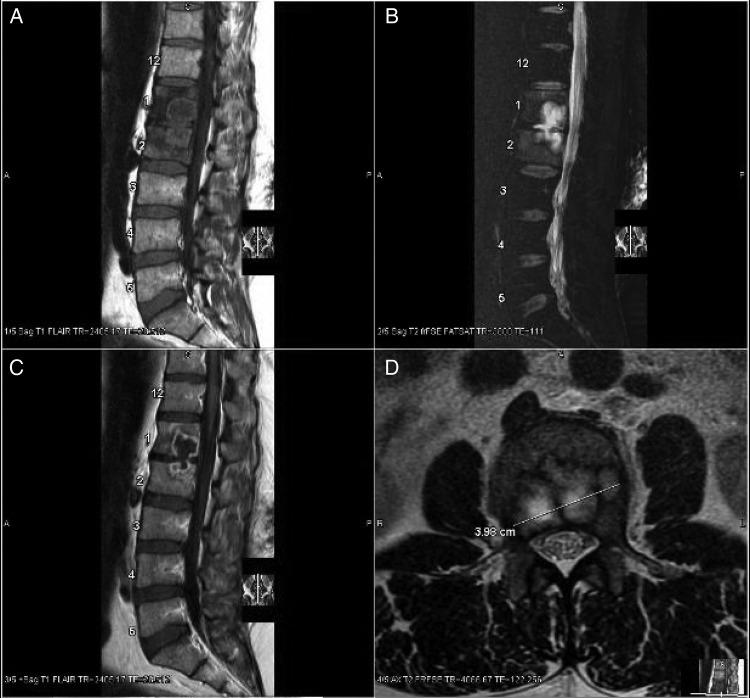
In persons with advanced immunosuppression, Mycobacterium avium complex (MAC) typically causes disseminated disease with systemic symptoms. We report 2 cases in which MAC caused localized osteomyelitis in human immunodeficiency virus (HIV)-infected individuals on antiretroviral therapy with rising CD4 counts. We summarize 17 additional cases of HIV-associated MAC osteomyelitis from the literature and compare CD4 count at presentation for vertebral cases versus nonvertebral cases, which reveals a significantly higher CD4 at presentation for vertebral cases (median 251 cells/µL vs 50 cells/µL; P = .043; Mann-Whitney U test). The literature review demonstrates that the majority of cases of MAC osteomyelitis, especially vertebral, occurs in individuals with CD4 counts that have increased to above 100 cells/µL on antiretroviral therapy. Among HIV-infected individuals with osteomyelitis, MAC should be considered a possible etiology, particularly in the setting of immune reconstitution.
在免疫抑制严重的患者中,鸟分枝杆菌复合体(MAC)通常会引起全身性症状的播散性疾病。我们报告了 2 例在接受抗逆转录病毒治疗且 CD4 计数升高的 HIV 感染者中,MAC 引起局部骨髓炎的病例。我们总结了文献中另外 17 例 HIV 相关 MAC 骨髓炎的病例,并比较了脊柱病例和非脊柱病例的 CD4 计数,结果显示脊柱病例的 CD4 计数显著更高(中位数 251 个/µL 与 50 个/µL;P =.043;Mann-Whitney U 检验)。文献回顾表明,大多数 MAC 骨髓炎病例,尤其是脊柱病例,发生在 CD4 计数在抗逆转录病毒治疗后升高至 100 个/µL 以上的患者中。在患有骨髓炎的 HIV 感染者中,应考虑 MAC 为可能的病因,尤其是在免疫重建的情况下。

 Zotero 插件