Eixelsberger Thomas, Nidetzky Bernd
Institute of Biotechnology and Biochemical Engineering, Graz University of Technology NAWI Graz, Petersgasse 12/I, A-8010 Graz, Austria.
Institute of Biotechnology and Biochemical Engineering, Graz University of Technology NAWI Graz, Petersgasse 12/I, A-8010 Graz, Austria ; Austrian Centre of Industrial Biotechnology Petersgasse 14, A-8010 Graz, Austria, ; phone: (+43)-316-873-8400 ; e-mail:
Adv Synth Catal. 2014 Nov 24;356(17):3575-3584. doi: 10.1002/adsc.201400766. Epub 2014 Nov 5.
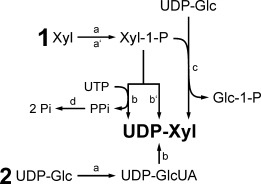
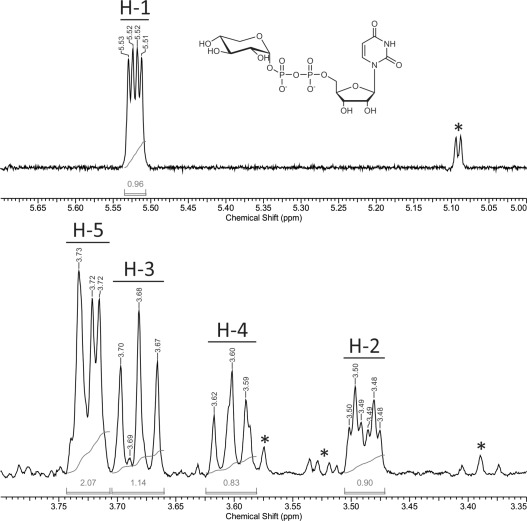
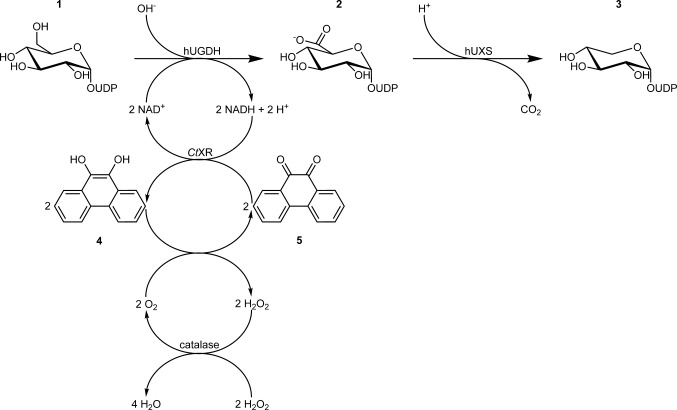
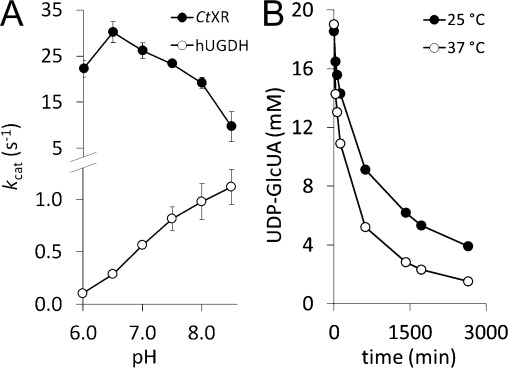
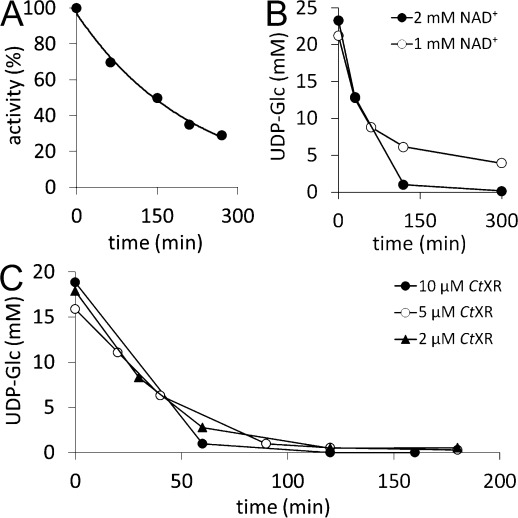
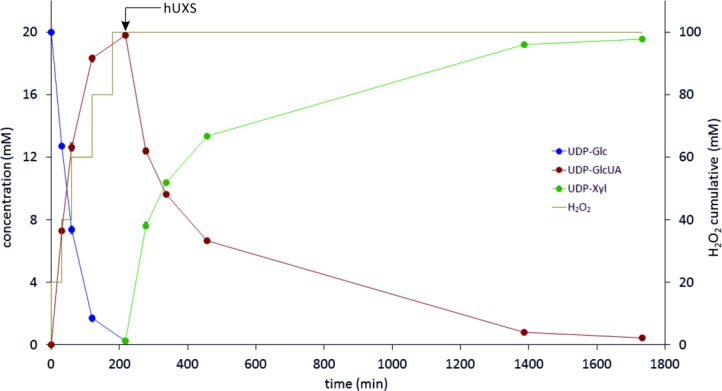
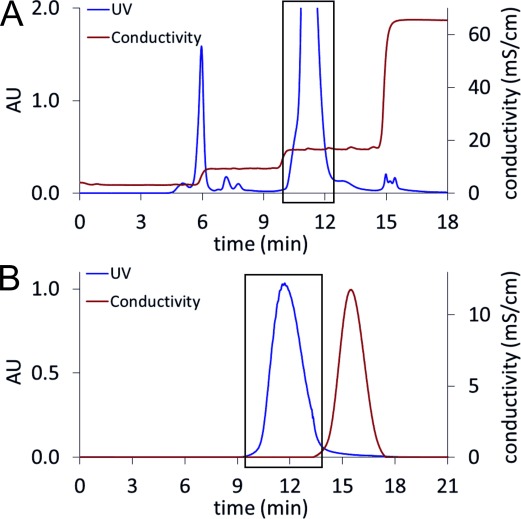
Synthetic ways towards uridine 5'-diphosphate (UDP)-xylose are scarce and not well established, although this compound plays an important role in the glycobiology of various organisms and cell types. We show here how UDP-glucose 6-dehydrogenase (hUGDH) and UDP-xylose synthase 1 (hUXS) from can be used for the efficient production of pure UDP-α-xylose from UDP-glucose. In a mimic of the natural biosynthetic route, UDP-glucose is converted to UDP-glucuronic acid by hUGDH, followed by subsequent formation of UDP-xylose by hUXS. The nicotinamide adenine dinucleotide (NAD) required in the hUGDH reaction is continuously regenerated in a three-step chemo-enzymatic cascade. In the first step, reduced NAD (NADH) is recycled by xylose reductase from reduction of 9,10-phenanthrenequinone (PQ). Radical chemical re-oxidation of this mediator in the second step reduces molecular oxygen to hydrogen peroxide (HO) that is cleaved by bovine liver catalase in the last step. A comprehensive analysis of the coupled chemo-enzymatic reactions revealed pronounced inhibition of hUGDH by NADH and UDP-xylose as well as an adequate oxygen supply for PQ re-oxidation as major bottlenecks of effective performance of the overall multi-step reaction system. Net oxidation of UDP-glucose to UDP-xylose by hydrogen peroxide (HO) could thus be achieved when using an oxygen supply through periodic external feed of HO during the reaction. Engineering of the interrelated reaction parameters finally enabled production of 19.5 mM (10.5 g l) UDP-α-xylose. After two-step chromatographic purification the compound was obtained in high purity (>98%) and good overall yield (46%). The results provide a strong case for application of multi-step redox cascades in the synthesis of nucleotide sugar products.
尽管尿苷5'-二磷酸(UDP)-木糖在各种生物体和细胞类型的糖生物学中发挥着重要作用,但合成UDP-木糖的方法却很稀少且尚未成熟。我们在此展示了如何利用来自人类的UDP-葡萄糖6-脱氢酶(hUGDH)和UDP-木糖合酶1(hUXS)从UDP-葡萄糖高效生产纯UDP-α-木糖。在模拟天然生物合成途径中,hUGDH将UDP-葡萄糖转化为UDP-葡萄糖醛酸,随后hUXS形成UDP-木糖。hUGDH反应所需的烟酰胺腺嘌呤二核苷酸(NAD)在三步化学酶级联反应中持续再生。第一步,木糖还原酶将9,10-菲醌(PQ)还原产生的还原型NAD(NADH)进行循环利用。第二步,该介质的自由基化学再氧化将分子氧还原为过氧化氢(H₂O₂),最后一步牛肝过氧化氢酶将H₂O₂分解。对耦合化学酶反应的全面分析表明,NADH和UDP-木糖对hUGDH有明显抑制作用,以及PQ再氧化所需的充足氧气供应是整个多步反应系统有效运行的主要瓶颈。因此,当在反应过程中通过定期外部添加H₂O₂提供氧气时,可实现H₂O₂将UDP-葡萄糖净氧化为UDP-木糖。对相关反应参数的工程改造最终实现了19.5 mM(10.5 g l)UDP-α-木糖的生产。经过两步色谱纯化后,得到了高纯度(>98%)和良好总收率(46%)的该化合物。这些结果为多步氧化还原级联反应在核苷酸糖产品合成中的应用提供了有力依据。