Departments of Medicine, Pittsburgh, PA 15261 USA.
Departments of Biostatistics, Pittsburgh, PA 15261 USA.
J Immunother Cancer. 2015 Jul 21;3:32. doi: 10.1186/s40425-015-0077-x. eCollection 2015.
Dendritic cells (DC) are uniquely equipped to capture, process, and present antigens from their environment. The context in which an antigen is acquired by DC helps to dictate the subsequent immune response. Cancer vaccination promotes antitumor immunity by directing an immune response to antigens expressed by tumors. We have tested the tumor-associated antigen alpha-fetoprotein (AFP) as an immunotherapy target. The majority of hepatocellular carcinomas (HCC) upregulate and secrete this oncofetal antigen.
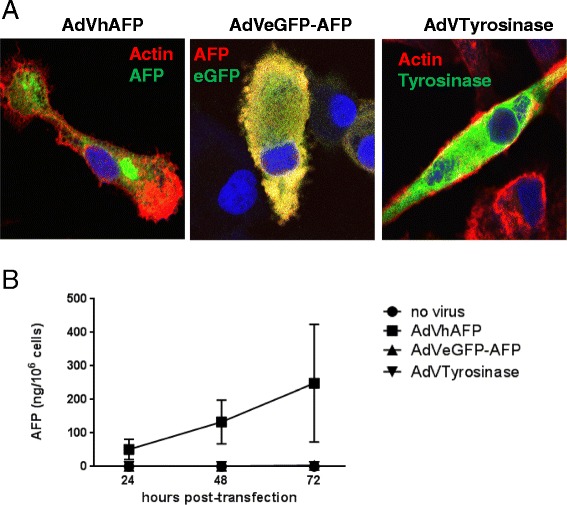
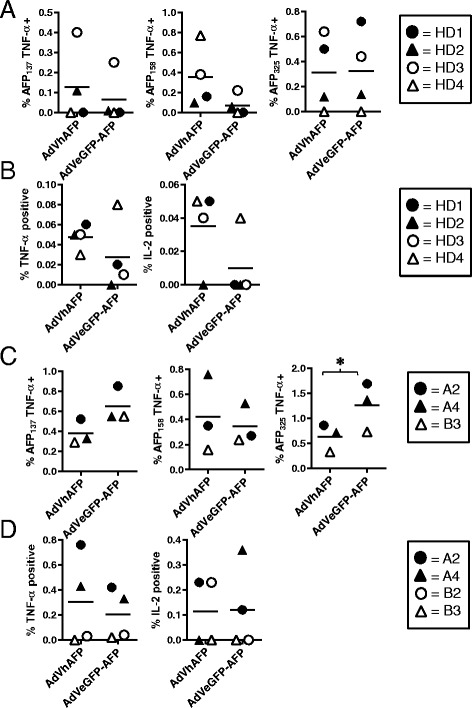
To develop cancer vaccines for HCC capable of promoting potent tumor-specific T cell responses, we tested adenovirally-encoded synthetic AFP, with or without its signal sequence, as well as protein forms of AFP and compared intracellular routing and subsequent antigen-specific CD8+ and CD4+ T cell responses.
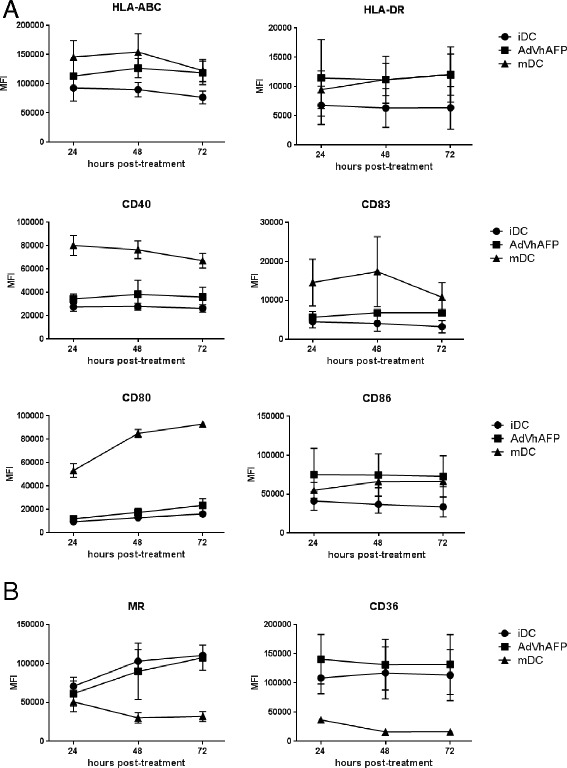
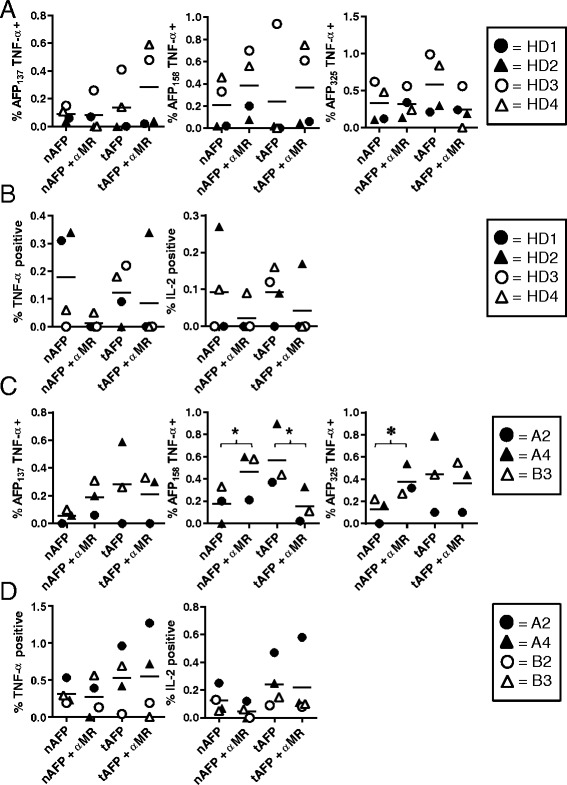
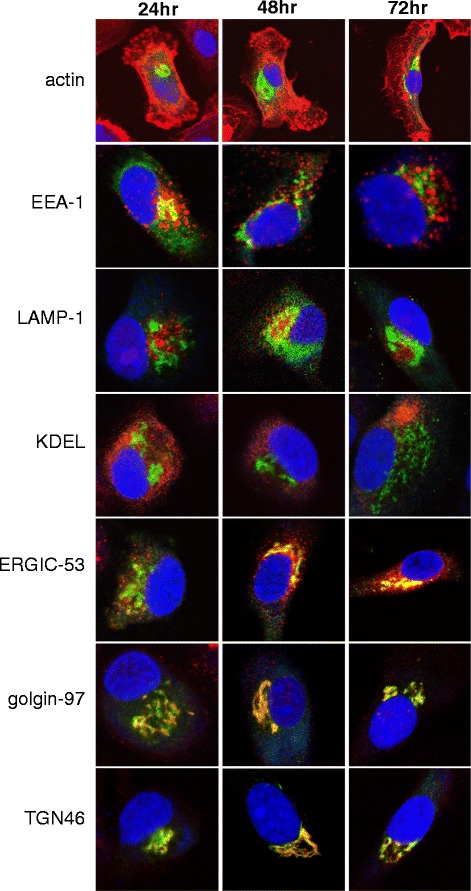
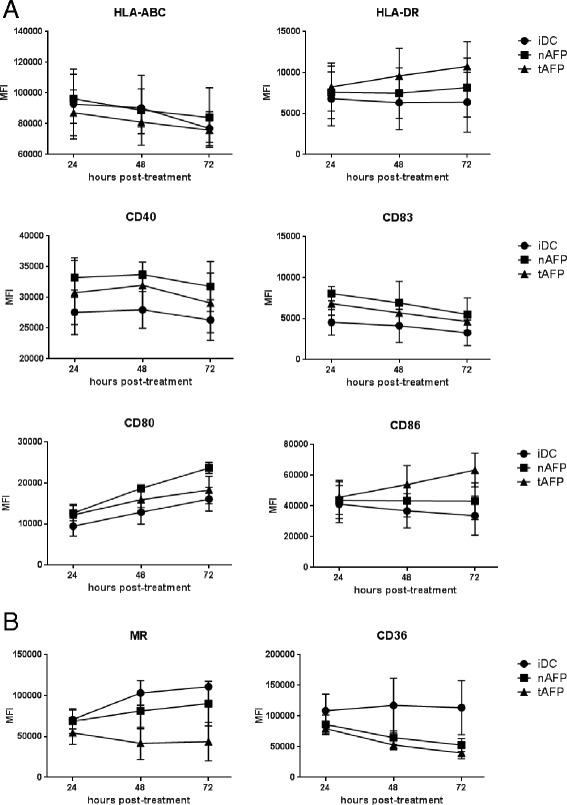
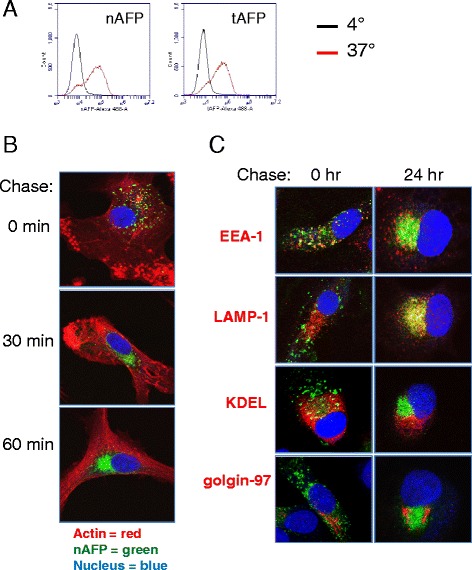
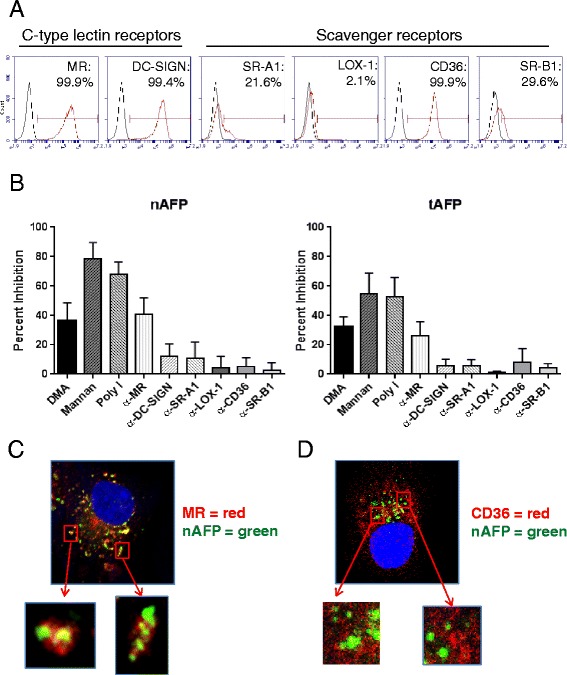
Surprisingly, the secreted form of antigen was superior for both CD4+ and CD8+ T cell activation. We also examined the mechanism through which AFP protein is endocytosed and trafficked in human DC. We identify the mannose receptor (MR/CD206) as the primary uptake pathway for both normal cord blood-derived AFP (nAFP) and tumor-derived AFP (tAFP) proteins. While in healthy donors, nAFP and tAFP were cross-presented to CD8+ T cells similarly and CD4+ T cell responses were dependent upon MR-mediated uptake. In HCC patient cells, tAFP was more immunogenic, and CD4+ T cell responses were not MR-dependent.
Secreted, cytoplasmically retained, and endocytosed forms of AFP utilize unique uptake and processing pathways, resulting in different immunologic responses from the induced antigen-specific CD4+ and CD8+ T cells and between healthy donors and HCC patients. Collectively, these data elucidate pathways of spontaneous and induced anti-tumor immunity in HCC patients to this secreted antigen.
树突状细胞(DC)具有独特的能力,可以从其环境中捕获、处理和呈现抗原。抗原被 DC 摄取的环境有助于决定随后的免疫反应。癌症疫苗通过将免疫反应导向肿瘤表达的抗原来促进抗肿瘤免疫。我们已经测试了肿瘤相关抗原甲胎蛋白(AFP)作为免疫治疗靶点。大多数肝细胞癌(HCC)上调并分泌这种癌胚抗原。
为了开发能够促进强烈的肿瘤特异性 T 细胞反应的 HCC 癌症疫苗,我们测试了腺病毒编码的合成 AFP,无论是否带有其信号序列,以及 AFP 的蛋白形式,并比较了细胞内途径以及随后的抗原特异性 CD8+和 CD4+T 细胞反应。
令人惊讶的是,分泌形式的抗原对 CD4+和 CD8+T 细胞的激活都更有效。我们还研究了 AFP 蛋白在人 DC 中被内吞和运输的机制。我们确定甘露糖受体(MR/CD206)是正常脐带血来源的 AFP(nAFP)和肿瘤来源的 AFP(tAFP)蛋白的主要摄取途径。在健康供体中,nAFP 和 tAFP 以相似的方式被交叉呈递给 CD8+T 细胞,并且 CD4+T 细胞反应依赖于 MR 介导的摄取。在 HCC 患者细胞中,tAFP 更具免疫原性,并且 CD4+T 细胞反应不依赖于 MR。
分泌的、细胞质内保留的和内吞的 AFP 形式利用独特的摄取和处理途径,导致诱导的抗原特异性 CD4+和 CD8+T 细胞之间以及健康供体和 HCC 患者之间产生不同的免疫反应。总的来说,这些数据阐明了 HCC 患者对这种分泌抗原的自发和诱导抗肿瘤免疫的途径。