Dória Milena Santos, Sousa Aurizângela Oliveira de, Barbosa Cristiane de Jesus, Costa Márcio Gilberto Cardoso, Gesteira Abelmon da Silva, Souza Regina Martins, Freitas Ana Camila Oliveira, Pirovani Carlos Priminho
Centro of Biotechnologia and Genetica, Universidade Estadual de Santa Cruz, UESC, Rodovia Ilhéus-Itabuna, Km 16, Ilhéus/BA, 45662-000, Brasil.
Embrapa Mandioca e Fruticultura, CEP 44380-000, Cruz das Almas, BA, Brazil.
PLoS One. 2015 Jul 24;10(7):e0130950. doi: 10.1371/journal.pone.0130950. eCollection 2015.
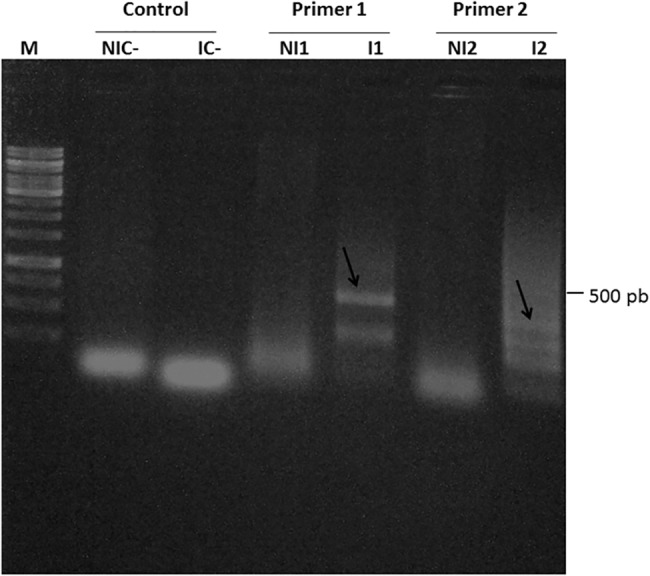
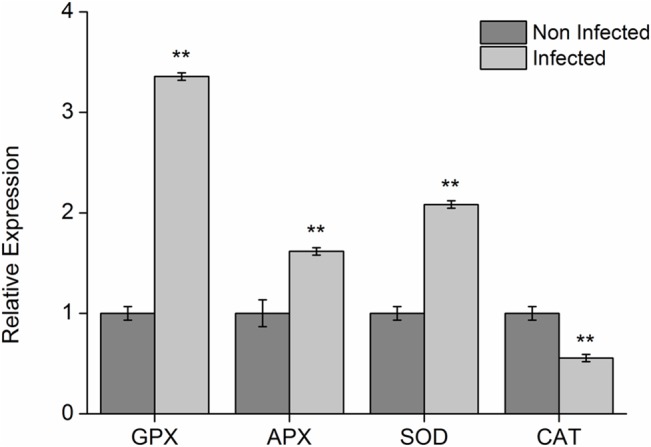
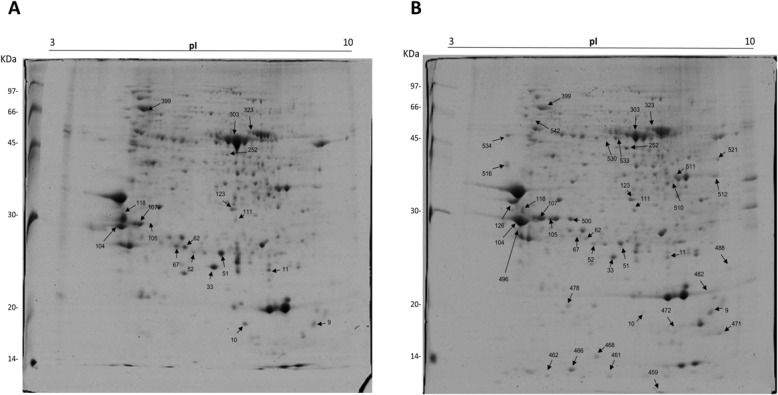
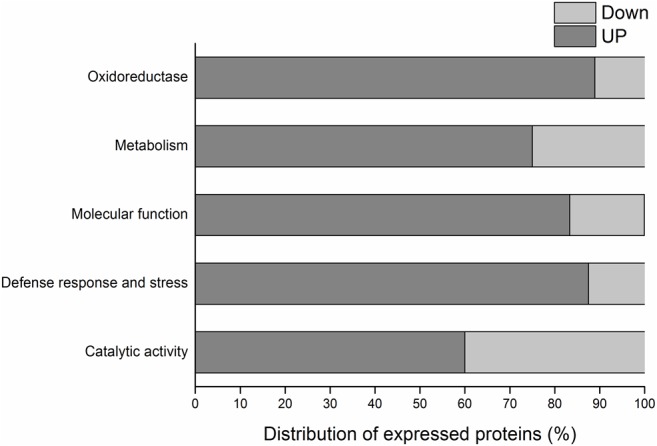
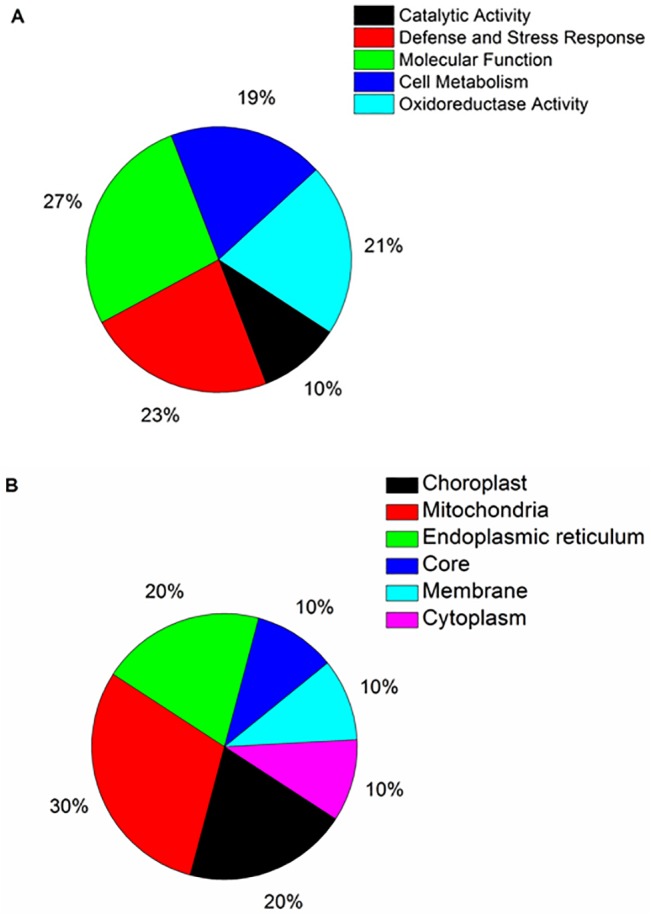
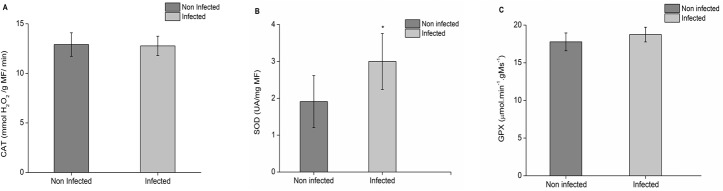
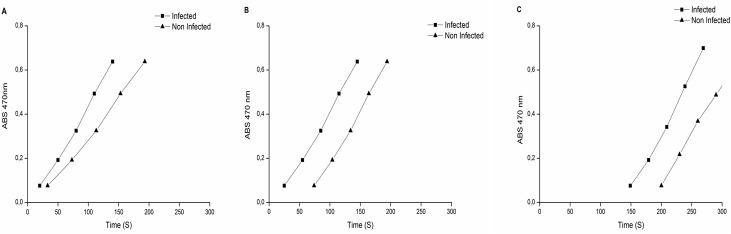
Citrus Tristeza disease, caused by CTV (Citrus tristeza virus), committs citrus plantations around the world and specifically attacks phloem tissues of the plant. The virus exists as a mixture of more or less severe variants, which may or may not cause symptoms of Tristeza. The objective of this study was to analyze the changes caused by CTV in the proteome of stems of sweet orange, as well as in the activity and gene expression of antioxidant enzymes. The CTV-infected sweet orange displayed mild symptoms, which were characterized by the presence of sparse stem pitting throughout their stems. The presence of virus was confirmed by RT-PCR. Proteomic analysis by 2DE-PAGE-MS / MS revealed the identity of 40 proteins differentially expressed between CTV- infected and -non-infected samples. Of these, 33 were up-regulated and 7 were down-regulated in CTV-infected samples. Among the proteins identified stands out a specific from the virus, the coat protein. Other proteins identified are involved with oxidative stress and for this their enzymatic activity was measured. The activity of superoxide dismutase (SOD) was higher in CTV-infected samples, as catalase (CAT) showed higher activity in uninfected samples. The activity of guaiacol peroxidase (GPX) did not vary significantly between samples. However, ascorbate peroxidase (APX) was more active in the infected samples. The relative expression of the genes encoding CAT, SOD, APX and GPX was analyzed by quantitative real time PCR (RT-qPCR). The CTV-infected samples showed greater accumulation of transcripts, except for the CAT gene. This gene showed higher expression in the uninfected samples. Taken together, it can be concluded that the CTV affects the protein profile and activity and gene expression of antioxidant enzymes in plants infected by this virus.
柑橘衰退病由柑橘衰退病毒(CTV)引起,危害着世界各地的柑橘种植园,尤其侵袭植物的韧皮部组织。该病毒以或多或少严重的变异体混合物形式存在,这些变异体可能会也可能不会引发衰退病症状。本研究的目的是分析CTV对甜橙茎部蛋白质组所造成的变化,以及对抗氧化酶的活性和基因表达的影响。感染CTV的甜橙表现出轻微症状,其特征是整个茎干上有稀疏的茎陷点。通过逆转录聚合酶链反应(RT-PCR)证实了病毒的存在。二维聚丙烯酰胺凝胶电泳-质谱联用(2DE-PAGE-MS/MS)蛋白质组分析揭示了CTV感染样本和未感染样本之间40种差异表达蛋白质的身份。其中,33种在CTV感染样本中上调,7种下调。在鉴定出的蛋白质中,有一种特别的病毒蛋白,即外壳蛋白。鉴定出的其他蛋白质与氧化应激有关,并对其酶活性进行了测定。超氧化物歧化酶(SOD)的活性在CTV感染样本中较高,而过氧化氢酶(CAT)在未感染样本中显示出较高活性。愈创木酚过氧化物酶(GPX)的活性在样本之间没有显著差异。然而,抗坏血酸过氧化物酶(APX)在感染样本中更活跃。通过定量实时聚合酶链反应(RT-qPCR)分析了编码CAT、SOD、APX和GPX的基因的相对表达。CTV感染样本显示出转录本的积累更多,但CAT基因除外。该基因在未感染样本中表达较高。综上所述,可以得出结论,CTV会影响感染该病毒的植物中的蛋白质谱、抗氧化酶的活性和基因表达。