Cauchy Pierre, James Sally R, Zacarias-Cabeza Joaquin, Ptasinska Anetta, Imperato Maria Rosaria, Assi Salam A, Piper Jason, Canestraro Martina, Hoogenkamp Maarten, Raghavan Manoj, Loke Justin, Akiki Susanna, Clokie Samuel J, Richards Stephen J, Westhead David R, Griffiths Michael J, Ott Sascha, Bonifer Constanze, Cockerill Peter N
School of Cancer Sciences, College of Medicine and Dentistry, University of Birmingham, Birmingham B15 2TT, UK.
Section of Experimental Haematology, Leeds Institute for Molecular Medicine, University of Leeds, Leeds LS9 7TF, UK.
Cell Rep. 2015 Aug 4;12(5):821-36. doi: 10.1016/j.celrep.2015.06.069. Epub 2015 Jul 23.
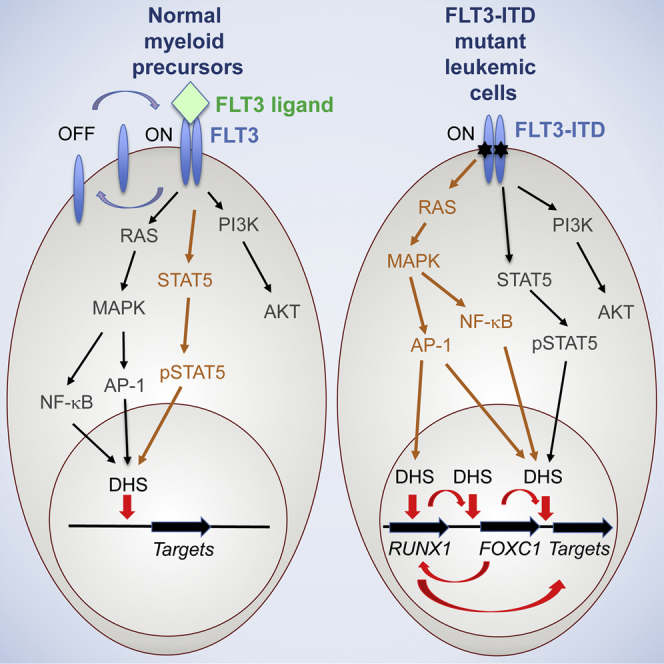
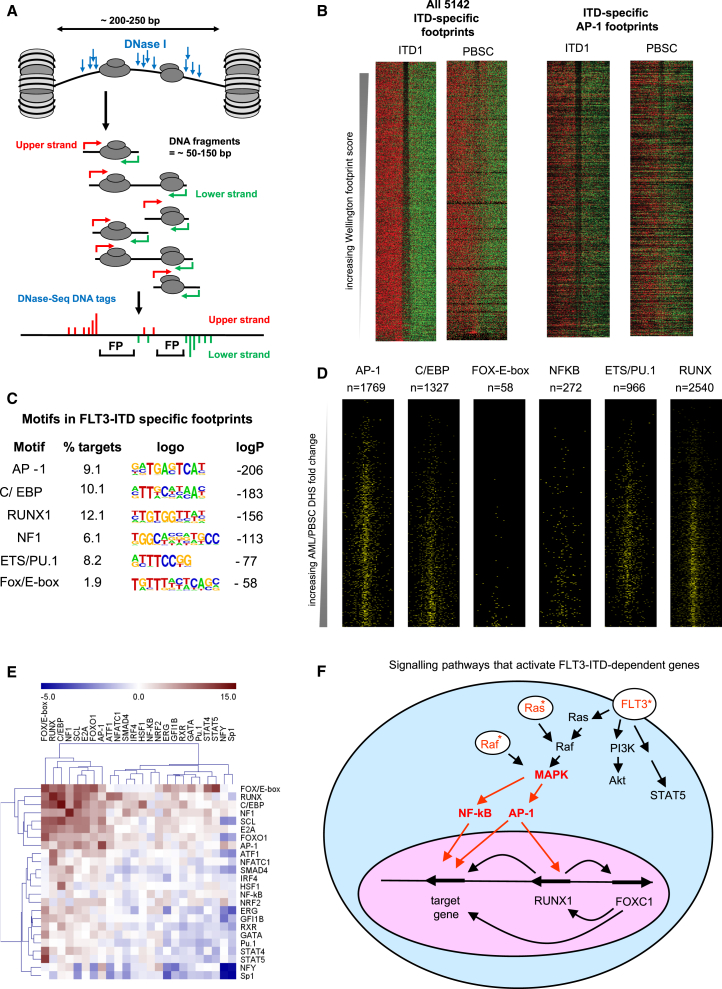
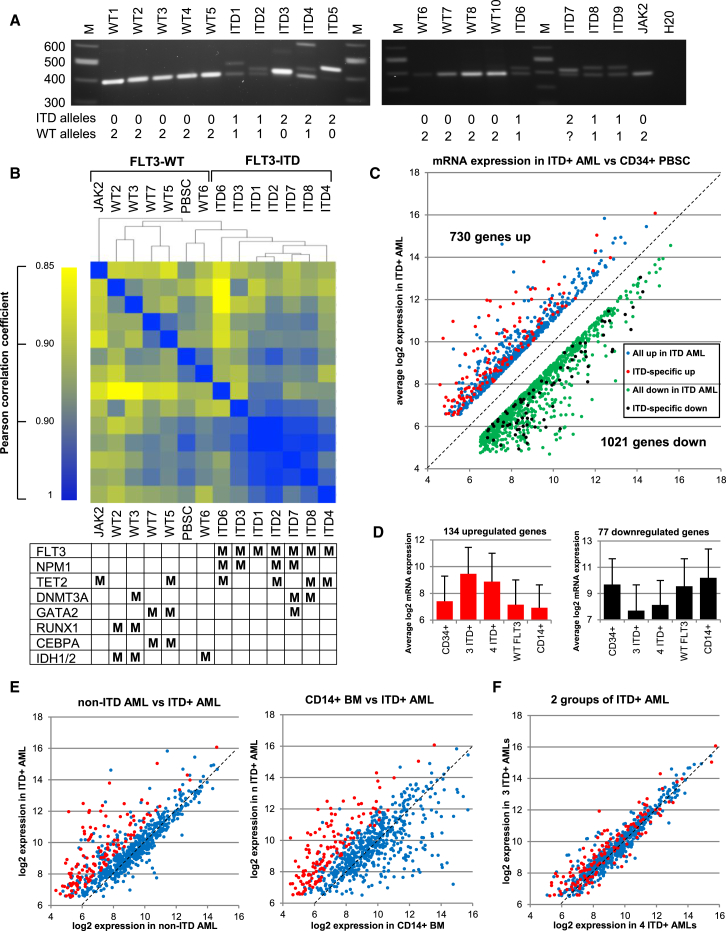
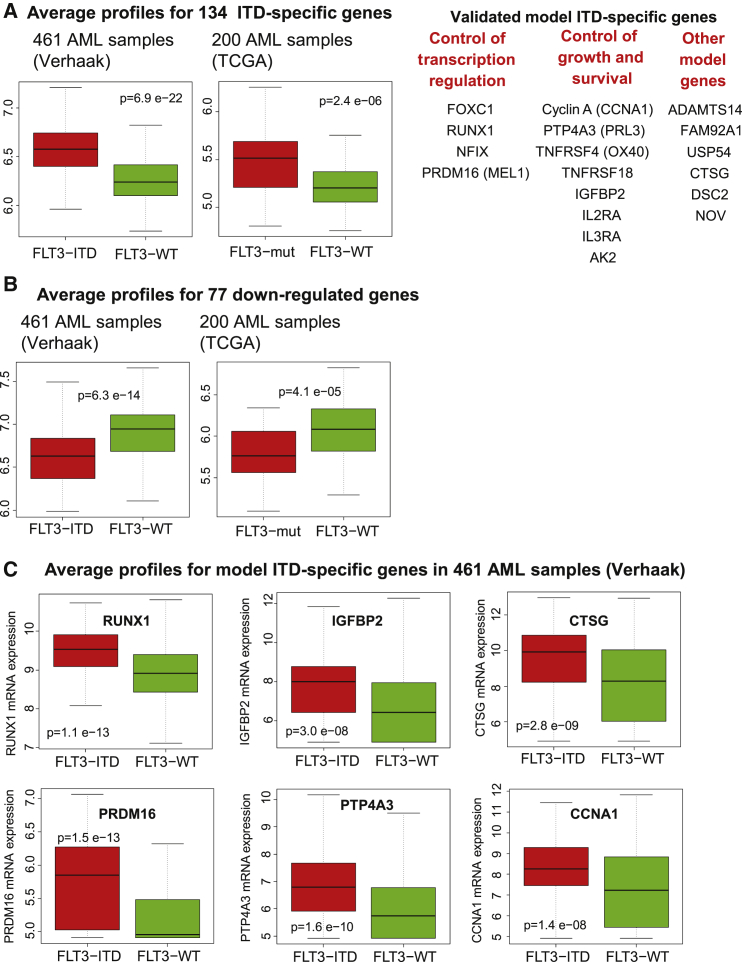
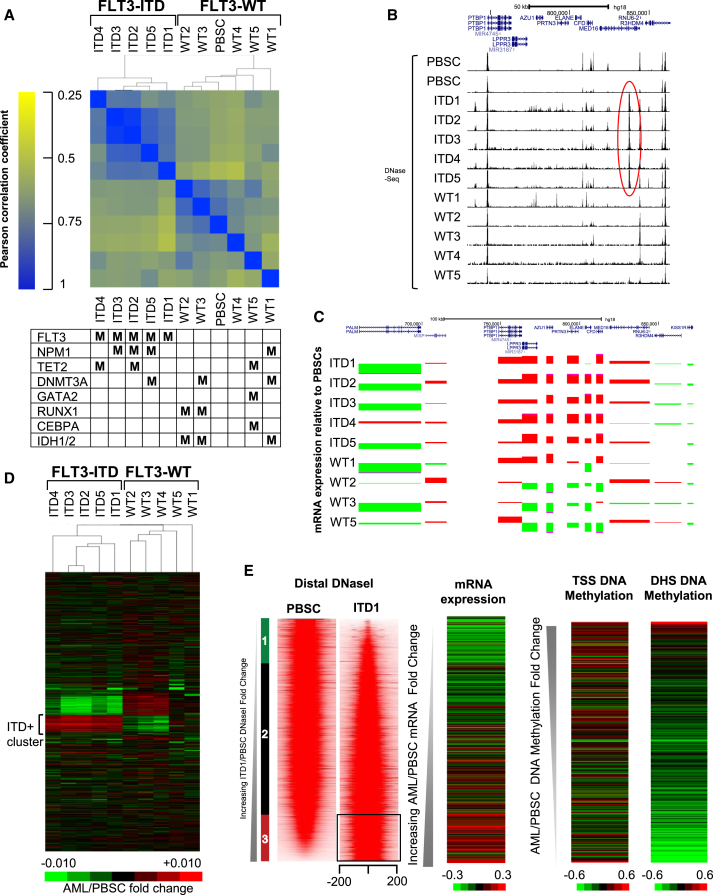
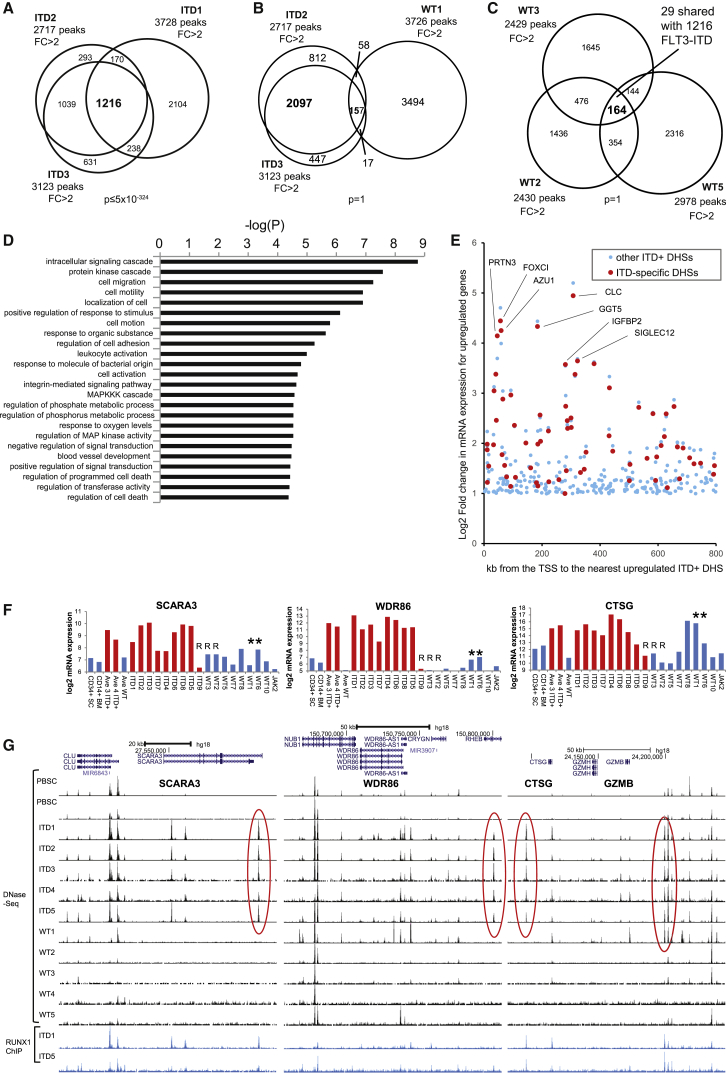
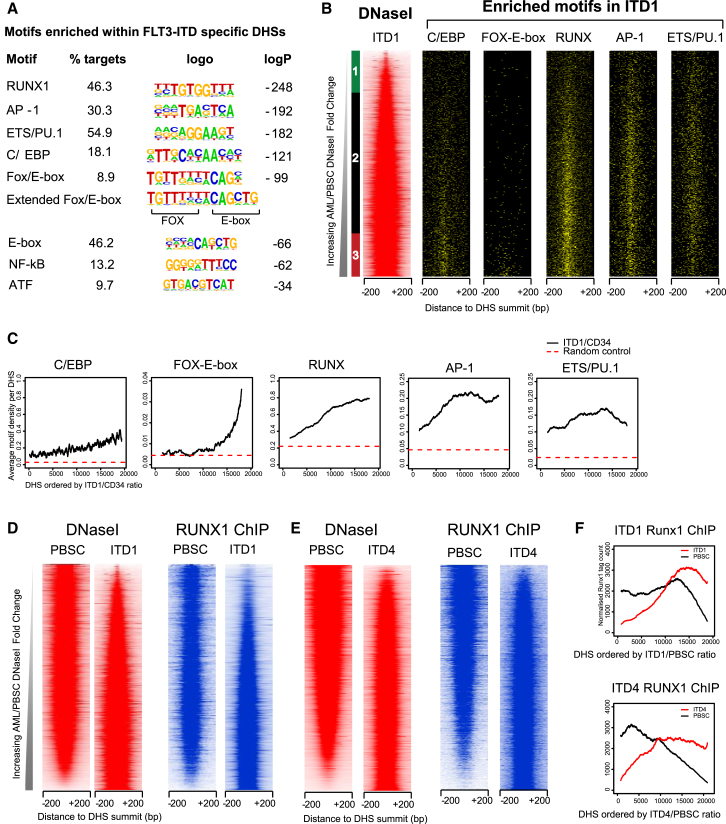
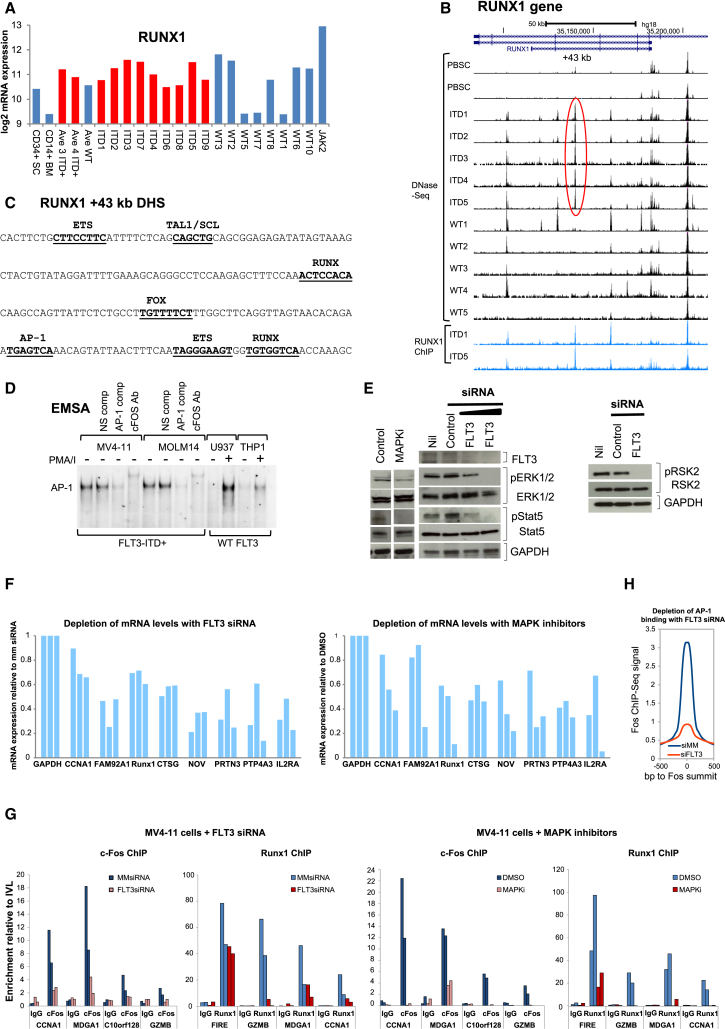
Acute myeloid leukemia (AML) is characterized by recurrent mutations that affect the epigenetic regulatory machinery and signaling molecules, leading to a block in hematopoietic differentiation. Constitutive signaling from mutated growth factor receptors is a major driver of leukemic growth, but how aberrant signaling affects the epigenome in AML is less understood. Furthermore, AML cells undergo extensive clonal evolution, and the mutations in signaling genes are often secondary events. To elucidate how chronic growth factor signaling alters the transcriptional network in AML, we performed a system-wide multi-omics study of primary cells from patients suffering from AML with internal tandem duplications in the FLT3 transmembrane domain (FLT3-ITD). This strategy revealed cooperation between the MAP kinase (MAPK) inducible transcription factor AP-1 and RUNX1 as a major driver of a common, FLT3-ITD-specific gene expression and chromatin signature, demonstrating a major impact of MAPK signaling pathways in shaping the epigenome of FLT3-ITD AML.
急性髓系白血病(AML)的特征是反复出现影响表观遗传调控机制和信号分子的突变,导致造血分化受阻。来自突变生长因子受体的组成性信号是白血病生长的主要驱动因素,但异常信号如何影响AML中的表观基因组尚不清楚。此外,AML细胞经历广泛的克隆进化,信号基因中的突变通常是继发事件。为了阐明慢性生长因子信号如何改变AML中的转录网络,我们对患有FLT3跨膜结构域内部串联重复(FLT3-ITD)的AML患者的原代细胞进行了全系统多组学研究。该策略揭示了丝裂原活化蛋白激酶(MAPK)诱导的转录因子AP-1和RUNX1之间的协同作用,这是常见的、FLT3-ITD特异性基因表达和染色质特征的主要驱动因素,证明了MAPK信号通路在塑造FLT3-ITD AML表观基因组中的主要作用。