Mertens Christopher J, Meier Matthias M, Brown Steven, Norman Ryan B, Xu Xiaojing
NASA Langley Research Center Hampton, Virginia, USA.
DLR - German Aerospace Center, Institute of Aerospace Medicine, Radiation Biology Cologne, Germany.
Space Weather. 2013 Oct;11(10):603-635. doi: 10.1002/swe.20100. Epub 2013 Oct 25.
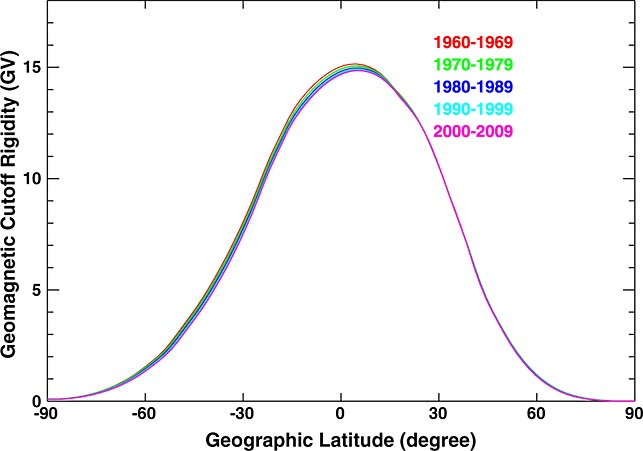
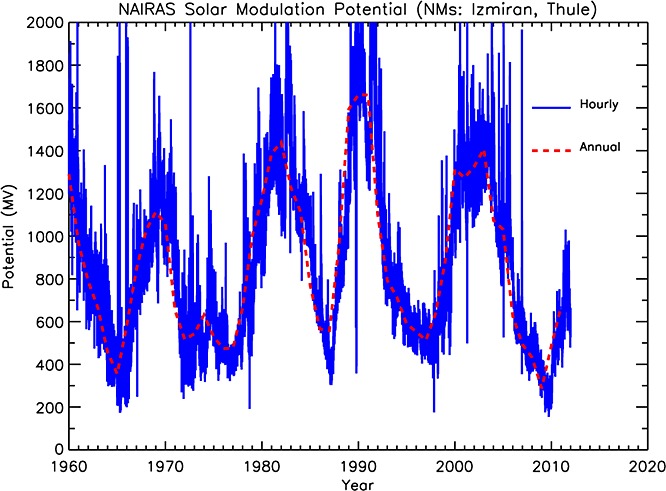
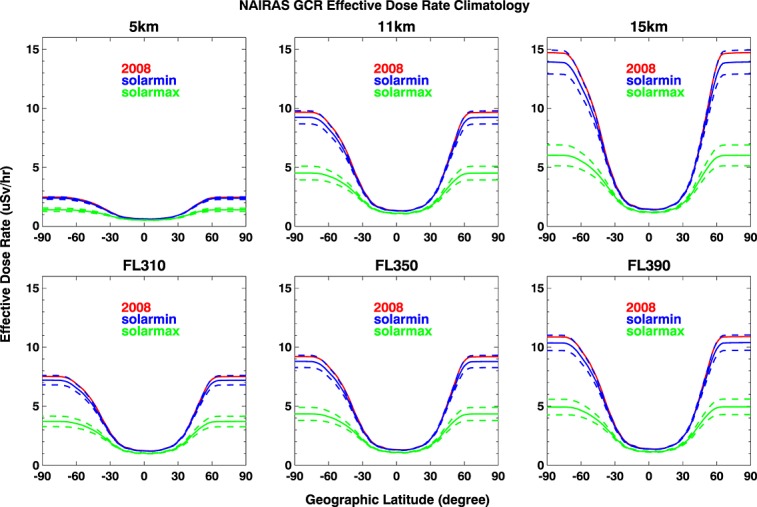
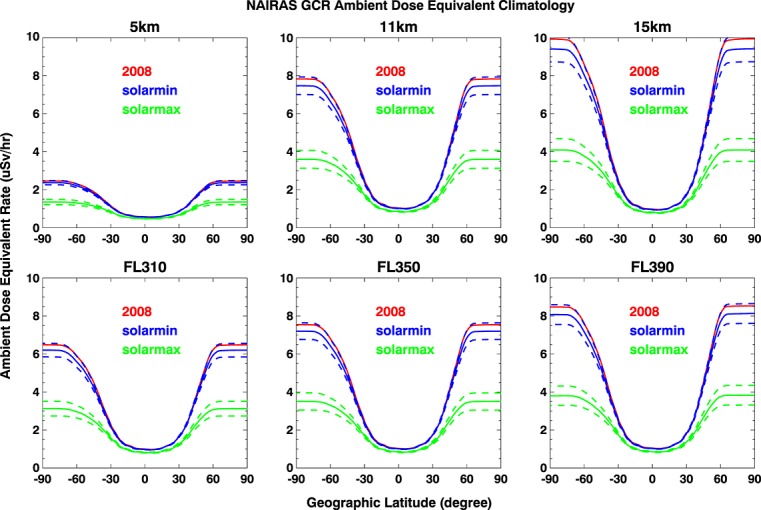
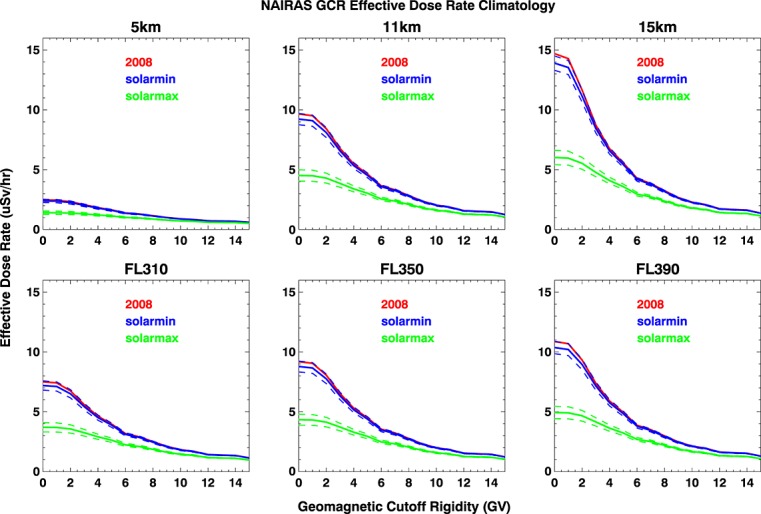
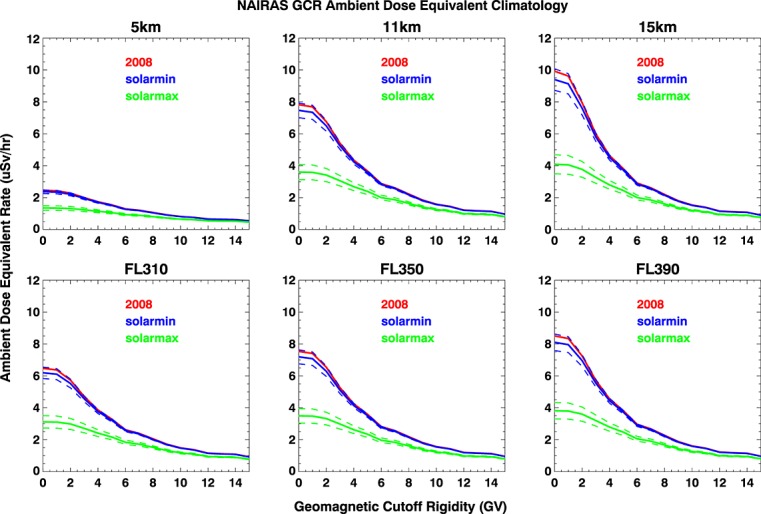
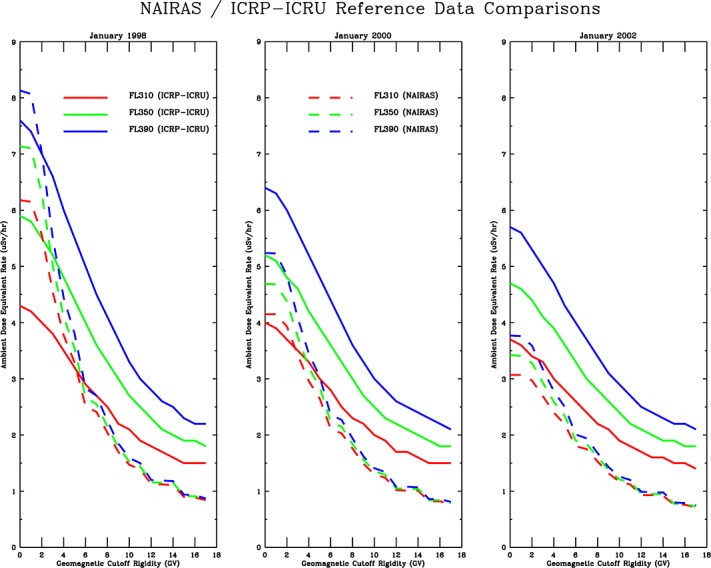
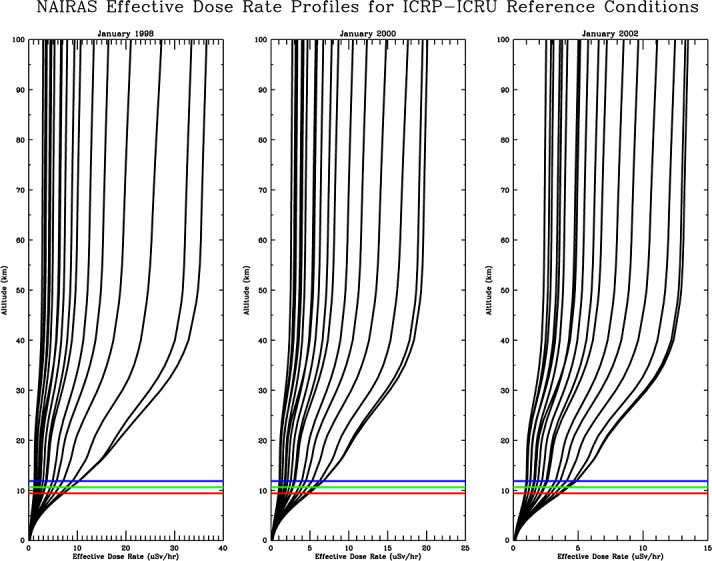
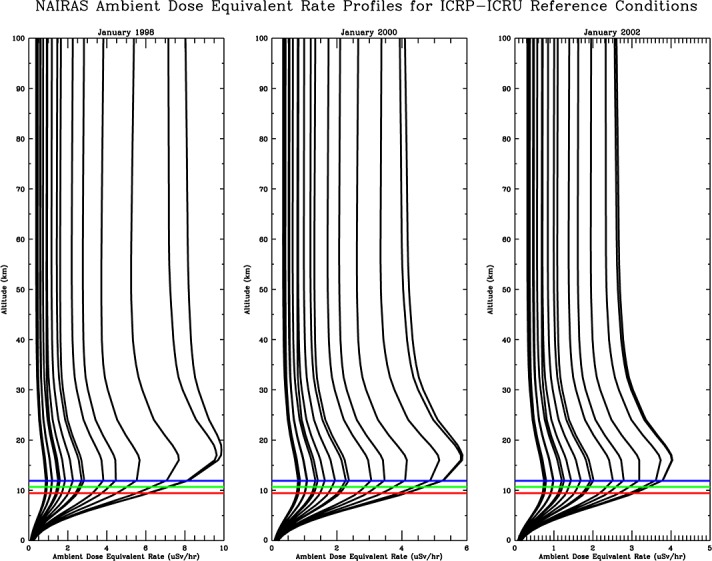
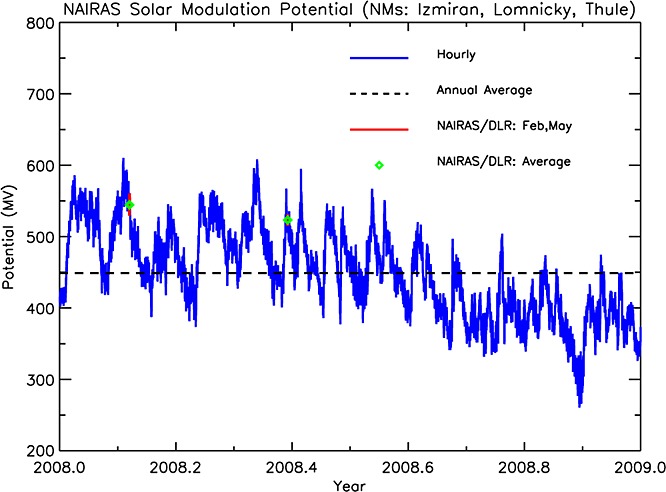
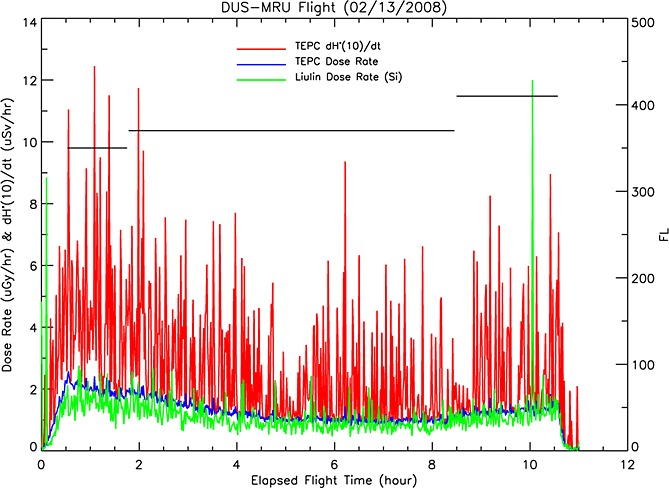
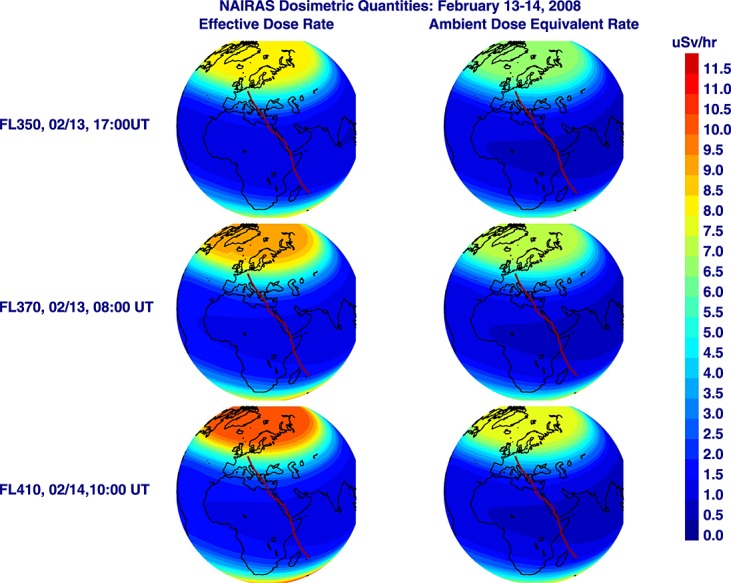
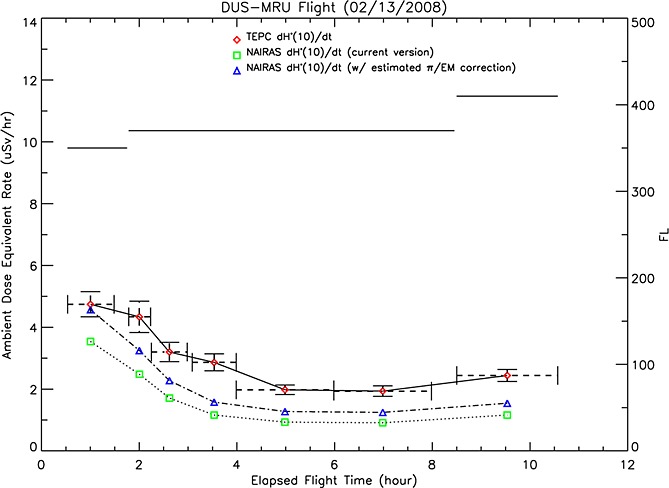
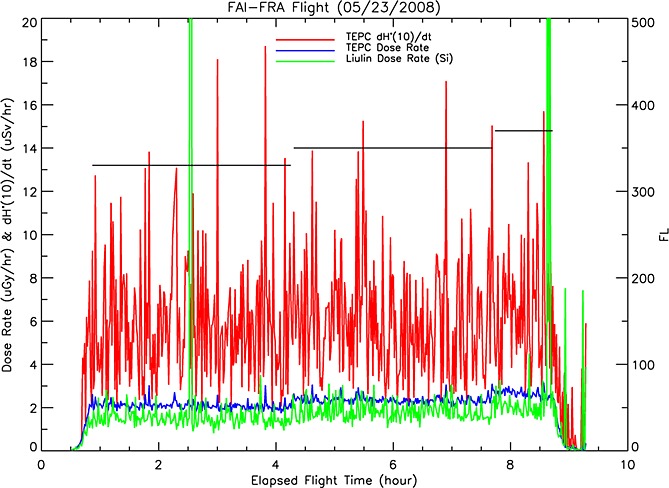
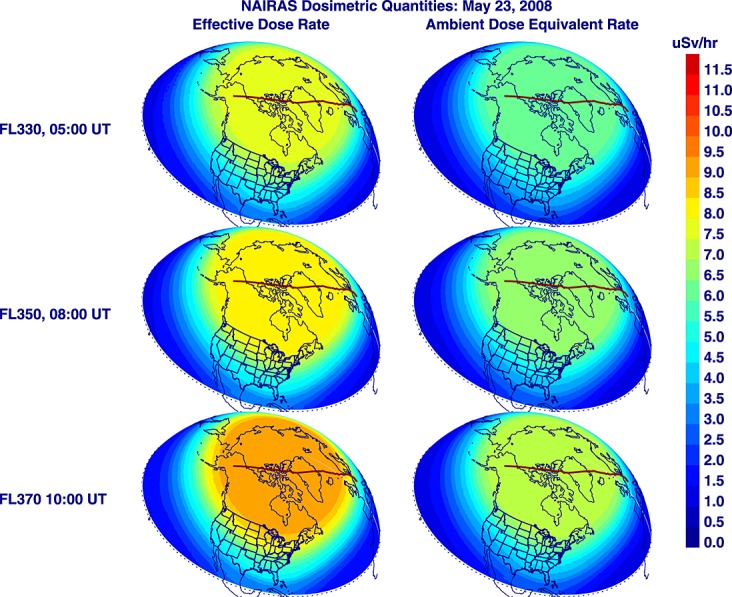
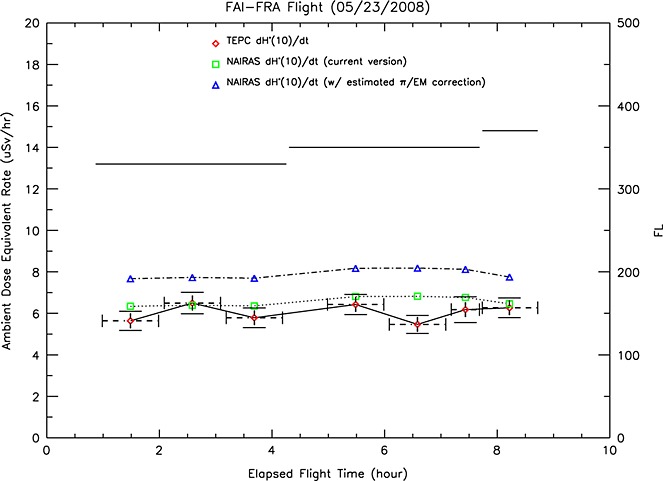
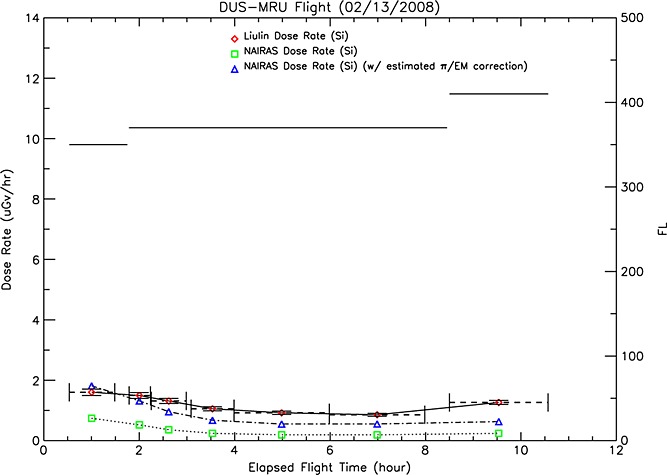
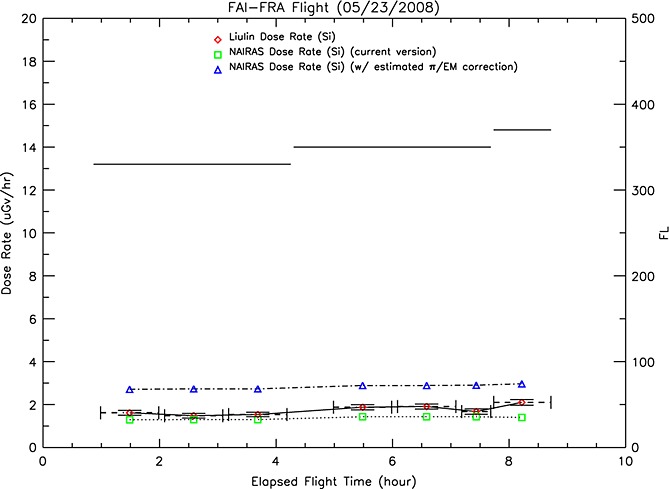
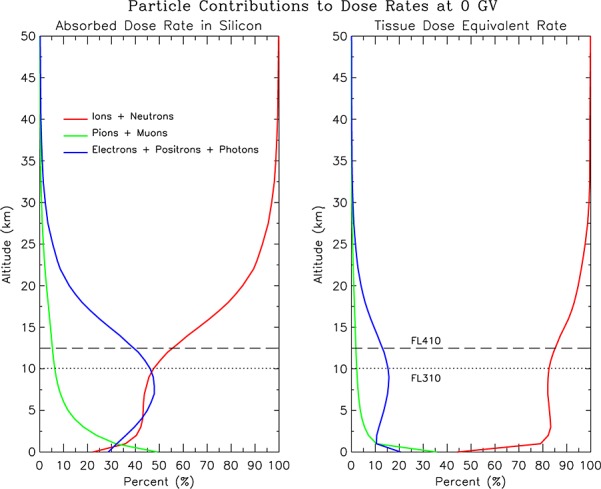
[1] The Nowcast of Atmospheric Ionizing Radiation for Aviation Safety (NAIRAS) is a real-time, global, physics-based model used to assess radiation exposure to commercial aircrews and passengers. The model is a free-running physics-based model in the sense that there are no adjustment factors applied to nudge the model into agreement with measurements. The model predicts dosimetric quantities in the atmosphere from both galactic cosmic rays (GCR) and solar energetic particles, including the response of the geomagnetic field to interplanetary dynamical processes and its subsequent influence on atmospheric dose. The focus of this paper is on atmospheric GCR exposure during geomagnetically quiet conditions, with three main objectives. First, provide detailed descriptions of the NAIRAS GCR transport and dosimetry methodologies. Second, present a climatology of effective dose and ambient dose equivalent rates at typical commercial airline altitudes representative of solar cycle maximum and solar cycle minimum conditions and spanning the full range of geomagnetic cutoff rigidities. Third, conduct an initial validation of the NAIRAS model by comparing predictions of ambient dose equivalent rates with tabulated reference measurement data and recent aircraft radiation measurements taken in 2008 during the minimum between solar cycle 23 and solar cycle 24. By applying the criterion of the International Commission on Radiation Units and Measurements (ICRU) on acceptable levels of aircraft radiation dose uncertainty for ambient dose equivalent greater than or equal to an annual dose of 1 mSv, the NAIRAS model is within 25% of the measured data, which fall within the ICRU acceptable uncertainty limit of 30%. The NAIRAS model predictions of ambient dose equivalent rate are generally within 50% of the measured data for any single-point comparison. The largest differences occur at low latitudes and high cutoffs, where the radiation dose level is low. Nevertheless, analysis suggests that these single-point differences will be within 30% when a new deterministic pion-initiated electromagnetic cascade code is integrated into NAIRAS, an effort which is currently underway.
[1] 用于航空安全的大气电离辐射临近预报(NAIRAS)是一个基于物理的实时全球模型,用于评估商业机组人员和乘客所受的辐射暴露。该模型是一个自由运行的基于物理的模型,即不存在用于促使模型与测量结果相符的调整因子。该模型可预测来自银河宇宙射线(GCR)和太阳高能粒子在大气中的剂量学量,包括地磁场对行星际动力学过程的响应及其对大气剂量的后续影响。本文重点关注地磁平静条件下的大气GCR暴露,有三个主要目标。第一,详细描述NAIRAS的GCR传输和剂量测定方法。第二,给出在代表太阳活动极大期和极小期条件且涵盖整个地磁截止刚度范围的典型商业航线高度下的有效剂量和环境剂量当量率的气候学特征。第三,通过将环境剂量当量率的预测结果与列表参考测量数据以及2008年太阳活动第23周期和第24周期之间极小期进行的近期飞机辐射测量结果进行比较,对NAIRAS模型进行初步验证。通过应用国际辐射单位与测量委员会(ICRU)关于飞机辐射剂量不确定性可接受水平的标准(对于环境剂量当量大于或等于年剂量1 mSv的情况),NAIRAS模型的结果在测量数据的25%以内,而测量数据落在ICRU可接受的30%不确定性极限范围内。对于任何单点比较,NAIRAS模型对环境剂量当量率的预测结果通常在测量数据的50%以内。最大差异出现在低纬度和高截止处,那里的辐射剂量水平较低。然而,分析表明,当一个新的确定性π介子引发的电磁级联代码集成到NAIRAS中时(目前正在进行这项工作),这些单点差异将在30%以内。