King Heather E, Wakeford Alison, Taylor William, Wetzell Bradley, Rice Kenner C, Riley Anthony L
Psychopharmacology Laboratory, Department of Psychology, American University, Washington, DC 20016, United States.
Psychopharmacology Laboratory, Department of Psychology, American University, Washington, DC 20016, United States.
Pharmacol Biochem Behav. 2015 Oct;137:16-22. doi: 10.1016/j.pbb.2015.07.013. Epub 2015 Jul 26.
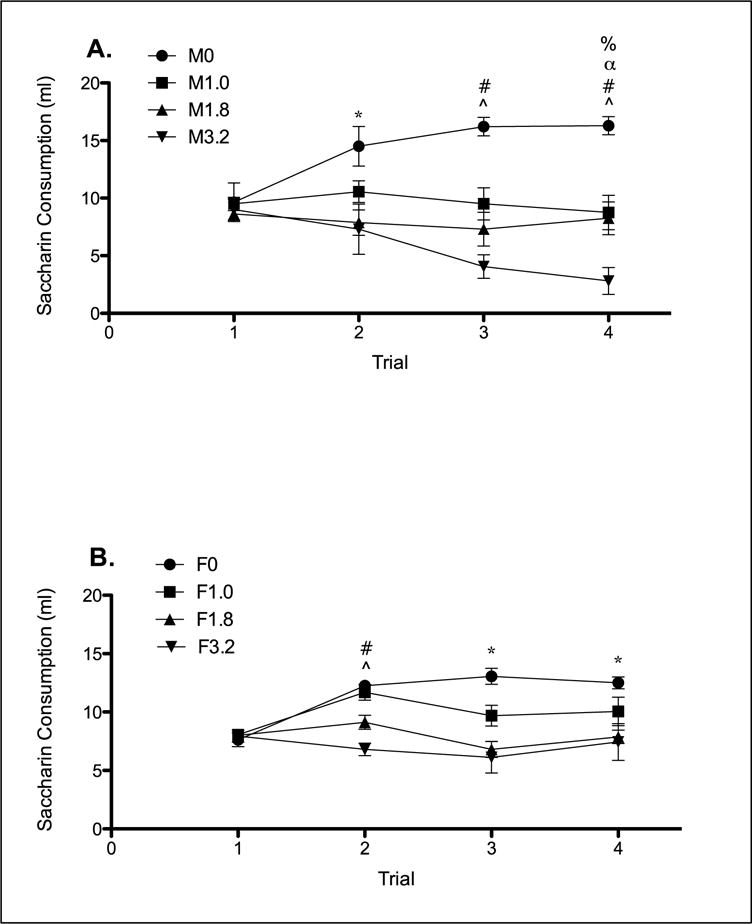
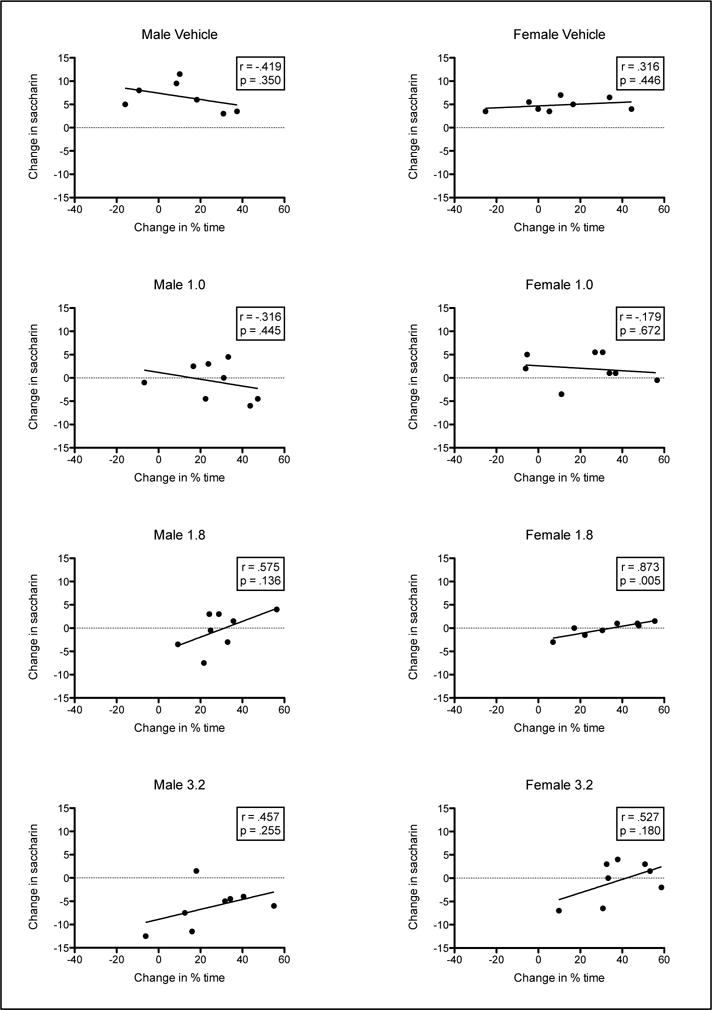
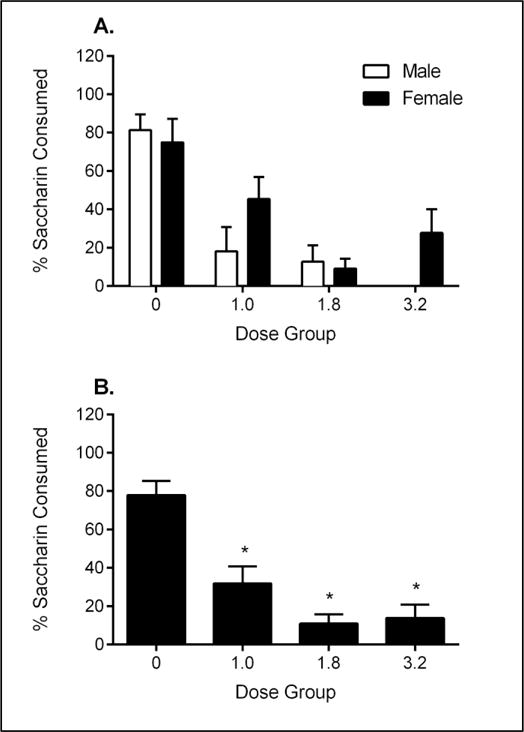
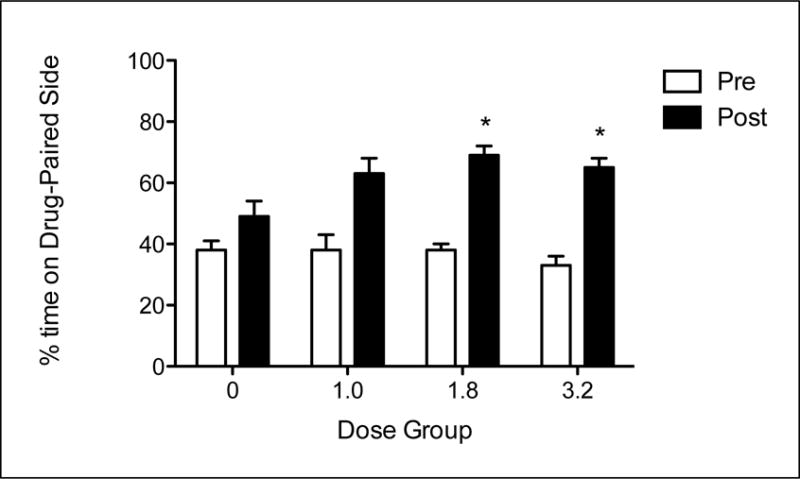
Synthetic cathinones, otherwise known as "bath salts", have gained significant attention in the last few years as a result of increased use and abuse. One such compound, 3,4-methylenedioxypyrovalerone (MDPV), is pharmacologically and behaviorally similar to cocaine and has been shown to possess both aversive and rewarding effects. For a host of other drugs, each of these effects (and their relative balance) can be influenced by a variety of factors, including sex, which in turn impacts drug taking behavior. In this context, the present assessment sought to determine whether males and females differed in MDPV-induced CTA and CPP. Both male and female Sprague-Dawley rats underwent a combined CTA/CPP procedure, in which an injection of one of three doses of MDPV (1.0, 1.8 or 3.2mg/kg) was paired with both a novel saccharin solution and a novel environment and changes in preferences for these stimuli were examined. Taste avoidance was evident in both sexes, although this avoidance was weaker in females compared to males. MDPV also produced place preferences in all drug-treated animals, but these preferences did not vary as a function of sex. The fact that females showed a weaker avoidance response compared to males (despite comparable preferences) suggests that females may have a heightened susceptibility to use and abuse of MDPV, paralleling results seen with cocaine and other stimulants. The present findings extend the behavioral characterization of MDPV and the factors that may alter its aversive and rewarding effects.
合成卡西酮,也就是所谓的“浴盐”,在过去几年中因使用和滥用情况增加而备受关注。其中一种化合物,3,4-亚甲基二氧吡咯戊酮(MDPV),在药理和行为上与可卡因相似,并且已被证明具有厌恶和奖赏效应。对于许多其他药物而言,这些效应(及其相对平衡)会受到多种因素的影响,包括性别,而性别又会反过来影响药物使用行为。在此背景下,本评估旨在确定雄性和雌性大鼠在MDPV诱导的条件性味觉厌恶(CTA)和条件性位置偏爱(CPP)方面是否存在差异。雄性和雌性斯普拉格-道利大鼠都接受了CTA/CPP联合程序,其中注射三种剂量之一的MDPV(1.0、1.8或3.2毫克/千克)与一种新型糖精溶液和一个新环境配对,并检测对这些刺激的偏好变化。两性都出现了味觉回避现象,不过雌性的这种回避比雄性弱。MDPV也在所有接受药物治疗的动物中产生了位置偏爱,但这些偏爱并不因性别而异。与雄性相比,雌性表现出较弱的回避反应(尽管偏好相当)这一事实表明,雌性可能对MDPV的使用和滥用更为敏感,这与可卡因和其他兴奋剂的情况类似。本研究结果扩展了MDPV的行为特征以及可能改变其厌恶和奖赏效应的因素。