Palaniyappan Lena, Mahmood Jenaid, Balain Vijender, Mougin Olivier, Gowland Penny A, Liddle Peter F
Translational Neuroimaging for Mental Health, Division of Psychiatry & Applied Psychology, Institute of Mental Health, University of Nottingham, UK; Early Intervention in Psychosis, Nottinghamshire Healthcare NHS Trust, Nottingham, UK.
Translational Neuroimaging for Mental Health, Division of Psychiatry & Applied Psychology, Institute of Mental Health, University of Nottingham, UK.
Schizophr Res. 2015 Oct;168(1-2):305-12. doi: 10.1016/j.schres.2015.07.022. Epub 2015 Jul 29.
Persistent formal thought disorder (FTD) is one of the most characteristic features of schizophrenia. Several neuroimaging studies report spatially distinct neuroanatomical changes in association with FTD. Given that most studies so far have employed a univariate localisation approach that obscures the study of covarying interregional relationships, the present study focussed on the multivariate systemic pattern of anatomical changes that contribute to FTD.
Speech samples from nineteen medicated clinically stable schizophrenia patients and 20 healthy controls were evaluated for subtle formal thought disorder. Ultra high-field (7T) anatomical Magnetic Resonance Imaging scans were obtained from all subjects. Multivariate morphometric patterns were identified using an independent component approach (source based morphometry). Using multiple regression analysis, the morphometric patterns predicting positive and negative FTD scores were identified.
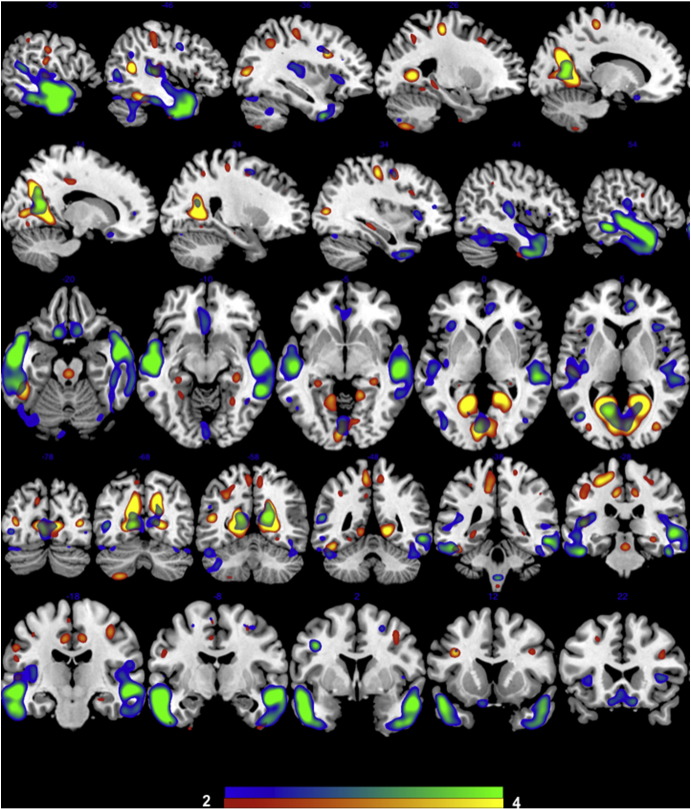
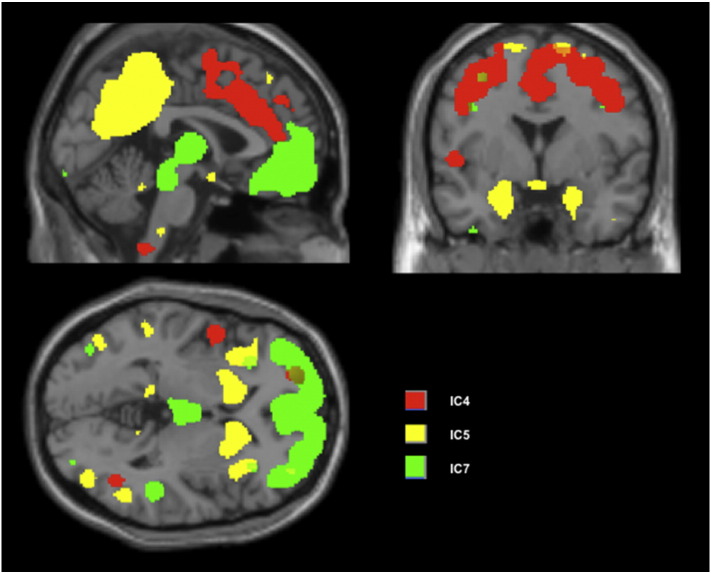
Morphometric variations in grey matter predicted a substantial portion of inter-individual variance in negative but not positive FTD. A pattern of concomitant striato-insular/precuneus reduction along with frontocingular grey matter increase had a significant association with negative FTD.
These results suggest that concomitant increase and decrease in grey matter occur in association with persistent negative thought disorder in clinically stable individuals with schizophrenia.
持续性形式思维障碍(FTD)是精神分裂症最具特征性的表现之一。多项神经影像学研究报告了与FTD相关的空间上不同的神经解剖学变化。鉴于迄今为止大多数研究采用的是单变量定位方法,这种方法掩盖了对区域间协变关系的研究,本研究聚焦于导致FTD的解剖学变化的多变量系统模式。
对19名临床症状稳定且正在服药的精神分裂症患者和20名健康对照者的言语样本进行评估,以检测细微的形式思维障碍。对所有受试者进行超高场(7T)解剖磁共振成像扫描。使用独立成分分析方法(基于源的形态测量法)识别多变量形态测量模式。通过多元回归分析,确定预测阳性和阴性FTD评分的形态测量模式。
灰质的形态测量变化可预测阴性FTD中相当一部分个体间差异,但不能预测阳性FTD。纹状体 - 脑岛/楔前叶减少伴额扣带回灰质增加的模式与阴性FTD显著相关。
这些结果表明,在临床症状稳定的精神分裂症患者中,灰质的增加和减少与持续性阴性思维障碍相关。