Hu Jinquan, Deng Guoying, Tian Ye, Pu Yingyan, Cao Peng, Yuan Wen
Department of Orthopedic Surgery, Changzheng Hospital, Shanghai 200023, P.R. China.
Institute of Neuroscience and Key Laboratory of Molecular Neurobiology of The Ministry of Education, Neuroscience Research Center of Changzheng Hospital, Second Military Medical University, Shanghai 200433, P.R. China.
Mol Med Rep. 2015 Oct;12(4):5701-8. doi: 10.3892/mmr.2015.4139. Epub 2015 Jul 29.
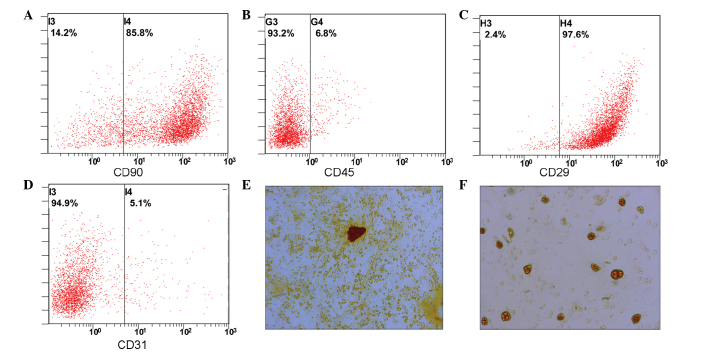
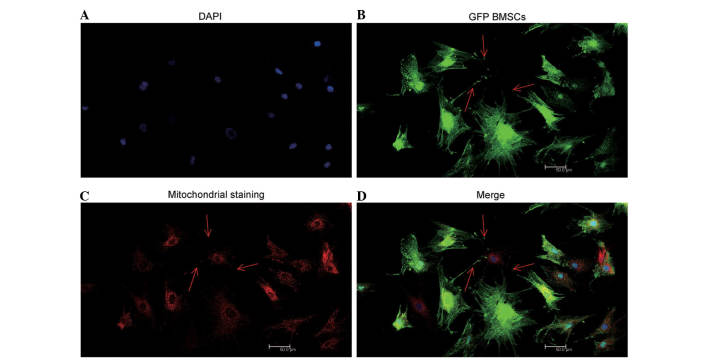
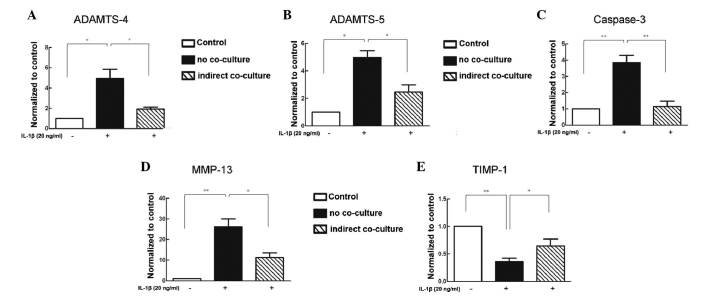
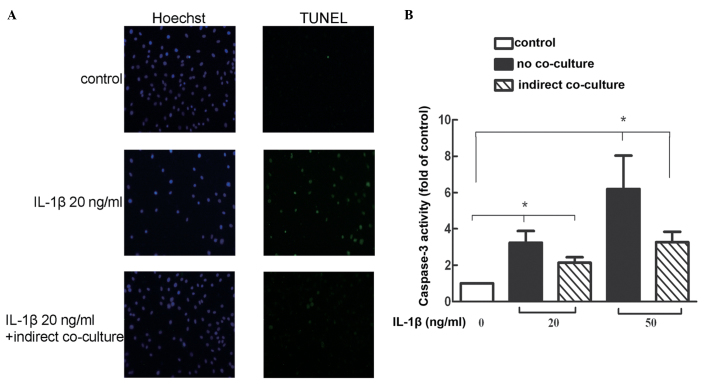
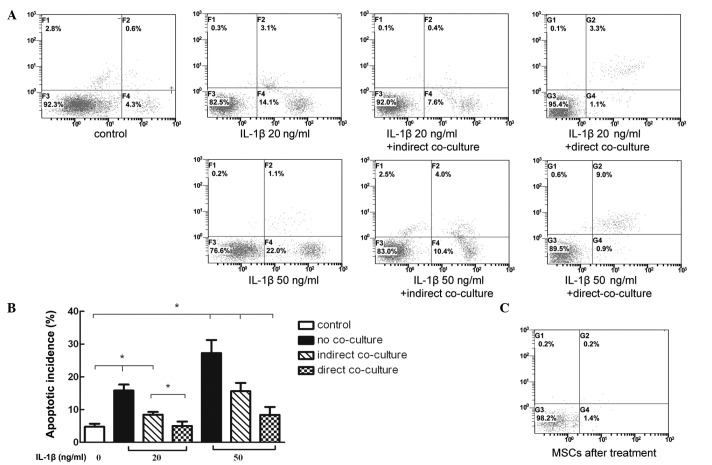
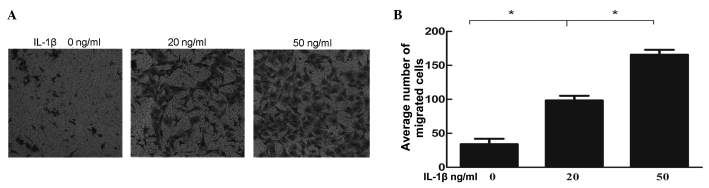
Excessive apoptosis and high expression levels of interleukin‑1β (IL‑1β) in disc cells have been reported to serve important roles in intervertebral disc degeneration (IVDD). Previous studies investigating mesenchymal stem cells (MSCs) have indicated potential for their use in the treatment of IVDD. However, the therapeutic potential and anti‑apoptotic ability of MSCs remains to be fully elucidated. The present study aimed to establish an in vitro model for bone marrow‑derived MSC (BMSC) therapy by investigating the anti‑apoptotic effects, in addition to the migration of BMSCs to nucleus pulposus (NP) cells stimulated by IL‑1β. A co-culture system of BMSCs and NP cells was founded. Following inflammatory stimulation, the NP cells exhibited increased indexes for inflammation‑induced degeneration. The degenerative and apoptotic indexes were significantly reduced when NP cells were co‑cultured with BMSCs. Compared with the indirect co-culture group, the direct co-culture group exhibited an improved capacity for anti-apoptosis. In addition, IL‑1β‑stimulated NP cells attracted and mediated the migration of BMSCs. Mitochondrial transfer from BMSCs to NP cells by tunneling nanotubes was also observed. In conclusion, the anti‑apoptosis and the migration, in addition to mitochondrial transfer associated with BMSC treatments in IVDD, were investigated in vitro in the present study. The interaction between stimulated NP cells and BMSCs is likely involved in to simulating the in vivo process of stem cell‑mediated repair.
据报道,椎间盘细胞中过度凋亡和白细胞介素 -1β(IL-1β)的高表达水平在椎间盘退变(IVDD)中起重要作用。先前对间充质干细胞(MSCs)的研究表明其在治疗IVDD方面具有潜力。然而,MSCs的治疗潜力和抗凋亡能力仍有待充分阐明。本研究旨在通过研究骨髓源性MSC(BMSC)的抗凋亡作用以及BMSCs向IL-1β刺激的髓核(NP)细胞的迁移,建立一种用于BMSC治疗的体外模型。建立了BMSCs和NP细胞的共培养系统。炎症刺激后,NP细胞的炎症诱导退变指标增加。当NP细胞与BMSCs共培养时,退变和凋亡指标显著降低。与间接共培养组相比,直接共培养组的抗凋亡能力有所提高。此外,IL-1β刺激的NP细胞吸引并介导了BMSCs的迁移。还观察到通过隧道纳米管从BMSCs向NP细胞的线粒体转移。总之,本研究在体外研究了IVDD中与BMSC治疗相关的抗凋亡、迁移以及线粒体转移。刺激的NP细胞与BMSCs之间的相互作用可能参与模拟干细胞介导修复的体内过程。