Kawano Masanori, Tanaka Kazuhiro, Itonaga Ichiro, Ikeda Shinichi, Iwasaki Tatsuya, Tsumura Hiroshi
Department of Orthopaedic Surgery, Faculty of Medicine, Oita University, Oita, 879-5593, Japan.
J Exp Clin Cancer Res. 2015 Aug 5;34(1):76. doi: 10.1186/s13046-015-0192-z.
Aberrant microRNA (miRNA) expression plays an essential role in osteosarcoma (OS) pathogenesis. Recent studies have shown that dysregulation of miRNA expression is associated with increased tumorigenesis and poor prognosis in several types of cancers, including OS. The aim of this study was to investigate the relevant microRNAs involved in the development of OS.
To explore possible oncogenic factors in OS, we used a microarray-based approach to profile changes in the expression of miRNAs and their target mRNAs in five OS cell lines and human mesenchymal stem cells (hMSCs). An miRNA, miR-93, was significantly up-regulated, whereas phosphatase and tensin homologue (PTEN) expression was significantly down-regulated in all tested OS cells, when compared with hMSCs.
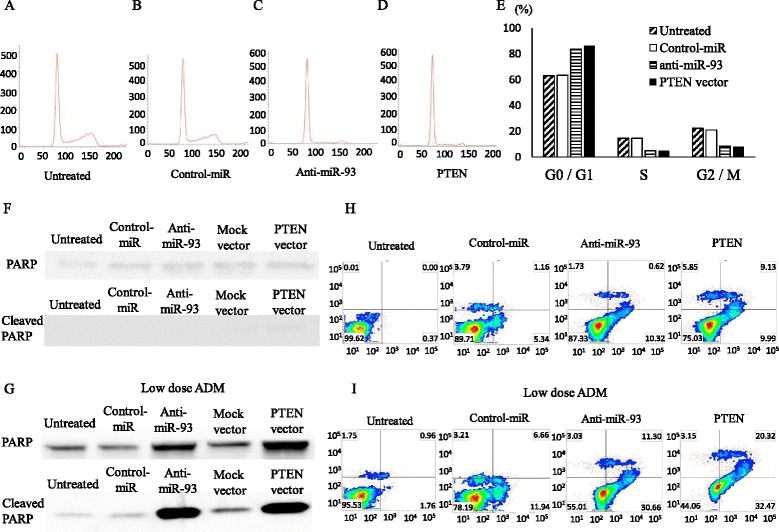
When anti-miR-93 was transfected into OS cell lines, PTEN expression was greatly increased, suggesting that PTEN might be a target of miR-93 in ES cells. The expression of phosphorylated Akt protein, which is known to be inversely correlated with that of PTEN, was significantly down-regulated in anti-miR-93-transfected cells. Furthermore, transfection of anti-miR-93 inhibited the proliferation and cell cycle progression of ES cells. In addition, the down-regulation of miR-93 in these cells significantly suppressed tumor growth in vivo.
Ectopic expression of miR-93 decreased PTEN protein levels. Furthermore, miR-93 increased proliferation and decreased apoptosis in OS cells, whereas its silencing in these cells inhibited such carcinogenic processes. Taking these observations together, miR-93 can be seen to play a critical role in carcinogenesis through suppression of PTEN, and may serve as a therapeutic target for the treatment of OS.
异常的微小RNA(miRNA)表达在骨肉瘤(OS)发病机制中起重要作用。最近的研究表明,miRNA表达失调与包括OS在内的几种癌症的肿瘤发生增加和预后不良有关。本研究的目的是调查参与OS发生发展的相关微小RNA。
为了探索OS中可能的致癌因素,我们采用基于微阵列的方法来分析五种OS细胞系和人间充质干细胞(hMSCs)中miRNA及其靶mRNA表达的变化。与hMSCs相比,一种miRNA,即miR-93,在所有测试的OS细胞中显著上调,而磷酸酶和张力蛋白同源物(PTEN)表达显著下调。
当将抗miR-93转染到OS细胞系中时,PTEN表达大幅增加,表明PTEN可能是ES细胞中miR-93的靶标。已知与PTEN表达呈负相关的磷酸化Akt蛋白的表达在抗miR-93转染的细胞中显著下调。此外,抗miR-93的转染抑制了ES细胞的增殖和细胞周期进程。另外,这些细胞中miR-93的下调在体内显著抑制了肿瘤生长。
miR-93的异位表达降低了PTEN蛋白水平。此外,miR-93增加了OS细胞的增殖并减少了凋亡,而其在这些细胞中的沉默则抑制了此类致癌过程。综合这些观察结果,可见miR-93通过抑制PTEN在致癌过程中起关键作用,并且可能作为OS治疗的一个治疗靶点。