Ravicz Miranda M, Perdue Katherine L, Westerlund Alissa, Vanderwert Ross E, Nelson Charles A
Laboratories of Cognitive Neuroscience, Division of Developmental Medicine, Boston Children's Hospital, Boston MA, USA.
Laboratories of Cognitive Neuroscience, Division of Developmental Medicine, Boston Children's Hospital, Boston MA, USA ; Department of Pediatrics, Harvard Medical School, Boston MA, USA.
Front Psychol. 2015 Jul 20;6:922. doi: 10.3389/fpsyg.2015.00922. eCollection 2015.
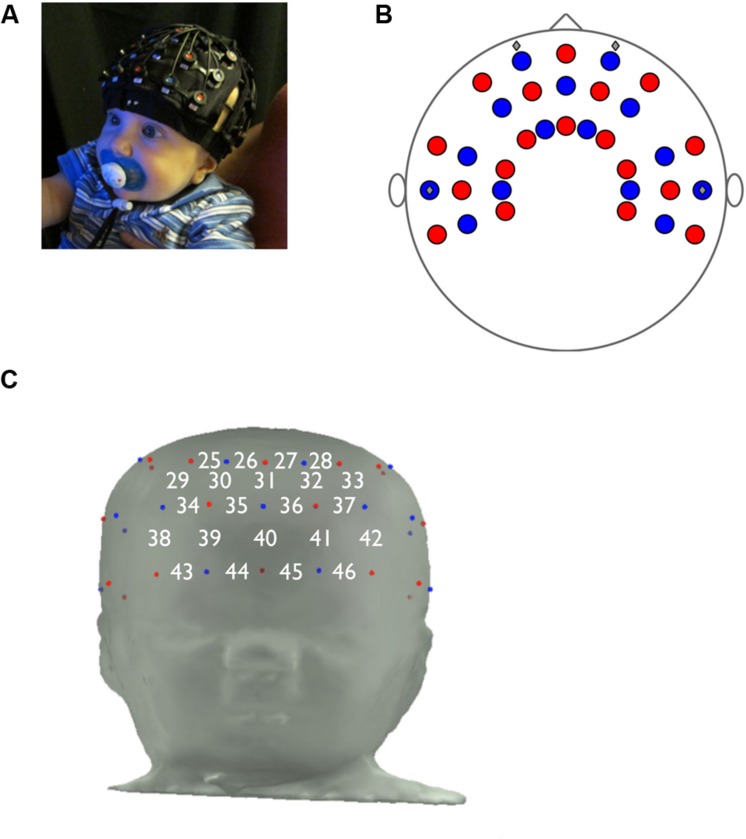
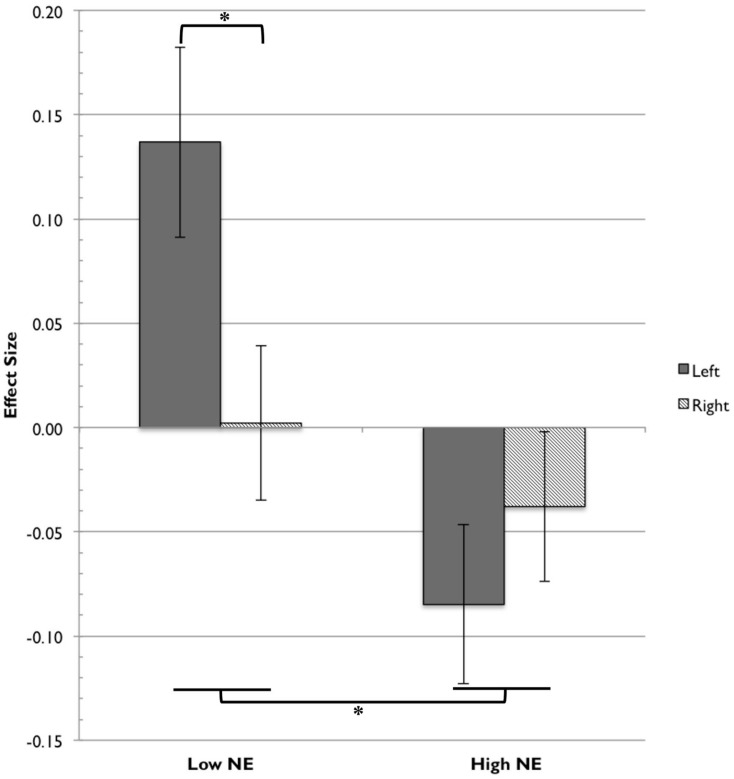
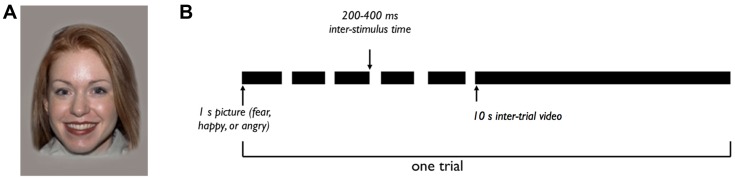
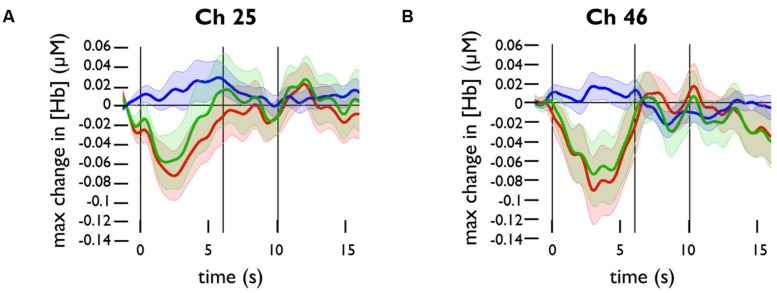
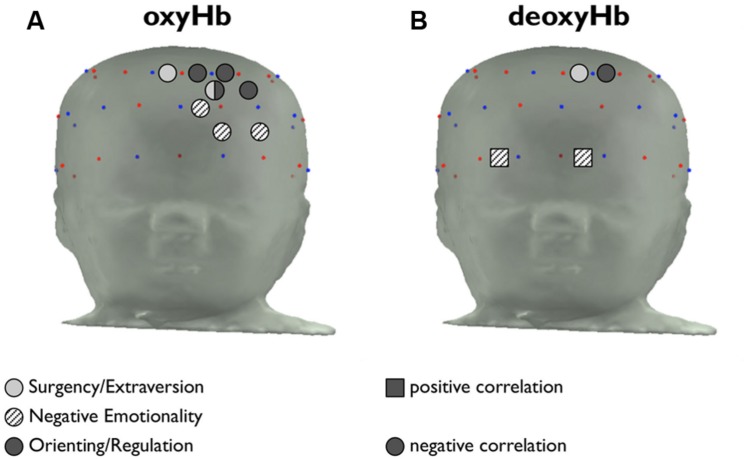
Accurate decoding of facial expressions is critical for human communication, particularly during infancy, before formal language has developed. Different facial emotions elicit distinct neural responses within the first months of life. However, there are broad individual differences in such responses, so that the same emotional expression can elicit different brain responses in different infants. In this study, we sought to investigate such differences in the processing of emotional faces by analyzing infants's cortical metabolic responses to face stimuli and examining whether individual differences in these responses might vary as a function of infant temperament. Seven-month-old infants (N = 24) were shown photographs of women portraying happy expressions, and neural activity was recorded using functional near-infrared spectroscopy (fNIRS). Temperament data were collected using the Revised Infant Behavior Questionnaire Short Form, which assesses the broad temperament factors of Surgency/Extraversion (S/E), Negative Emotionality (NE), and Orienting/Regulation (O/R). We observed that oxyhemoglobin (oxyHb) responses to happy face stimuli were negatively correlated with infant temperament factors in channels over the left prefrontal cortex (uncorrected for multiple comparisons). To investigate the brain activity underlying this association, and to explore the use of fNIRS in measuring cortical asymmetry, we analyzed hemispheric asymmetry with respect to temperament groups. Results showed preferential activation of the left hemisphere in low-NE infants in response to smiling faces. These results suggest that individual differences in temperament are associated with differential prefrontal oxyHb responses to faces. Overall, these analyses contribute to our current understanding of face processing during infancy, demonstrate the use of fNIRS in measuring prefrontal asymmetry, and illuminate the neural correlates of face processing as modulated by temperament.
准确解码面部表情对于人际交流至关重要,尤其是在婴儿期,即在正式语言发展之前。不同的面部情绪在生命的最初几个月内会引发不同的神经反应。然而,这些反应存在广泛的个体差异,以至于相同的情绪表达在不同的婴儿身上可能会引发不同的大脑反应。在本研究中,我们试图通过分析婴儿对脸部刺激的皮质代谢反应,并研究这些反应中的个体差异是否可能随婴儿气质而变化,来探究在处理情绪面孔方面的此类差异。我们向24名7个月大的婴儿展示了描绘快乐表情的女性照片,并使用功能近红外光谱技术(fNIRS)记录神经活动。使用修订版婴儿行为问卷简表收集气质数据,该问卷评估活力/外向性(S/E)、消极情绪(NE)和定向/调节(O/R)等广泛的气质因素。我们观察到,在左前额叶皮质区域的通道中,对快乐面孔刺激的氧合血红蛋白(oxyHb)反应与婴儿气质因素呈负相关(未进行多重比较校正)。为了研究这种关联背后的大脑活动,并探索fNIRS在测量皮质不对称性方面的应用,我们分析了不同气质组的半球不对称性。结果显示,低消极情绪的婴儿在面对笑脸时左半球有优先激活。这些结果表明,气质方面的个体差异与前额叶对面孔的氧合血红蛋白反应差异有关。总体而言,这些分析有助于我们目前对婴儿期面部处理的理解,证明了fNIRS在测量前额叶不对称性方面的应用,并阐明了受气质调节的面部处理的神经关联。