Watson Karli K, Miller Stephanie, Hannah Eleanor, Kovac Megan, Damiano Cara R, Sabatino-DiCrisco Antoinette, Turner-Brown Lauren, Sasson Noah J, Platt Michael L, Dichter Gabriel S
Institute for Cognitive Science, University of Colorado at Boulder , Boulder, CO, USA.
Carolina Institute for Developmental Disabilities , Chapel Hill, NC, USA.
Front Psychol. 2015 Jul 22;6:1026. doi: 10.3389/fpsyg.2015.01026. eCollection 2015.
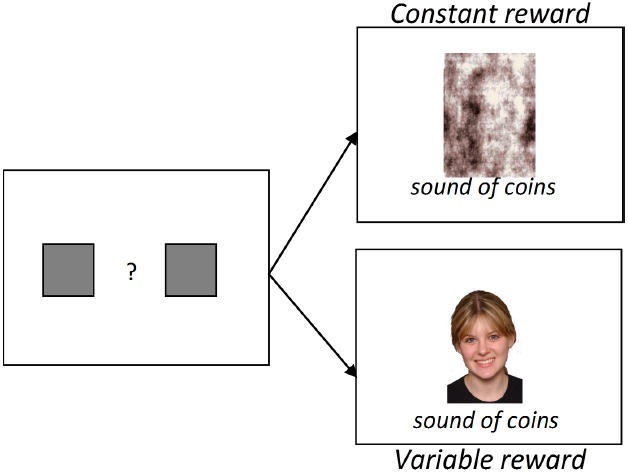
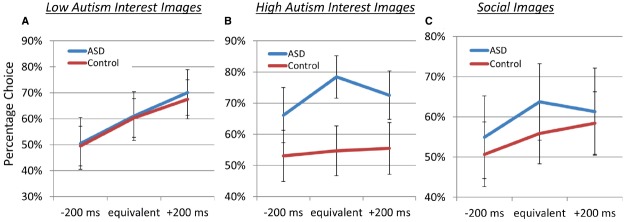
An econometric choice task was used to estimate the implicit reward value of social and non-social stimuli related to restricted interests in children and adolescents with (n = 12) and without (n = 22) autism spectrum disorder (ASD). Mixed effects logistic regression analyses revealed that groups differed in valuation of images related to restricted interests: control children were indifferent to cash payouts to view these images, but children with ASD were willing to receive less cash payout to view these images. Groups did not differ in valuation of social images or non-social images not related to restricted interests. Results highlight that motivational accounts of ASD should also consider the reward value of non-social stimuli related to restricted interests in ASD (Dichter and Adolphs, 2012).
采用计量经济学选择任务来估计与患有(n = 12)和未患有(n = 22)自闭症谱系障碍(ASD)的儿童及青少年的受限兴趣相关的社交和非社交刺激的隐性奖励价值。混合效应逻辑回归分析显示,两组在对与受限兴趣相关图像的估值上存在差异:对照组儿童对为观看这些图像而获得的现金支付无动于衷,但患有ASD的儿童愿意为观看这些图像接受较少的现金支付。两组在对与受限兴趣无关的社交图像或非社交图像的估值上没有差异。结果表明,对ASD的动机解释还应考虑与ASD中受限兴趣相关的非社交刺激的奖励价值(Dichter和Adolphs,2012)。