Valenti Roberto G, Dryanovski Ivan, Xiao Jizhong
The City College of New York, The City University of New York, Convent Avenue and 140th Street, New York, NY 10031, USA.
The Graduate Center, The City University of New York, 365 Fifth Avenue, New York, NY 10016, USA.
Sensors (Basel). 2015 Aug 6;15(8):19302-30. doi: 10.3390/s150819302.
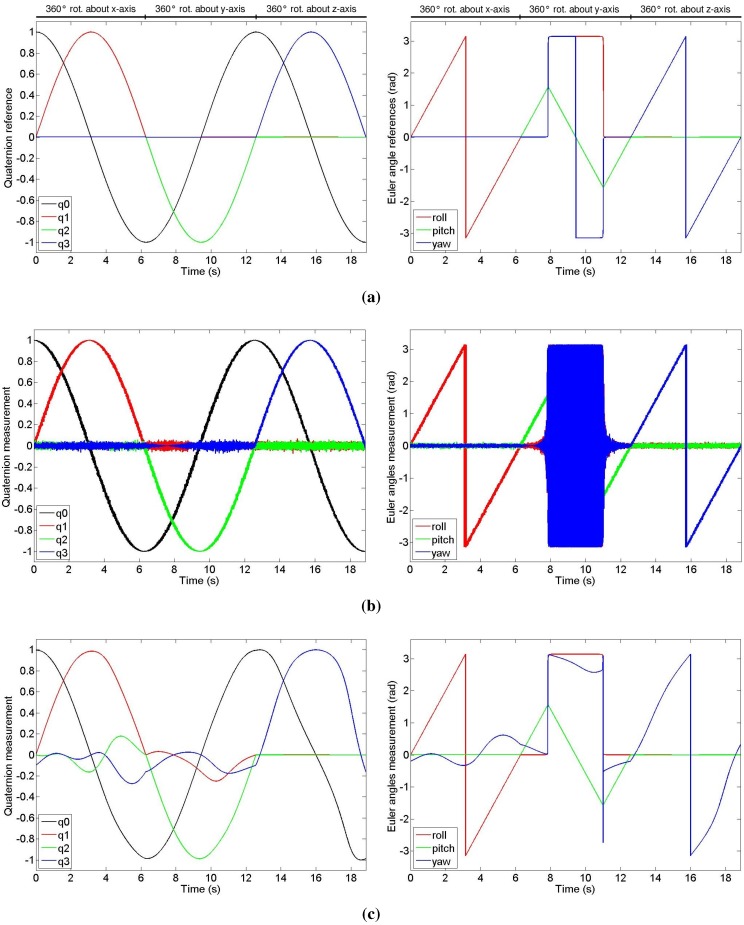
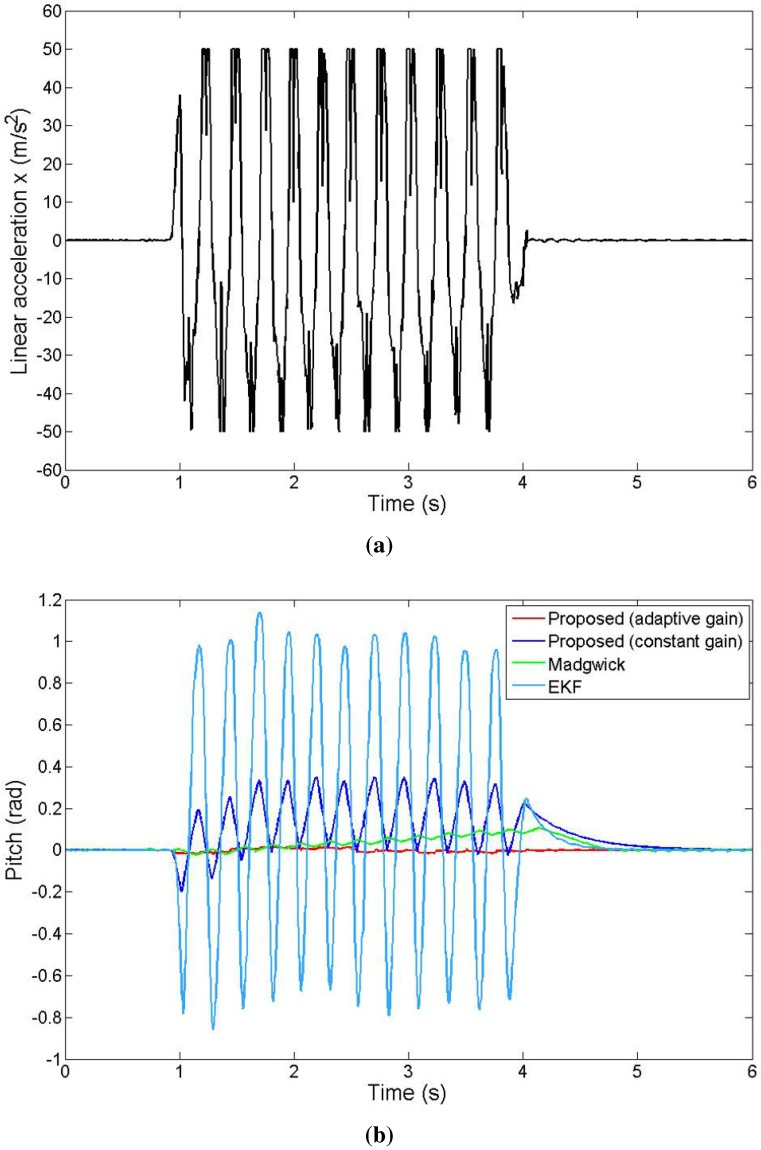
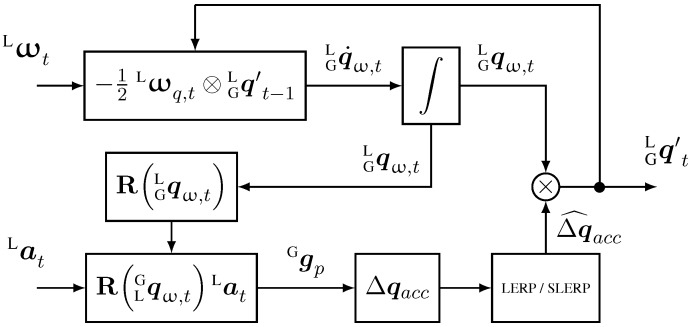
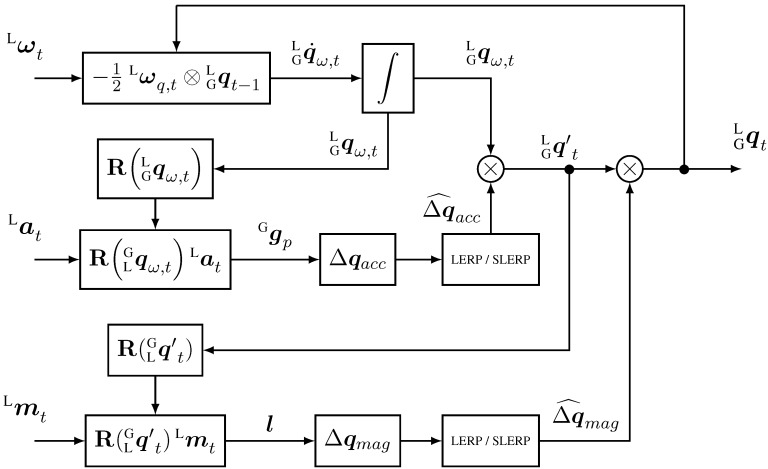
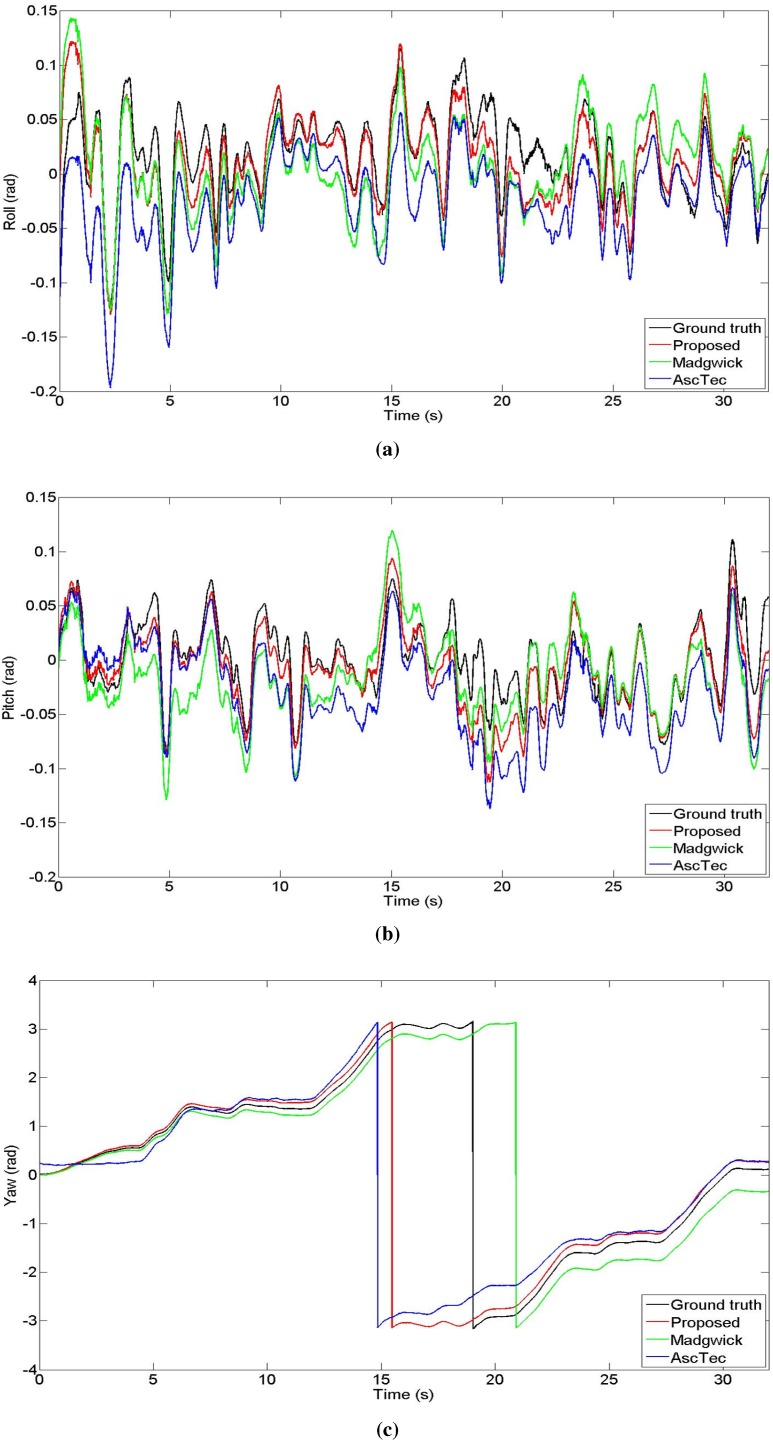
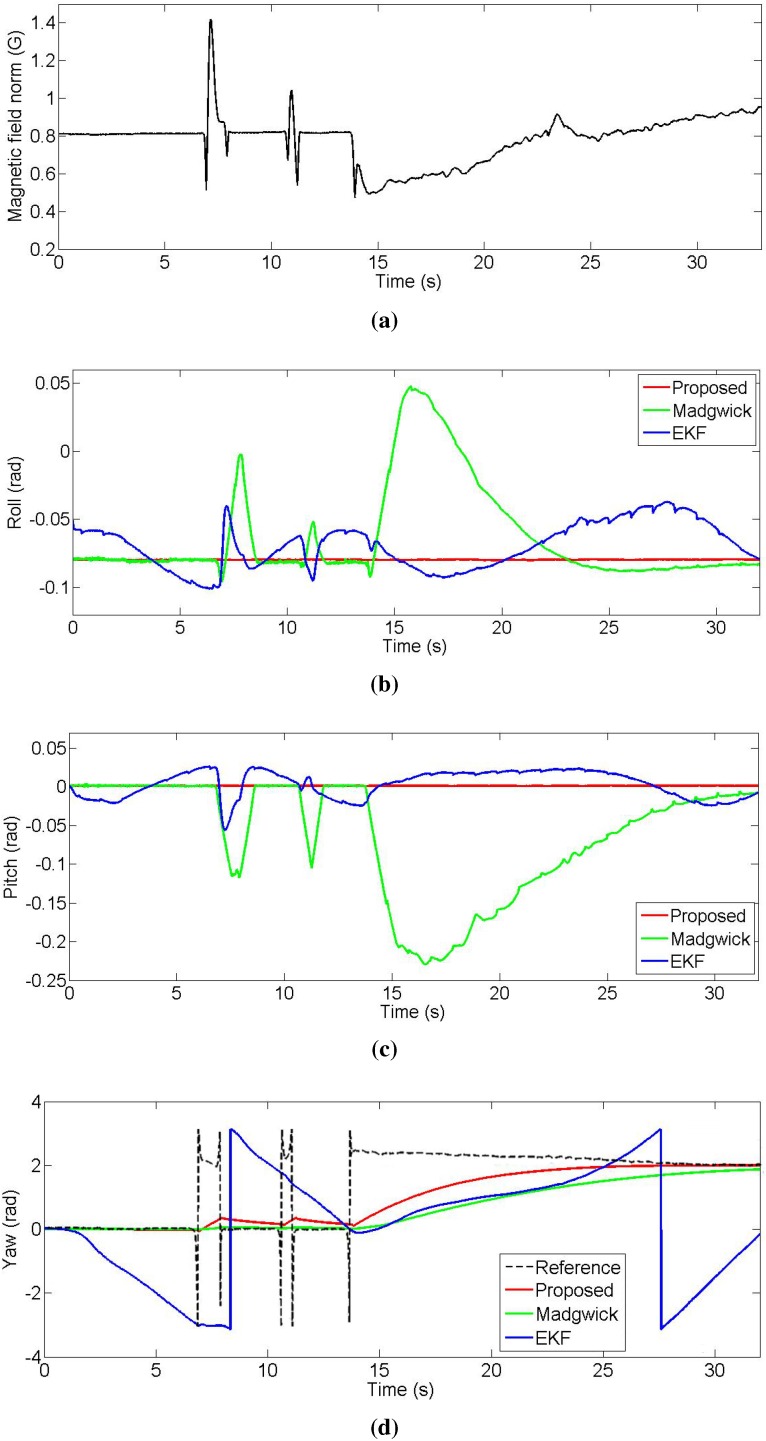
Orientation estimation using low cost sensors is an important task for Micro Aerial Vehicles (MAVs) in order to obtain a good feedback for the attitude controller. The challenges come from the low accuracy and noisy data of the MicroElectroMechanical System (MEMS) technology, which is the basis of modern, miniaturized inertial sensors. In this article, we describe a novel approach to obtain an estimation of the orientation in quaternion form from the observations of gravity and magnetic field. Our approach provides a quaternion estimation as the algebraic solution of a system from inertial/magnetic observations. We separate the problems of finding the "tilt" quaternion and the heading quaternion in two sub-parts of our system. This procedure is the key for avoiding the impact of the magnetic disturbances on the roll and pitch components of the orientation when the sensor is surrounded by unwanted magnetic flux. We demonstrate the validity of our method first analytically and then empirically using simulated data. We propose a novel complementary filter for MAVs that fuses together gyroscope data with accelerometer and magnetic field readings. The correction part of the filter is based on the method described above and works for both IMU (Inertial Measurement Unit) and MARG (Magnetic, Angular Rate, and Gravity) sensors. We evaluate the effectiveness of the filter and show that it significantly outperforms other common methods, using publicly available datasets with ground-truth data recorded during a real flight experiment of a micro quadrotor helicopter.
利用低成本传感器进行姿态估计对于微型飞行器(MAV)来说是一项重要任务,以便为姿态控制器获得良好的反馈。挑战来自微机电系统(MEMS)技术的低精度和噪声数据,而MEMS技术是现代小型惯性传感器的基础。在本文中,我们描述了一种从重力和磁场观测中获取四元数形式姿态估计的新方法。我们的方法通过惯性/磁观测提供四元数估计作为系统的代数解。我们在系统的两个子部分中分别解决寻找“倾斜”四元数和航向四元数的问题。当传感器被不需要的磁通量包围时,此过程是避免磁干扰对姿态的横滚和俯仰分量产生影响的关键。我们首先通过分析证明了我们方法的有效性,然后使用模拟数据进行了实证验证。我们为微型飞行器提出了一种新颖的数据融合互补滤波器,该滤波器将陀螺仪数据与加速度计和磁场读数融合在一起。滤波器的校正部分基于上述方法,适用于惯性测量单元(IMU)和磁、角速率和重力(MARG)传感器。我们使用微型四旋翼直升机实际飞行实验期间记录的带有地面真值数据的公开可用数据集,评估了该滤波器的有效性,并表明它明显优于其他常用方法。