
免疫探索者(IMEX):一个基于IMGT/HighV-QUEST预处理的NGS数据对免疫球蛋白和T细胞受体进行多样性和克隆性分析的软件框架。
ImmunExplorer (IMEX): a software framework for diversity and clonality analyses of immunoglobulins and T cell receptors on the basis of IMGT/HighV-QUEST preprocessed NGS data.
作者信息
Schaller Susanne, Weinberger Johannes, Jimenez-Heredia Raul, Danzer Martin, Oberbauer Rainer, Gabriel Christian, Winkler Stephan M
机构信息
University of Applied Sciences Upper Austria, Hagenberg Campus, Bioinformatics Research Group, Softwarepark 13, Hagenberg, 4232, Austria.
Red Cross Transfusion Service of Upper Austria, Krankenhausstrasse 7, Linz, 4020, Austria.
出版信息
BMC Bioinformatics. 2015 Aug 12;16:252. doi: 10.1186/s12859-015-0687-9.
BACKGROUND
Today's modern research of B and T cell antigen receptors (the immunoglobulins (IG) or antibodies and T cell receptors (TR)) forms the basis for detailed analyses of the human adaptive immune system. For instance, insights in the state of the adaptive immune system provide information that is essentially important in monitoring transplantation processes and the regulation of immune suppressiva. In this context, algorithms and tools are necessary for analyzing the IG and TR diversity on nucleotide as well as on amino acid sequence level, identifying highly proliferated clonotypes, determining the diversity of the cell repertoire found in a sample, comparing different states of the human immune system, and visualizing all relevant information.
RESULTS
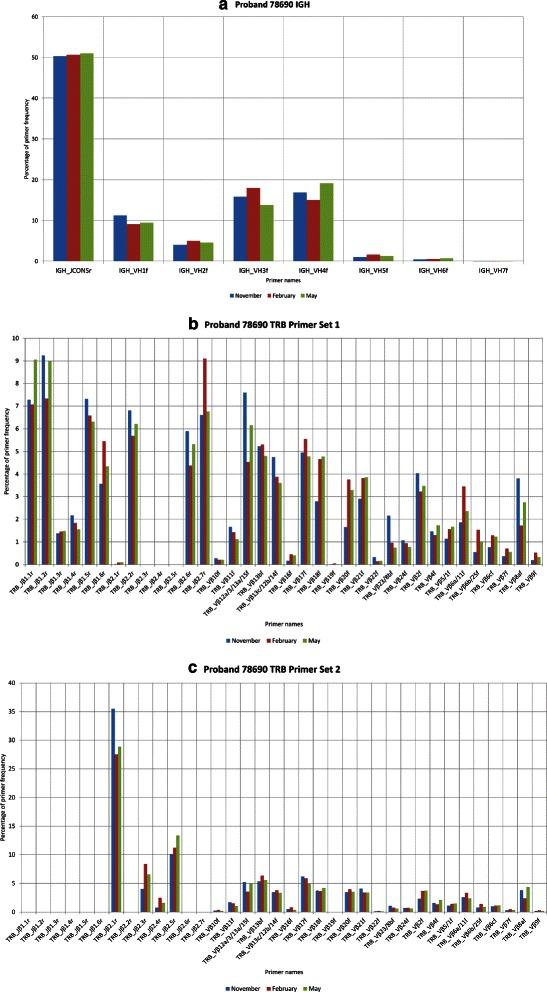
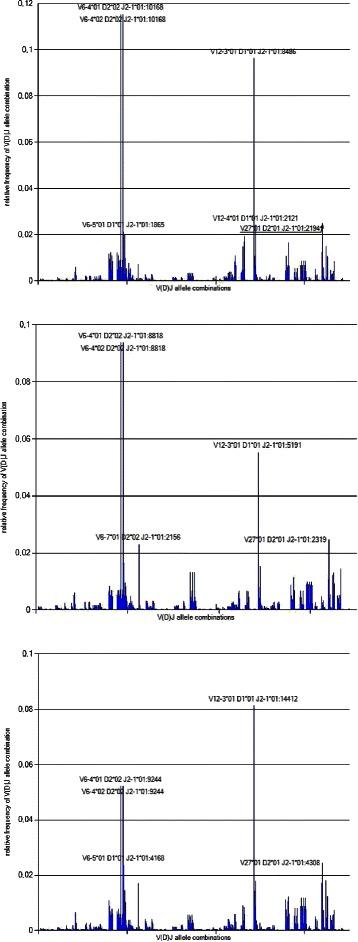
We here present IMEX, a software framework for the detailed characterization and visualization of the state of human IG and TR repertoires. IMEX offers a broad range of algorithms for statistical analysis of IG and TR data, CDR and V-(D)-J analysis, diversity analysis by calculating the distribution of IG and TR, calculating primer efficiency, and comparing multiple data sets. We use a mathematical model that is able to describe the number of unique clonotypes in a sample taking into account the true number of unique sequences and read errors; we heuristically optimize the parameters of this model. IMEX uses IMGT/HighV-QUEST analysis outputs and includes methods for splitting and merging to enable the submission to this portal and to combine the outputs results, respectively. All calculation results can be visualized and exported.
CONCLUSION
IMEX is an user-friendly and flexible framework for performing clonality experiments based on CDR and V-(D)-J rearranged regions, diversity analysis, primer efficiency, and various different visualization experiments. Using IMEX, various immunological reactions and alterations can be investigated in detail. IMEX is freely available for Windows and Unix platforms at http://bioinformatics.fh-hagenberg.at/immunexplorer/.
背景
当今对B细胞和T细胞抗原受体(免疫球蛋白(IG)或抗体以及T细胞受体(TR))的现代研究构成了详细分析人类适应性免疫系统的基础。例如,对适应性免疫系统状态的深入了解为监测移植过程和免疫抑制剂的调节提供了至关重要的信息。在这种背景下,需要算法和工具来分析核苷酸以及氨基酸序列水平上的IG和TR多样性,识别高度增殖的克隆型,确定样本中发现的细胞库的多样性,比较人类免疫系统的不同状态,并可视化所有相关信息。
结果
我们在此展示IMEX,这是一个用于详细表征和可视化人类IG和TR库状态的软件框架。IMEX提供了广泛的算法,用于IG和TR数据的统计分析、CDR和V-(D)-J分析、通过计算IG和TR的分布进行多样性分析、计算引物效率以及比较多个数据集。我们使用一个数学模型,该模型能够考虑独特序列的真实数量和读取错误来描述样本中独特克隆型的数量;我们通过启发式方法优化该模型的参数。IMEX使用IMGT/HighV-QUEST分析输出,并包括拆分和合并方法,以便分别提交到该门户并组合输出结果。所有计算结果都可以可视化并导出。
结论
IMEX是一个用户友好且灵活的框架,用于基于CDR和V-(D)-J重排区域进行克隆性实验、多样性分析、引物效率分析以及各种不同的可视化实验。使用IMEX,可以详细研究各种免疫反应和变化。IMEX可在http://bioinformatics.fh-hagenberg.at/immunexplorer/上免费获取,适用于Windows和Unix平台。


 Zotero 插件