Szempruch Anthony J, Choudhury Rajarshi, Wang Zefeng, Hajduk Stephen L
Department of Biochemistry and Molecular Biology, University of Georgia, Athens, Georgia 30602, USA.
Department of Pharmacology, University of North Carolina Chapel Hill, Chapel Hill, North Carolina 27599, USA.
RNA. 2015 Oct;21(10):1781-9. doi: 10.1261/rna.052084.115. Epub 2015 Aug 11.
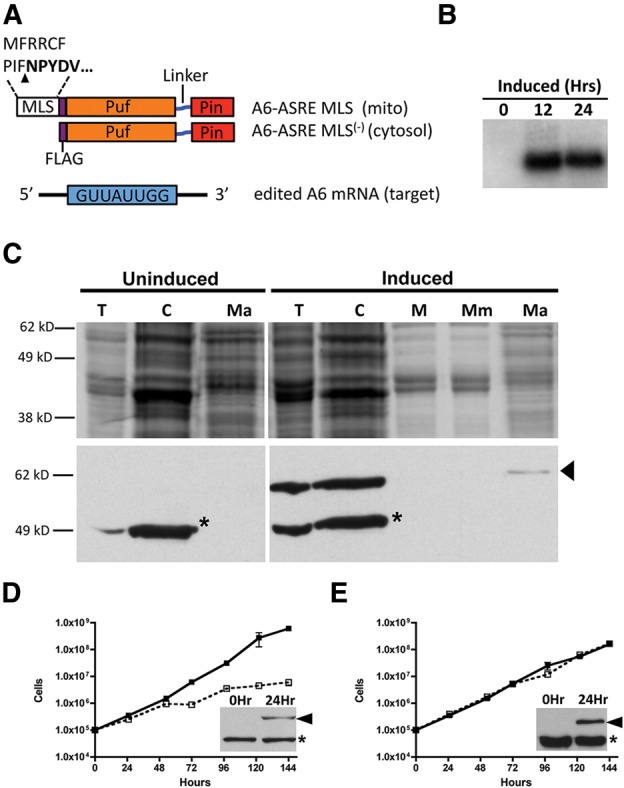
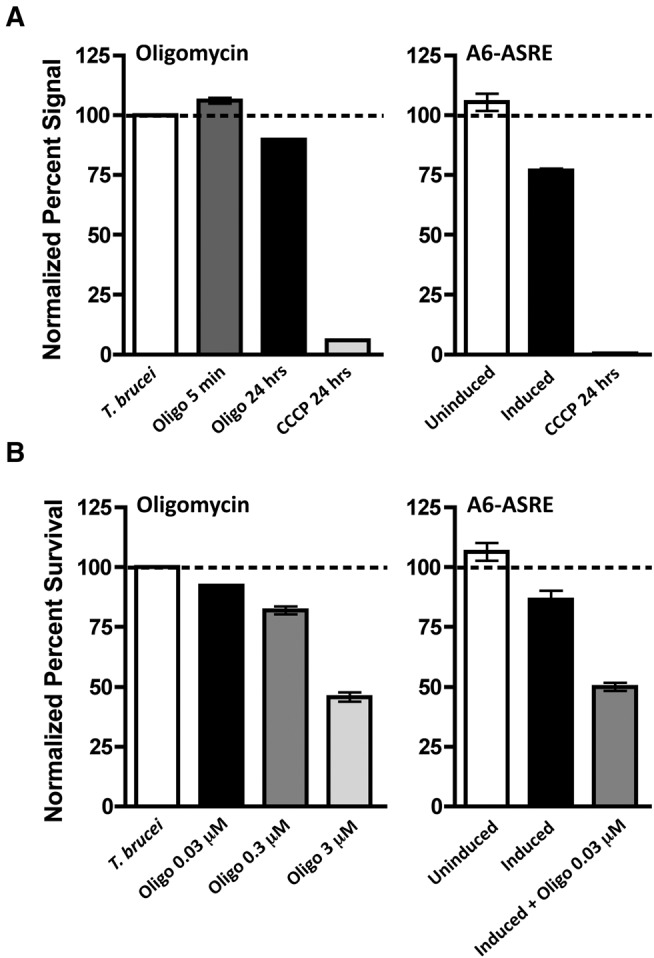
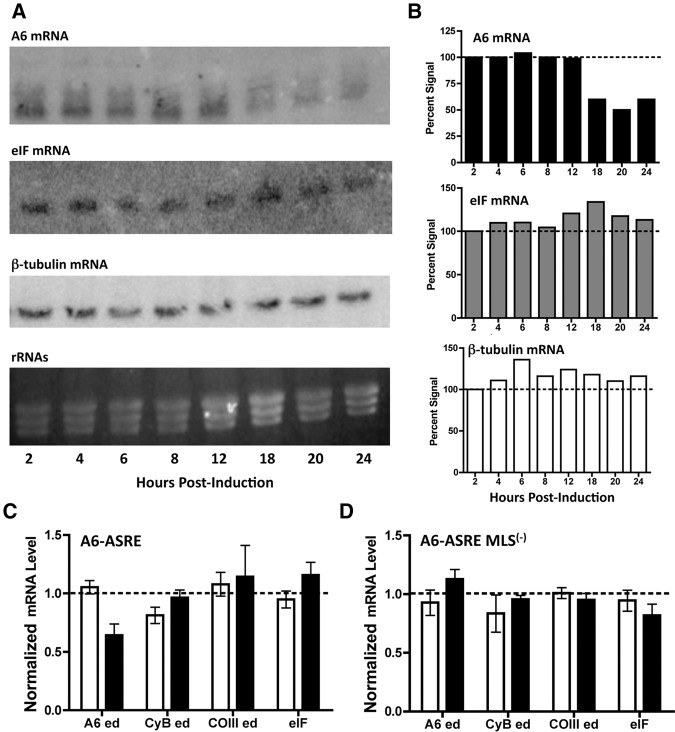
Trypanosomes possess a unique mitochondrial genome called the kinetoplast DNA (kDNA). Many kDNA genes encode pre-mRNAs that must undergo guide RNA-directed editing. In addition, alternative mRNA editing gives rise to diverse mRNAs and several kDNA genes encode open reading frames of unknown function. To better understand the mechanism of RNA editing and the function of mitochondrial RNAs in trypanosomes, we have developed a reverse genetic approach using artificial site-specific RNA endonucleases (ASREs) to directly silence kDNA-encoded genes. The RNA-binding domain of an ASRE can be programmed to recognize unique 8-nucleotide sequences, allowing the design of ASREs to cleave any target RNA. Utilizing an ASRE containing a mitochondrial localization signal, we targeted the extensively edited mitochondrial mRNA for the subunit A6 of the F0F1 ATP synthase (A6) in the procyclic stage of Trypanosoma brucei. This developmental stage, found in the midgut of the insect vector, relies on mitochondrial oxidative phosphorylation for ATP production with A6 forming the critical proton half channel across the inner mitochondrial membrane. Expression of an A6-targeted ASRE in procyclic trypanosomes resulted in a 50% reduction in A6 mRNA levels after 24 h, a time-dependent decrease in mitochondrial membrane potential (ΔΨm), and growth arrest. Expression of the A6-ASRE, lacking the mitochondrial localization signal, showed no significant growth defect. The development of the A6-ASRE allowed the first in vivo functional analysis of an edited mitochondrial mRNA in T. brucei and provides a critical new tool to study mitochondrial RNA biology in trypanosomes.
锥虫拥有一种独特的线粒体基因组,称为动质体DNA(kDNA)。许多kDNA基因编码的前体mRNA必须经过引导RNA介导的编辑。此外,可变mRNA编辑产生了多种mRNA,并且几个kDNA基因编码功能未知的开放阅读框。为了更好地理解锥虫中RNA编辑的机制以及线粒体RNA的功能,我们开发了一种反向遗传学方法,使用人工位点特异性RNA内切酶(ASREs)直接沉默kDNA编码的基因。ASRE的RNA结合结构域可以被编程以识别独特的8核苷酸序列,从而能够设计ASRE来切割任何靶RNA。利用含有线粒体定位信号的ASRE,我们在布氏锥虫的前循环期靶向F0F1 ATP合酶亚基A6(A6)的经过广泛编辑的线粒体mRNA。这个发育阶段存在于昆虫载体的中肠中,依赖线粒体氧化磷酸化产生ATP,其中A6形成跨线粒体内膜的关键质子半通道。在前循环锥虫中表达靶向A6的ASRE导致24小时后A6 mRNA水平降低50%,线粒体膜电位(ΔΨm)随时间下降,并导致生长停滞。缺乏线粒体定位信号的A6-ASRE的表达未显示出明显的生长缺陷。A6-ASRE的开发首次实现了对布氏锥虫中经过编辑的线粒体mRNA的体内功能分析,并为研究锥虫中线粒体RNA生物学提供了一个关键的新工具。