Konstantyner Tulio, Sesso Ricardo, de Camargo Maria Fernanda, de Santis Feltran Luciana, Koch-Nogueira Paulo Cesar
Sociedade Hospital Samaritano, Sao Paulo, Brazil; Pediatric Division, Federal Univesity of Sao Paulo, Sao Paulo, Brazil.
Sociedade Hospital Samaritano, Sao Paulo, Brazil; Nephrology Division, Federal University of Sao Paulo, Sao Paulo, Brazil.
PLoS One. 2015 Aug 18;10(8):e0135649. doi: 10.1371/journal.pone.0135649. eCollection 2015.
There are few reports in the literature estimating the epidemiologic characteristics of pediatric chronic dialysis. These patients have impaired physical growth, high number of comorbidities and great need for continuous attention of specialized services with high demand for complex and costly procedures.
The aim of this study was to estimate the incidence and prevalence rates and describe the characteristics of children and adolescents undergoing chronic dialysis treatment in a Brazilian demographic health survey.
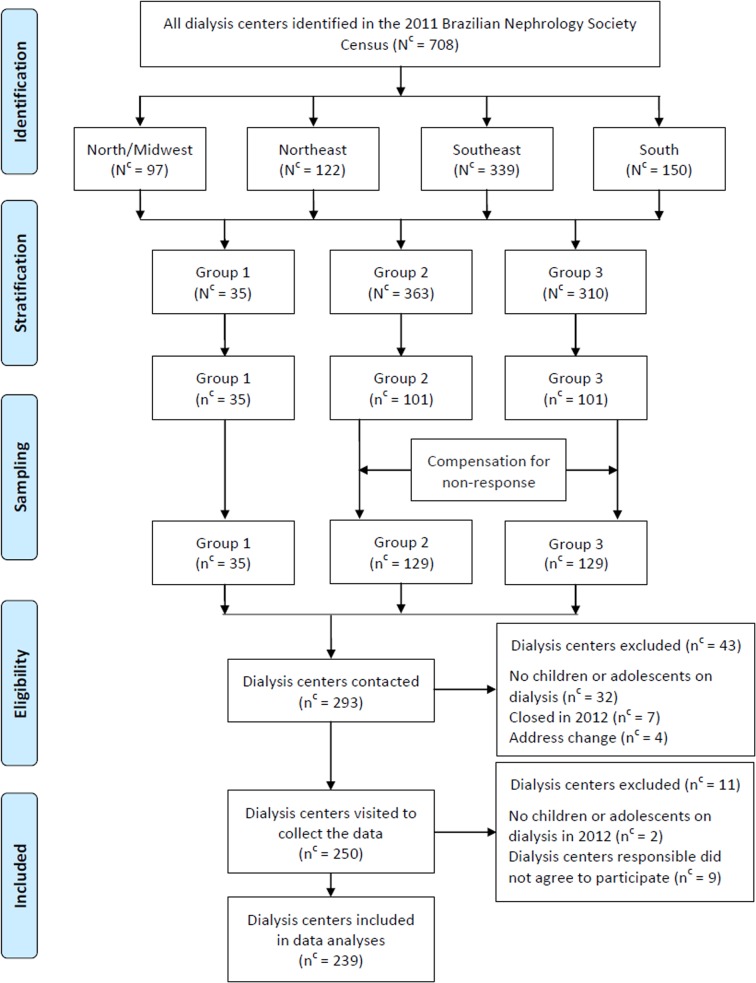
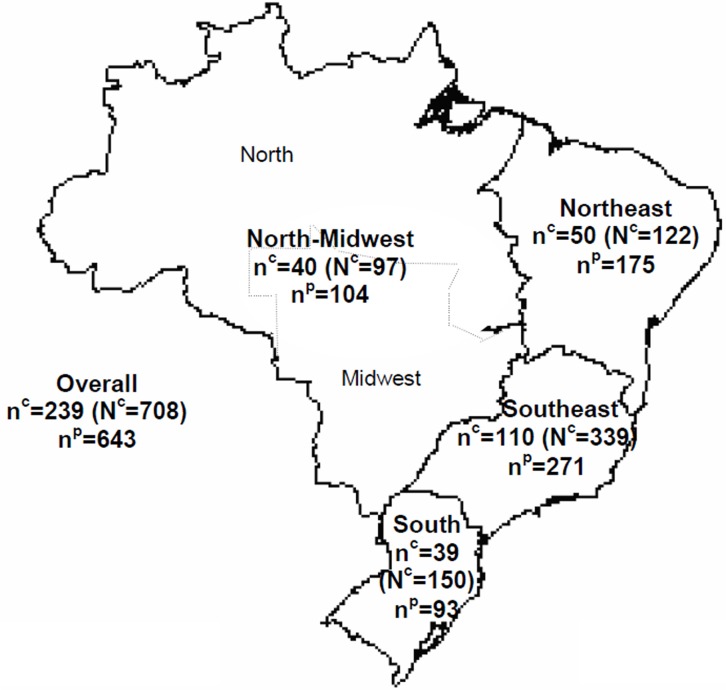
A cross-sectional study was performed in a representative sample of dialysis centers (nc = 239) that was established from the 2011 Brazilian Nephrology Society Census (Nc = 708). We collected data encompassing the five Brazilian macro-regions. We analyzed the data from all patients under 19 years of age. The sample population consisted of 643 children and adolescents who were on chronic dialysis program anytime in 2012. Data collection was carried out in the dialysis services by means of patients' records reviews and personal interviews with the centers' leaders.
We estimated that there were a total of 1,283 pediatric patients on chronic dialysis treatment in Brazil, resulting in a prevalence of 20.0 cases per million age-related population (pmarp) (95% CI: 14.8-25.3) and an incidence of 6.6 cases pmarp in 2012 (95% CI: 4.8-8.4). The South region had the highest prevalence and incidence rates of patients under dialysis therapy, 27.7 (95% CI: 7.3-48.1) and 11.0 (95% CI: 2.8-19.3) cases pmarp, respectively; the lowest prevalence and incidence rates were found in the North-Midwest region, 13.8 (95% CI: 6.2-21.4), and in the Northeast region, 3.8 (95% CI: 1.4-6.3) cases pmarp, respectively.
Brazil has an overall low prevalence of children on chronic dialysis treatment, figuring near the rates from others countries with same socioeconomic profile. There are substantial differences among regions related to pediatric chronic dialysis treatment. Joint strategies aiming to reduce inequities and improving access to treatment and adequacy of services across the Brazilian regions are necessary to provide an appropriate care setting for this population group.
文献中很少有关于儿童慢性透析流行病学特征的报道。这些患者身体生长发育受损,合并症数量众多,非常需要专业服务的持续关注,而这些服务对复杂且昂贵的治疗程序有很高的需求。
本研究的目的是在巴西人口健康调查中估计接受慢性透析治疗的儿童和青少年的发病率和患病率,并描述其特征。
对从2011年巴西肾脏病学会普查(Nc = 708)中选取的具有代表性的透析中心样本(nc = 239)进行了横断面研究。我们收集了涵盖巴西五个宏观区域的数据。我们分析了所有19岁以下患者的数据。样本人群包括2012年任何时间接受慢性透析治疗的643名儿童和青少年。通过查阅患者记录和与中心负责人进行个人访谈,在透析服务机构中收集数据。
我们估计巴西共有1283名接受慢性透析治疗的儿科患者,患病率为每百万年龄相关人口20.0例(pmarp)(95%置信区间:14.8 - 25.3),2012年发病率为每百万年龄相关人口6.6例(pmarp)(95%置信区间:4.8 - 8.4)。南部地区接受透析治疗的患者患病率和发病率最高,分别为每百万年龄相关人口27.7例(95%置信区间:7.3 - 48.1)和11.0例(95%置信区间:2.8 - 19.3);北部 - 中西部地区患病率最低,为每百万年龄相关人口13.8例(95%置信区间:6.2 - 21.4),东北地区发病率最低,为每百万年龄相关人口3.8例(95%置信区间:1.4 - 6.3)。
巴西儿童慢性透析治疗的总体患病率较低,与其他社会经济状况相同的国家相近。各地区在儿童慢性透析治疗方面存在显著差异。需要采取联合策略来减少不平等现象,并改善巴西各地区的治疗可及性和服务充分性,以便为这一人群提供适当的护理环境。