van Sittert Sybrand J, Mitchell Graham
Centre for Veterinary Wildlife Studies, Department of Production Animal Studies, Faculty of Veterinary Science, University of Pretoria , South Africa.
Centre for Veterinary Wildlife Studies, Department of Production Animal Studies, Faculty of Veterinary Science, University of Pretoria , South Africa ; Department of Zoology and Physiology, University of Wyoming , Laramie Wyoming , USA.
PeerJ. 2015 Aug 4;3:e1135. doi: 10.7717/peerj.1135. eCollection 2015.
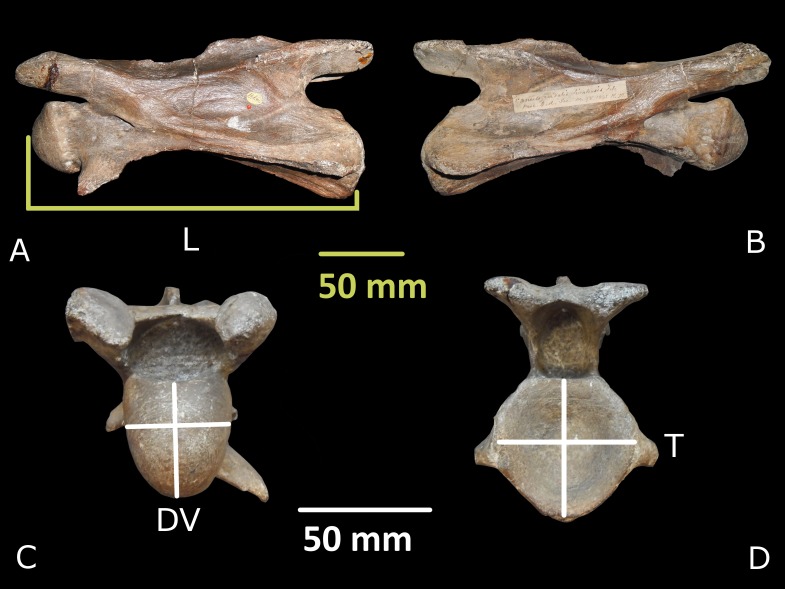
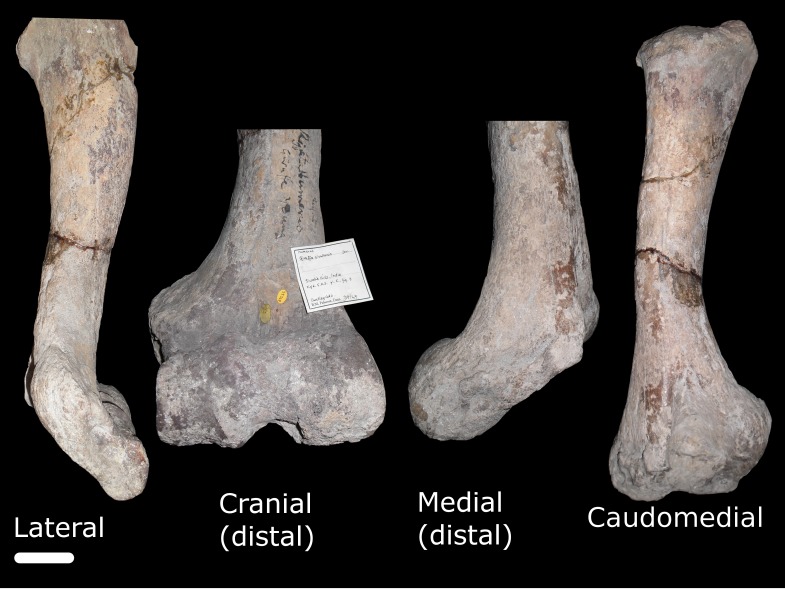
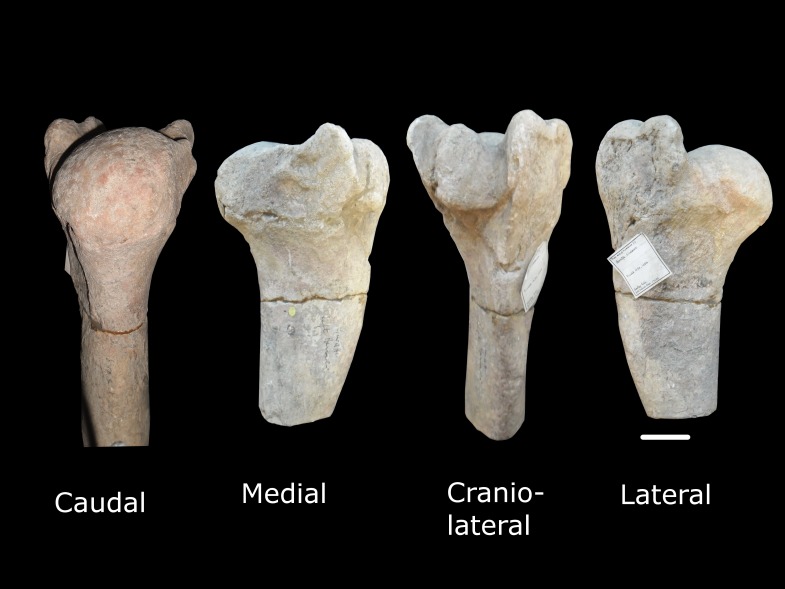
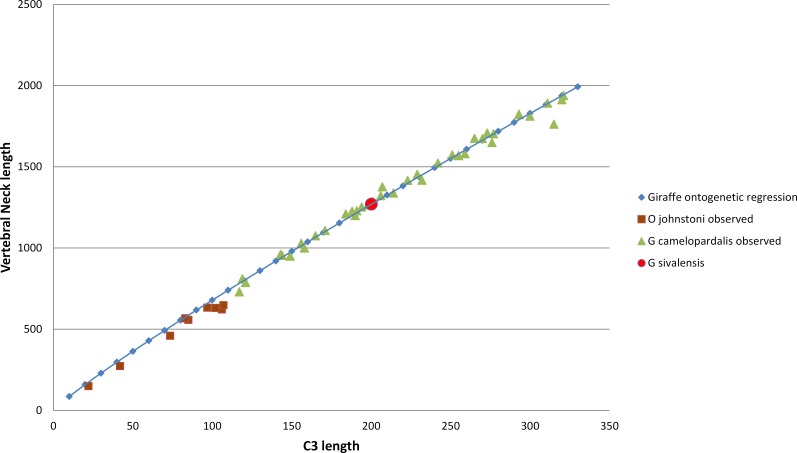
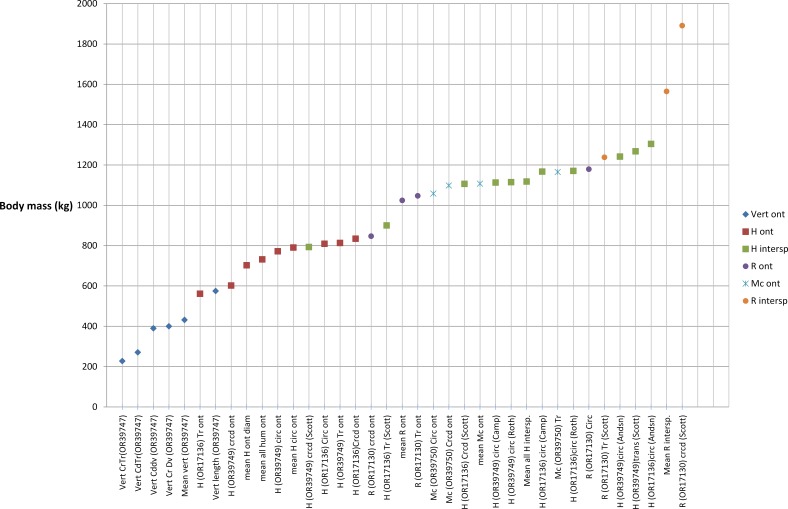
Giraffa sivalensis occurred during the Plio-Pleistocene period and probably represents the terminal species of the genus in Southern Asia. The holotype is an almost perfectly preserved cervical vertebra of disputed anatomical location. Although there is also uncertainty regarding this animal's size, other specimens that have been assigned to this species include fragments of two humeri, a radius, metacarpi and teeth. Here we estimate neck length, leg length and body mass using interspecific and, unusually, ontogenetic allometry of extant giraffe skeletal parameters. The appropriateness of each equation to estimate body mass was evaluated by calculating the prediction error incurred in both extant giraffes (G. camelopardalis) and okapis (Okapia johnstoni). It followed that the equations with the lowest prediction error in both species were considered robust enough to use in G. sivalensis. The size of G. sivalensis, based on the holotype, is proposed as 400 kg (range 228 kg-575 kg), with a neck length of approximately 147 cm and a height of 390 cm. The molar lengths of tooth specimens considered agree with this size estimate. The humerus was the most appropriate long bone to establish body mass, which estimates a heavier animal of ca 790 kg. The discrepancy with the vertebral body weight estimate might indicate sexual dimorphism. Radial and metacarpal specimens estimate G. sivalensis to be as heavy as extant giraffes. This may indicate that the radius and metacarpus are unsuitable for body mass predictions in Giraffa spp. Alternatively, certain long bones may have belonged to another long legged giraffid that occurred during the same period and locality as G. sivalensis. We have concluded that if sexual dimorphism was present then males would have been about twice the size of females. If sexual dimorphism was not present and all bones were correctly attributed to this species, then G. sivalensis had a slender neck with a relatively stocky body.
西瓦长颈鹿出现在上新世 - 更新世时期,可能代表了该属在南亚的末期物种。其正模标本是一个保存几乎完美但解剖位置存在争议的颈椎。尽管关于这种动物的大小也存在不确定性,但其他被归为该物种的标本包括两根肱骨、一根桡骨、掌骨和牙齿的碎片。在这里,我们利用现存长颈鹿骨骼参数的种间以及不同寻常的个体发育异速生长法来估计颈部长度、腿部长度和体重。通过计算现存长颈鹿(长颈鹿)和霍加狓(霍加狓)的预测误差,评估每个方程估计体重的适用性。结果是,在这两个物种中预测误差最低的方程被认为足够稳健,可用于西瓦长颈鹿。基于正模标本,西瓦长颈鹿的大小被推断为400千克(范围为228千克 - 575千克),颈部长度约为147厘米,身高为390厘米。所考虑的牙齿标本的臼齿长度与这个大小估计相符。肱骨是确定体重最合适的长骨,其估计的动物体重约为790千克。与椎体体重估计的差异可能表明存在两性异形。桡骨和掌骨标本估计西瓦长颈鹿与现存长颈鹿一样重。这可能表明桡骨和掌骨不适用于长颈鹿属物种的体重预测。或者,某些长骨可能属于与西瓦长颈鹿在同一时期和地点出现的另一种长腿长颈鹿科动物。我们得出的结论是,如果存在两性异形,那么雄性的大小可能是雌性的两倍左右。如果不存在两性异形且所有骨骼都正确归属于该物种,那么西瓦长颈鹿颈部细长,身体相对粗壮。