• 文献检索
  • 文档翻译
  • 深度研究
  • 学术资讯
  • Suppr Zotero 插件Zotero 插件
  • 邀请有礼
  • 套餐&价格
  • 历史记录
应用&插件
Suppr Zotero 插件Zotero 插件浏览器插件Mac 客户端Windows 客户端微信小程序
定价
高级版会员购买积分包购买API积分包
服务
文献检索文档翻译深度研究API 文档MCP 服务
关于我们
关于 Suppr公司介绍联系我们用户协议隐私条款
关注我们

Suppr 超能文献

核心技术专利:CN118964589B侵权必究
粤ICP备2023148730 号-1Suppr @ 2026

文献检索

告别复杂PubMed语法,用中文像聊天一样搜索,搜遍4000万医学文献。AI智能推荐,让科研检索更轻松。

立即免费搜索

文件翻译

保留排版,准确专业,支持PDF/Word/PPT等文件格式,支持 12+语言互译。

免费翻译文档

深度研究

AI帮你快速写综述,25分钟生成高质量综述,智能提取关键信息,辅助科研写作。

立即免费体验

蜥脚类恐龙为什么有长脖子;长颈鹿为什么脖子短。

Why sauropods had long necks; and why giraffes have short necks.

机构信息

Department of Earth Sciences , University of Bristol , Bristol , England.

出版信息

PeerJ. 2013 Feb 12;1:e36. doi: 10.7717/peerj.36. Print 2013.

DOI:10.7717/peerj.36
PMID:23638372
原文链接:https://pmc.ncbi.nlm.nih.gov/articles/PMC3628838/
Abstract

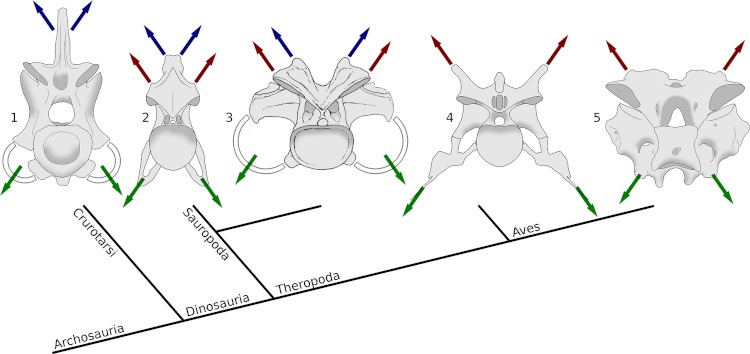
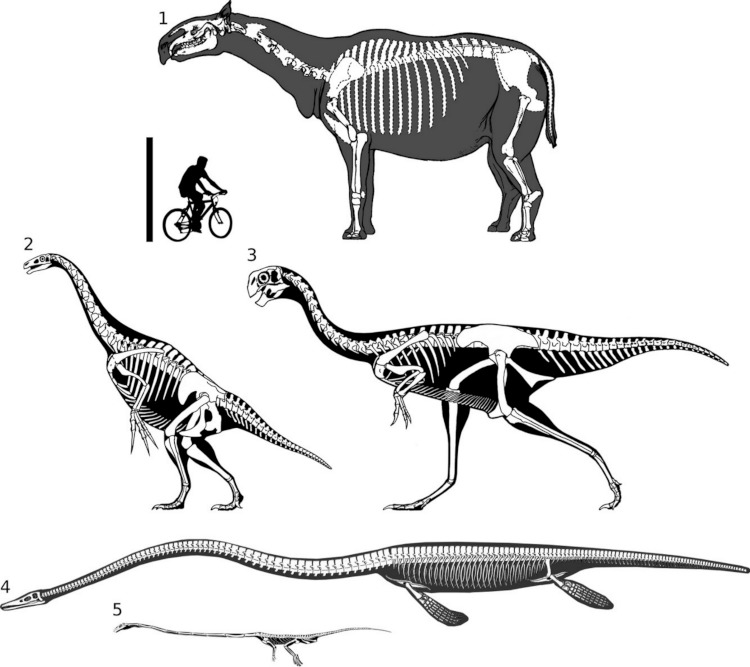
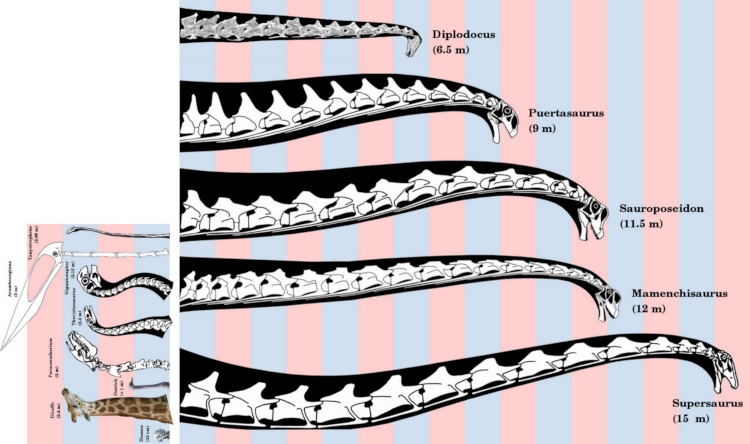
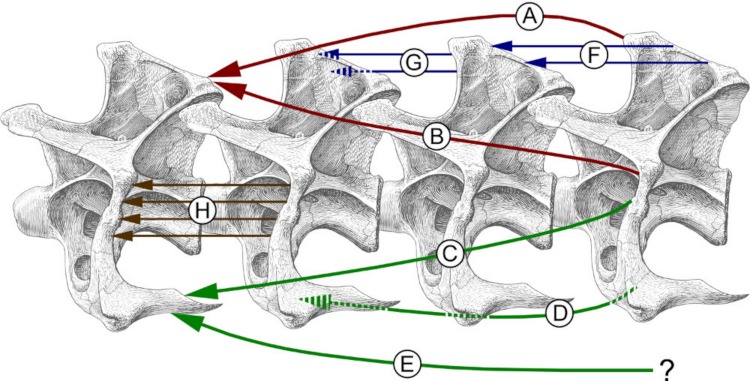
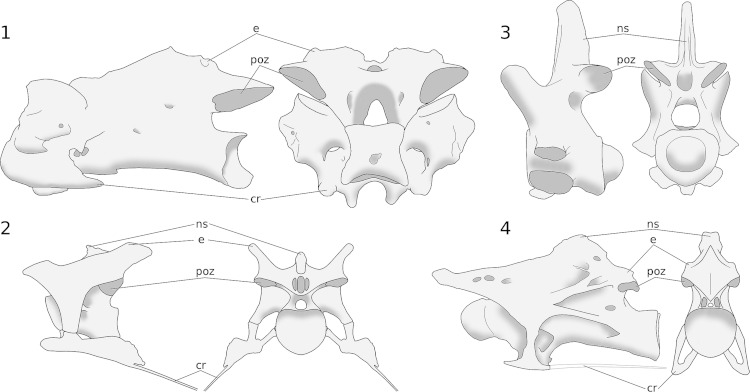
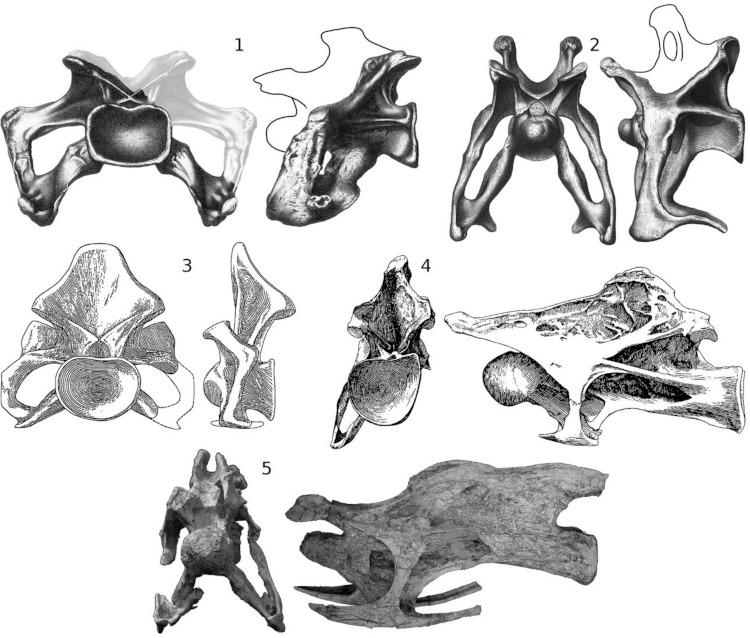
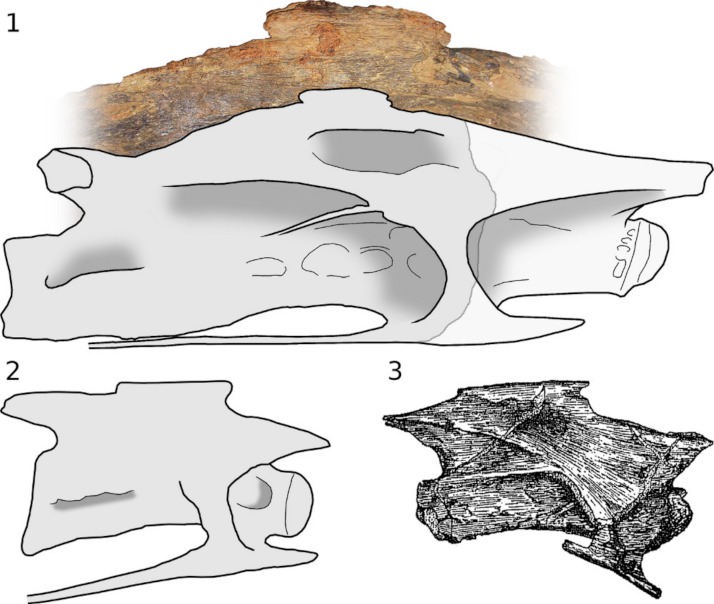
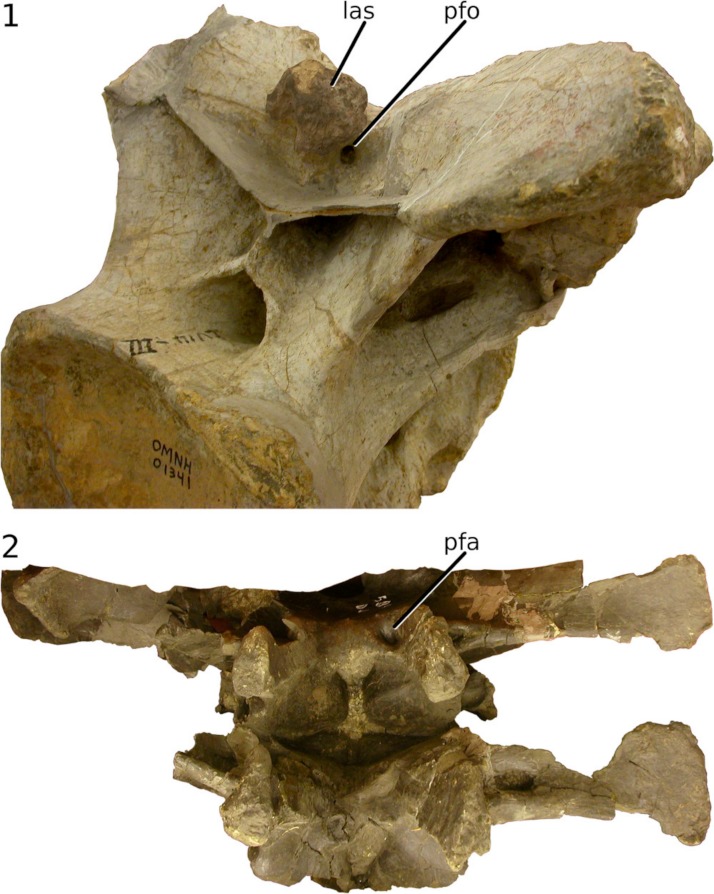
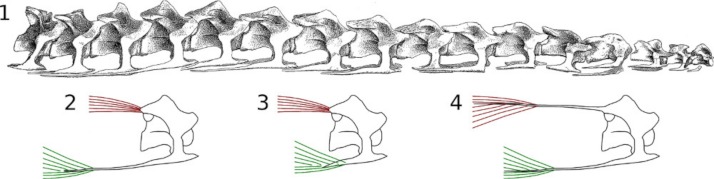
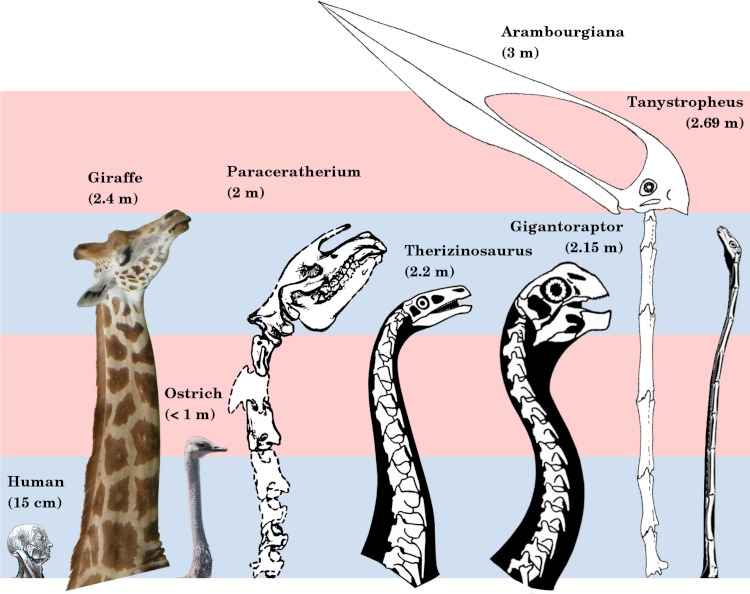
The necks of the sauropod dinosaurs reached 15 m in length: six times longer than that of the world record giraffe and five times longer than those of all other terrestrial animals. Several anatomical features enabled this extreme elongation, including: absolutely large body size and quadrupedal stance providing a stable platform for a long neck; a small, light head that did not orally process food; cervical vertebrae that were both numerous and individually elongate; an efficient air-sac-based respiratory system; and distinctive cervical architecture. Relevant features of sauropod cervical vertebrae include: pneumatic chambers that enabled the bone to be positioned in a mechanically efficient way within the envelope; and muscular attachments of varying importance to the neural spines, epipophyses and cervical ribs. Other long-necked tetrapods lacked important features of sauropods, preventing the evolution of longer necks: for example, giraffes have relatively small torsos and large, heavy heads, share the usual mammalian constraint of only seven cervical vertebrae, and lack an air-sac system and pneumatic bones. Among non-sauropods, their saurischian relatives the theropod dinosaurs seem to have been best placed to evolve long necks, and indeed their necks probably surpassed those of giraffes. But 150 million years of evolution did not suffice for them to exceed a relatively modest 2.5 m.

摘要

蜥脚类恐龙的颈部长达 15 米:比世界记录的长颈鹿长六倍,比所有其他陆地动物长五倍。几个解剖学特征使得这种极端伸长成为可能,包括:绝对大的体型和四足姿势为长脖子提供了一个稳定的平台;一个小而轻的头部,不进行口腔食物处理;颈椎数量众多且单独伸长;高效的基于气囊的呼吸系统;以及独特的颈椎结构。蜥脚类恐龙颈椎的相关特征包括:使骨骼能够在机械上有效定位在信封内的充气腔室;以及对神经棘、副突和颈椎肋骨的重要程度不同的肌肉附着。其他长颈四足动物缺乏蜥脚类恐龙的重要特征,阻止了更长颈部的进化:例如,长颈鹿的躯干相对较小,头部较大且较重,与通常的哺乳动物一样仅具有七个颈椎,并且缺乏气囊系统和充气骨骼。在非蜥脚类恐龙中,它们的兽脚亚目恐龙亲戚似乎最有能力进化出长脖子,事实上它们的脖子可能超过了长颈鹿的脖子。但是,1.5 亿年的进化还不足以使它们的脖子超过相对适中的 2.5 米。
https://cdn.ncbi.nlm.nih.gov/pmc/blobs/b31f/3628838/f7a0ceb1c063/peerj-01-36-g011.jpg
https://cdn.ncbi.nlm.nih.gov/pmc/blobs/b31f/3628838/0e38f1419507/peerj-01-36-g001.jpg
https://cdn.ncbi.nlm.nih.gov/pmc/blobs/b31f/3628838/b188566a0dab/peerj-01-36-g002.jpg
https://cdn.ncbi.nlm.nih.gov/pmc/blobs/b31f/3628838/12b7e01648db/peerj-01-36-g003.jpg
https://cdn.ncbi.nlm.nih.gov/pmc/blobs/b31f/3628838/8fa172e3e0d2/peerj-01-36-g004.jpg
https://cdn.ncbi.nlm.nih.gov/pmc/blobs/b31f/3628838/427dbb92e156/peerj-01-36-g005.jpg
https://cdn.ncbi.nlm.nih.gov/pmc/blobs/b31f/3628838/9bb24f871e20/peerj-01-36-g006.jpg
https://cdn.ncbi.nlm.nih.gov/pmc/blobs/b31f/3628838/70770700f684/peerj-01-36-g007.jpg
https://cdn.ncbi.nlm.nih.gov/pmc/blobs/b31f/3628838/8b1ed7a12392/peerj-01-36-g008.jpg
https://cdn.ncbi.nlm.nih.gov/pmc/blobs/b31f/3628838/137b9aed8218/peerj-01-36-g009.jpg
https://cdn.ncbi.nlm.nih.gov/pmc/blobs/b31f/3628838/6b1a32a4cf8f/peerj-01-36-g010.jpg
https://cdn.ncbi.nlm.nih.gov/pmc/blobs/b31f/3628838/f7a0ceb1c063/peerj-01-36-g011.jpg
https://cdn.ncbi.nlm.nih.gov/pmc/blobs/b31f/3628838/0e38f1419507/peerj-01-36-g001.jpg
https://cdn.ncbi.nlm.nih.gov/pmc/blobs/b31f/3628838/b188566a0dab/peerj-01-36-g002.jpg
https://cdn.ncbi.nlm.nih.gov/pmc/blobs/b31f/3628838/12b7e01648db/peerj-01-36-g003.jpg
https://cdn.ncbi.nlm.nih.gov/pmc/blobs/b31f/3628838/8fa172e3e0d2/peerj-01-36-g004.jpg
https://cdn.ncbi.nlm.nih.gov/pmc/blobs/b31f/3628838/427dbb92e156/peerj-01-36-g005.jpg
https://cdn.ncbi.nlm.nih.gov/pmc/blobs/b31f/3628838/9bb24f871e20/peerj-01-36-g006.jpg
https://cdn.ncbi.nlm.nih.gov/pmc/blobs/b31f/3628838/70770700f684/peerj-01-36-g007.jpg
https://cdn.ncbi.nlm.nih.gov/pmc/blobs/b31f/3628838/8b1ed7a12392/peerj-01-36-g008.jpg
https://cdn.ncbi.nlm.nih.gov/pmc/blobs/b31f/3628838/137b9aed8218/peerj-01-36-g009.jpg
https://cdn.ncbi.nlm.nih.gov/pmc/blobs/b31f/3628838/6b1a32a4cf8f/peerj-01-36-g010.jpg
https://cdn.ncbi.nlm.nih.gov/pmc/blobs/b31f/3628838/f7a0ceb1c063/peerj-01-36-g011.jpg

相似文献

1
Why sauropods had long necks; and why giraffes have short necks.蜥脚类恐龙为什么有长脖子;长颈鹿为什么脖子短。
PeerJ. 2013 Feb 12;1:e36. doi: 10.7717/peerj.36. Print 2013.
2
Biology of the sauropod dinosaurs: the evolution of gigantism.蜥脚类恐龙的生物学:巨型化的进化。
Biol Rev Camb Philos Soc. 2011 Feb;86(1):117-55. doi: 10.1111/j.1469-185X.2010.00137.x.
3
Almost all known sauropod necks are incomplete and distorted.几乎所有已知的蜥脚类恐龙的颈部都是不完整和变形的。
PeerJ. 2022 Jan 24;10:e12810. doi: 10.7717/peerj.12810. eCollection 2022.
4
Ontogenetic similarities between giraffe and sauropod neck osteological mobility.长颈鹿和蜥脚类恐龙颈部骨骼活动性的个体发生相似性。
PLoS One. 2020 Jan 13;15(1):e0227537. doi: 10.1371/journal.pone.0227537. eCollection 2020.
5
A new long-necked 'sauropod-mimic' stegosaur and the evolution of the plated dinosaurs.一种新的长颈“似蜥脚类”剑龙与披甲恐龙的演化
Proc Biol Sci. 2009 May 22;276(1663):1815-21. doi: 10.1098/rspb.2008.1909. Epub 2009 Feb 25.
6
Mechanical implications of pneumatic neck vertebrae in sauropod dinosaurs.蜥脚类恐龙的气动颈椎的力学意义。
Proc Biol Sci. 2010 Jan 7;277(1678):11-7. doi: 10.1098/rspb.2009.1275. Epub 2009 Oct 2.
7
Restoring Maximum Vertical Browsing Reach in Sauropod Dinosaurs.恢复蜥脚类恐龙的最大垂直浏览范围
Anat Rec (Hoboken). 2017 Oct;300(10):1802-1825. doi: 10.1002/ar.23617. Epub 2017 Jun 14.
8
The evolution of maximum terrestrial body mass in sauropod dinosaurs.蜥脚类恐龙最大陆地身体质量的演变。
Curr Biol. 2023 May 8;33(9):R349-R350. doi: 10.1016/j.cub.2023.02.067.
9
Torsion and bending in the neck and tail of sauropod dinosaurs and the function of cervical ribs: insights from functional morphology and biomechanics.蜥脚类恐龙颈部和尾部的扭转和弯曲以及颈肋的功能:来自功能形态学和生物力学的见解。
PLoS One. 2013 Oct 30;8(10):e78574. doi: 10.1371/journal.pone.0078574. eCollection 2013.
10
Discovery of a short-necked sauropod dinosaur from the Late Jurassic period of Patagonia.在巴塔哥尼亚晚侏罗世发现一种短颈蜥脚类恐龙。
Nature. 2005 Jun 2;435(7042):670-2. doi: 10.1038/nature03623.

引用本文的文献

1
When the lung invades: a review of avian postcranial skeletal pneumaticity.当肺部侵入时:鸟类颅后骨骼气腔化综述。
Philos Trans R Soc Lond B Biol Sci. 2025 Feb 27;380(1920):rstb20230427. doi: 10.1098/rstb.2023.0427.
2
The influence of soft tissue volume on estimates of skeletal pneumaticity: implications for fossil archosaurs.软组织体积对骨骼含气性估计的影响:对化石主龙类的启示
Philos Trans R Soc Lond B Biol Sci. 2025 Feb 27;380(1920):20230428. doi: 10.1098/rstb.2023.0428.
3
Almost all known sauropod necks are incomplete and distorted.

本文引用的文献

1
Histology shows that elongated neck ribs in sauropod dinosaurs are ossified tendons.组织学显示,蜥脚类恐龙的长颈部肋骨是骨化的肌腱。
Biol Lett. 2012 Dec 23;8(6):1032-5. doi: 10.1098/rsbl.2012.0778. Epub 2012 Oct 3.
2
Flexibility along the neck of the neogene terror bird Andalgalornis steulleti (Aves Phorusrhacidae).中新世恐鸟安第斯神鹫(鸟类恐鹤科)颈部的灵活性。
PLoS One. 2012;7(5):e37701. doi: 10.1371/journal.pone.0037701. Epub 2012 May 25.
3
A computational analysis of limb and body dimensions in Tyrannosaurus rex with implications for locomotion, ontogeny, and growth.
几乎所有已知的蜥脚类恐龙的颈部都是不完整和变形的。
PeerJ. 2022 Jan 24;10:e12810. doi: 10.7717/peerj.12810. eCollection 2022.
4
Helically arranged cross struts in azhdarchid pterosaur cervical vertebrae and their biomechanical implications.风神翼龙颈椎中的螺旋排列交叉支柱及其生物力学意义。
iScience. 2021 Apr 14;24(4):102338. doi: 10.1016/j.isci.2021.102338. eCollection 2021 Apr 23.
5
Vertebral pneumaticity is correlated with serial variation in vertebral shape in storks.鸟类的脊柱充气性与鹳形目鸟类的椎体形态的系列变化相关。
J Anat. 2021 Mar;238(3):615-625. doi: 10.1111/joa.13322. Epub 2020 Sep 26.
6
High browsing skeletal adaptations in Spinophorosaurus reveal an evolutionary innovation in sauropod dinosaurs.高浏览的骨骼适应性在 Spino 中揭示了蜥脚类恐龙的进化创新。
Sci Rep. 2020 Apr 20;10(1):6638. doi: 10.1038/s41598-020-63439-0.
7
Ontogenetic similarities between giraffe and sauropod neck osteological mobility.长颈鹿和蜥脚类恐龙颈部骨骼活动性的个体发生相似性。
PLoS One. 2020 Jan 13;15(1):e0227537. doi: 10.1371/journal.pone.0227537. eCollection 2020.
8
Neck mobility in the Jurassic plesiosaur : finite element analysis as a new approach to understanding the cervical skeleton in fossil vertebrates.侏罗纪蛇颈龙的颈部活动能力:有限元分析作为理解化石脊椎动物颈椎骨骼的新方法
PeerJ. 2019 Nov 6;7:e7658. doi: 10.7717/peerj.7658. eCollection 2019.
9
Evolution and Functional Differentiation of the Diaphragm Muscle of Mammals.哺乳动物膈肌的进化与功能分化。
Compr Physiol. 2019 Mar 14;9(2):715-766. doi: 10.1002/cphy.c180012.
10
The evolution of the syrinx: An acoustic theory.鸣管的进化:声学理论。
PLoS Biol. 2019 Feb 7;17(2):e2006507. doi: 10.1371/journal.pbio.2006507. eCollection 2019 Feb.
霸王龙肢体和体型的计算分析及其对运动、个体发育和生长的影响。
PLoS One. 2011;6(10):e26037. doi: 10.1371/journal.pone.0026037. Epub 2011 Oct 12.
4
Origin of postcranial skeletal pneumaticity in dinosaurs.恐龙颅后骨骼气腔化的起源。
Integr Zool. 2006 Jun;1(2):80-5. doi: 10.1111/j.1749-4877.2006.00019.x.
5
On the size and flight diversity of giant pterosaurs, the use of birds as pterosaur analogues and comments on pterosaur flightlessness.关于巨型翼龙的体型和飞行多样性、将鸟类用作翼龙的模拟物以及对翼龙不能飞行的评论。
PLoS One. 2010 Nov 15;5(11):e13982. doi: 10.1371/journal.pone.0013982.
6
First complete sauropod dinosaur skull from the Cretaceous of the Americas and the evolution of sauropod dentition.来自美洲白垩纪的首个完整蜥脚类恐龙头骨及蜥脚类恐龙齿系的演化。
Naturwissenschaften. 2010 Apr;97(4):379-91. doi: 10.1007/s00114-010-0650-6. Epub 2010 Feb 24.
7
Evidence for bird-like air sacs in saurischian dinosaurs.蜥臀目恐龙中存在类似鸟类气囊的证据。
J Exp Zool A Ecol Genet Physiol. 2009 Oct 1;311(8):611-28. doi: 10.1002/jez.513.
8
A reappraisal of azhdarchid pterosaur functional morphology and paleoecology.对阿氏翼龙功能形态学与古生态学的重新评估。
PLoS One. 2008 May 28;3(5):e2271. doi: 10.1371/journal.pone.0002271.
9
Could pterosaurs fly?翼龙会飞吗?
Science. 1975 May 16;188(4189):676. doi: 10.1126/science.188.4189.676.
10
A gigantic bird-like dinosaur from the Late Cretaceous of China.一种来自中国白垩纪晚期的巨型似鸟恐龙。
Nature. 2007 Jun 14;447(7146):844-7. doi: 10.1038/nature05849.