Demeulemeester Jonas, De Rijck Jan, Gijsbers Rik, Debyser Zeger
Department of Pharmaceutical and Pharmacological Sciences, Laboratory for Molecular Virology and Drug Discovery, KU Leuven-University of Leuven, Leuven, Belgium.
Department of Pharmaceutical and Pharmacological Sciences, Laboratory for Viral Vector Technology and Gene Therapy, KU Leuven-University of Leuven, Leuven, Belgium.
Bioessays. 2015 Nov;37(11):1202-14. doi: 10.1002/bies.201500051. Epub 2015 Aug 21.
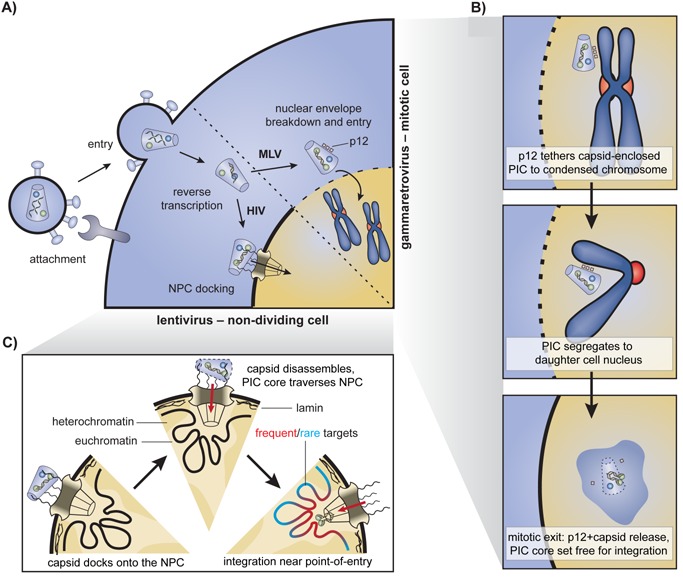
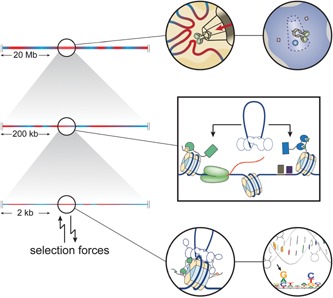
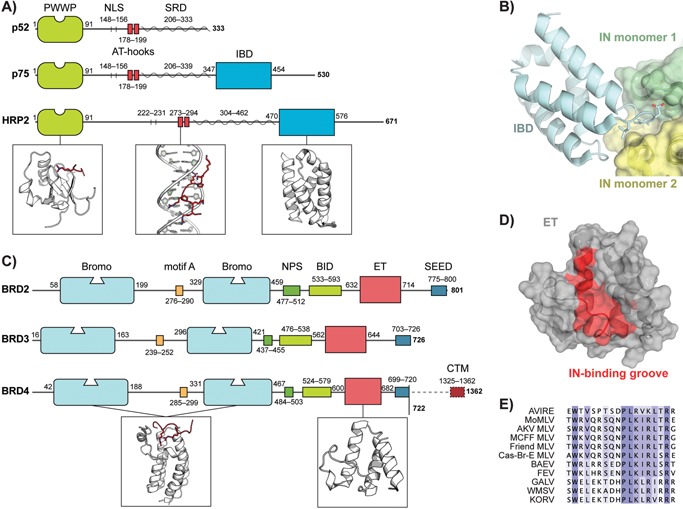
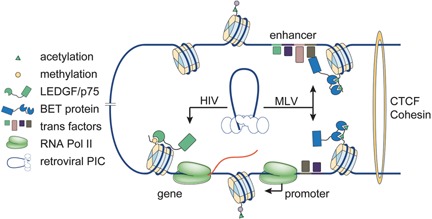
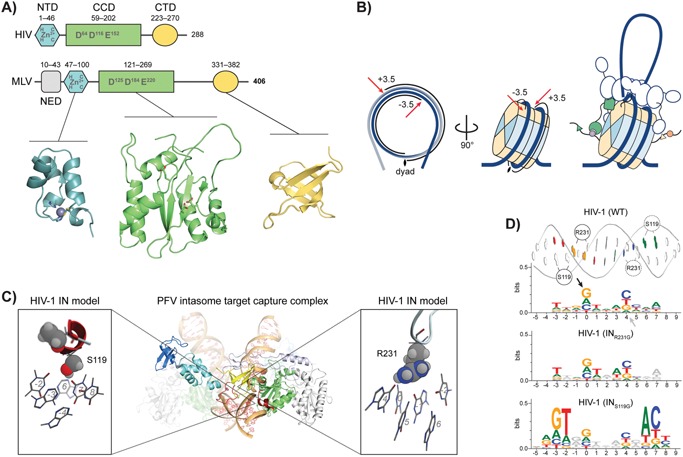
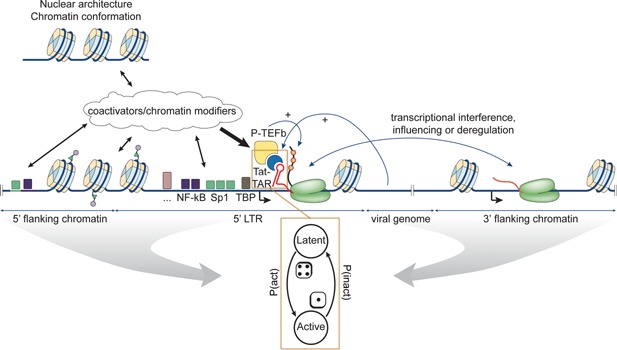
Here, we review genomic target site selection during retroviral integration as a multistep process in which specific biases are introduced at each level. The first asymmetries are introduced when the virus takes a specific route into the nucleus. Next, by co-opting distinct host cofactors, the integration machinery is guided to particular chromatin contexts. As the viral integrase captures a local target nucleosome, specific contacts introduce fine-grained biases in the integration site distribution. In vivo, the established population of proviruses is subject to both positive and negative selection, thereby continuously reshaping the integration site distribution. By affecting stochastic proviral expression as well as the mutagenic potential of the virus, integration site choice may be an inherent part of the evolutionary strategies used by different retroviruses to maximise reproductive success.
在此,我们回顾逆转录病毒整合过程中的基因组靶位点选择,这是一个多步骤过程,其中在每个层面都会引入特定的偏向性。当病毒进入细胞核采取特定路径时,首先会引入不对称性。接下来,通过利用不同的宿主辅助因子,整合机制被引导至特定的染色质环境。随着病毒整合酶捕获局部靶核小体,特定的相互作用会在整合位点分布中引入细微的偏向性。在体内,已建立的原病毒群体受到正选择和负选择的影响,从而不断重塑整合位点分布。通过影响原病毒的随机表达以及病毒的诱变潜力,整合位点的选择可能是不同逆转录病毒用于最大化繁殖成功率的进化策略的固有组成部分。