Gaur Sanchaika, Wen Yunfei, Song Jian H, Parikh Nila U, Mangala Lingegowda S, Blessing Alicia M, Ivan Cristina, Wu Sherry Y, Varkaris Andreas, Shi Yan, Lopez-Berestein Gabriel, Frigo Daniel E, Sood Anil K, Gallick Gary E
Department of Genitourinary Medical Oncology, David H. Koch Center for Applied Research of Genitourinary Cancers, The University of Texas, MD Anderson Cancer Center, Houston, TX, USA.
Program in Cancer Biology and Cancer Metastasis, The University of Texas Graduate School of Biomedical Sciences at Houston, TX, USA.
Oncotarget. 2015 Oct 6;6(30):29161-77. doi: 10.18632/oncotarget.4971.
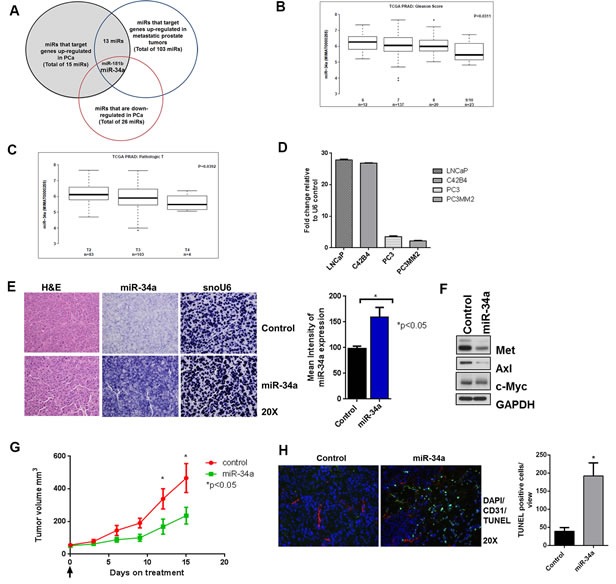
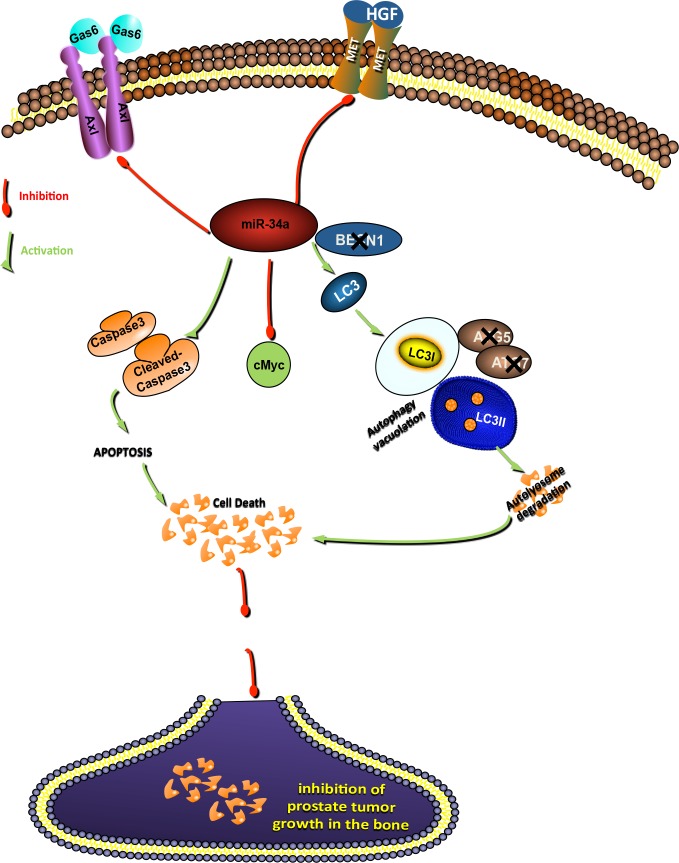
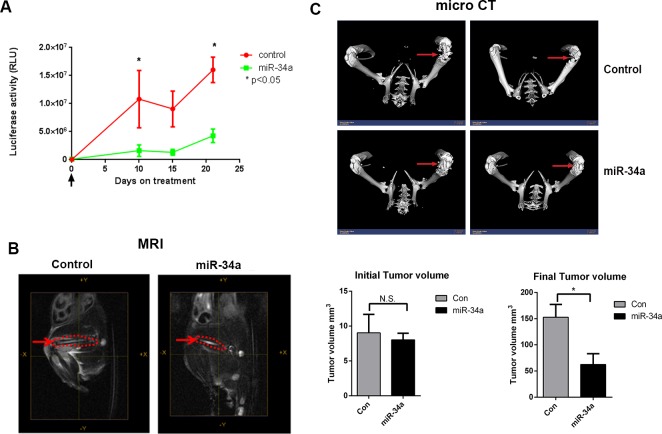
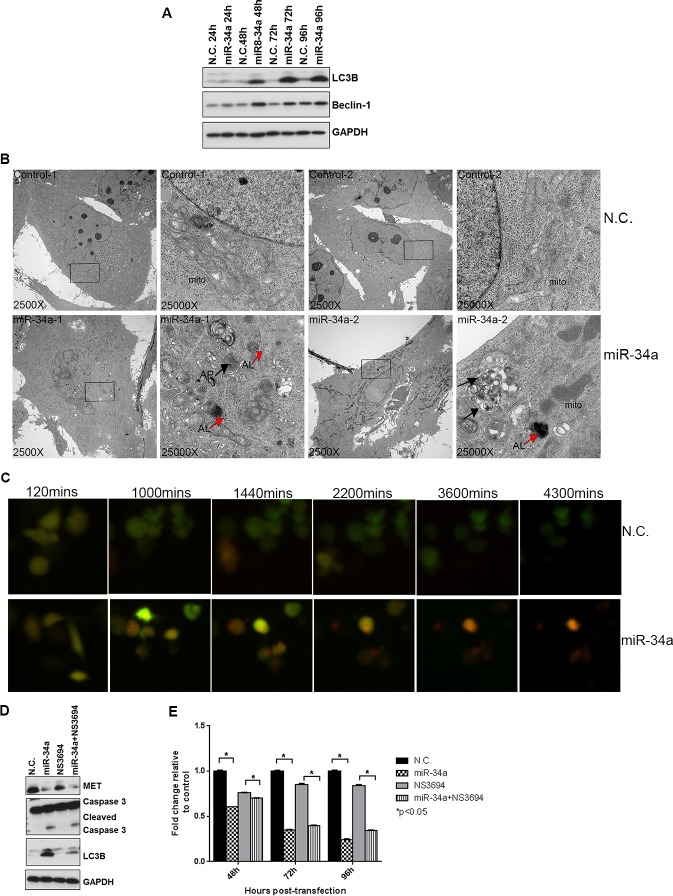
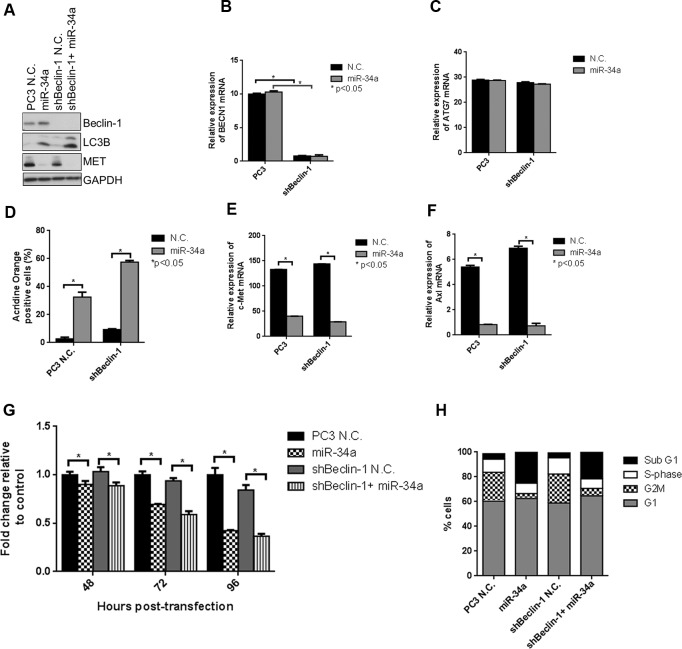
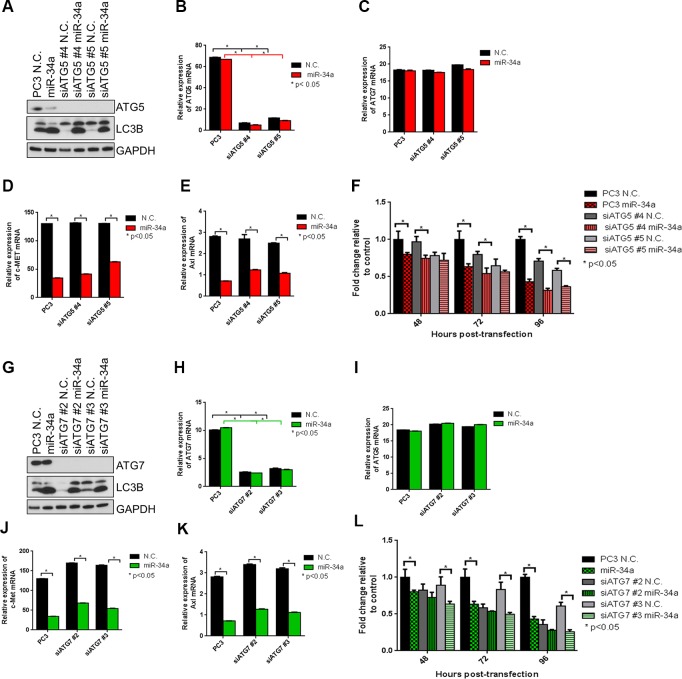
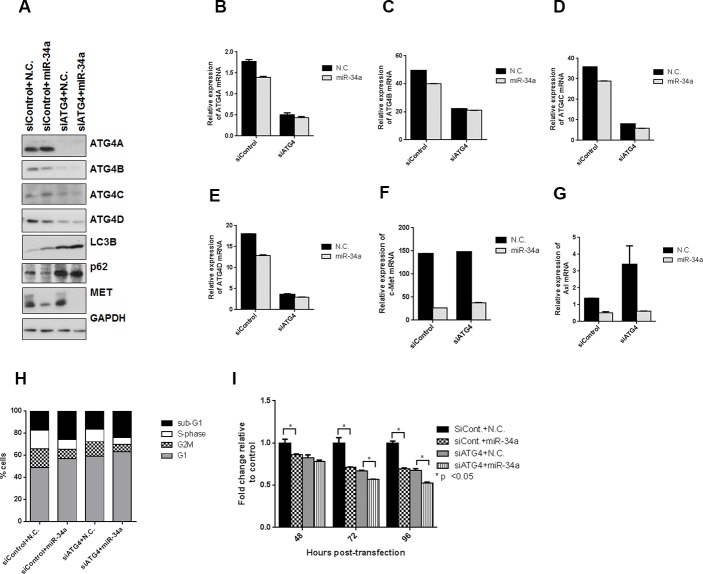
While several new therapies are FDA-approved for bone-metastatic prostate cancer (PCa), patient survival has only improved marginally. Here, we report that chitosan nanoparticle-mediated delivery of miR-34a, a tumor suppressive microRNA that downregulates multiple gene products involved in PCa progression and metastasis, inhibited prostate tumor growth and preserved bone integrity in a xenograft model representative of established PCa bone metastasis. Expression of miR-34a induced apoptosis in PCa cells, and, in accord with downregulation of targets associated with PCa growth, including MET and Axl and c-Myc, also induced a form of non-canonical autophagy that is independent of Beclin-1, ATG4, ATG5 and ATG7. MiR-34a-induced autophagy is anti-proliferative in prostate cancer cells, as blocking apoptosis still resulted in growth inhibition of tumor cells. Thus, combined effects of autophagy and apoptosis are responsible for miR-34a-mediated prostate tumor growth inhibition, and have translational impact, as this non-canonical form of autophagy is tumor inhibitory. Together, these results provide a new understanding of the biological effects of miR-34a and highlight the clinical potential for miR-34a delivery as a treatment for bone metastatic prostate cancer.
虽然有几种新疗法已获美国食品药品监督管理局(FDA)批准用于治疗骨转移性前列腺癌(PCa),但患者生存率仅略有提高。在此,我们报告,壳聚糖纳米颗粒介导的miR-34a递送,一种可下调参与PCa进展和转移的多种基因产物的肿瘤抑制性微小RNA,在一个代表已建立的PCa骨转移的异种移植模型中抑制了前列腺肿瘤生长并维持了骨完整性。miR-34a的表达诱导了PCa细胞凋亡,并且,与PCa生长相关靶点(包括MET、Axl和c-Myc)的下调一致,还诱导了一种独立于Beclin-1、ATG4、ATG5和ATG7的非经典自噬形式。miR-34a诱导的自噬在前列腺癌细胞中具有抗增殖作用,因为阻断凋亡仍会导致肿瘤细胞生长受到抑制。因此,自噬和凋亡的联合作用是miR-34a介导的前列腺肿瘤生长抑制的原因,并且具有转化意义,因为这种非经典形式的自噬具有肿瘤抑制作用。总之,这些结果为miR-34a的生物学效应提供了新的认识,并突出了递送miR-34a作为骨转移性前列腺癌治疗方法的临床潜力。