Melinte G, Moldovan S, Hirlimann C, Liu X, Bégin-Colin S, Bégin D, Banhart F, Pham-Huu C, Ersen O
Institut de Physique et Chimie des Matériaux de Strasbourg (IPCMS), UMR 7504 CNRS-Université de Strasbourg (UdS), 23, rue du Loess, 67034 Strasbourg cedex 2, France.
Institut de Chimie et Procédés pour l'Energie, l'Environnement et la Santé (ICPEES), UMR 7515 CNRS, ECPM, Université de Strasbourg (UdS), 25, rue Becquerel, 67087 Strasbourg, France.
Nat Commun. 2015 Aug 28;6:8071. doi: 10.1038/ncomms9071.
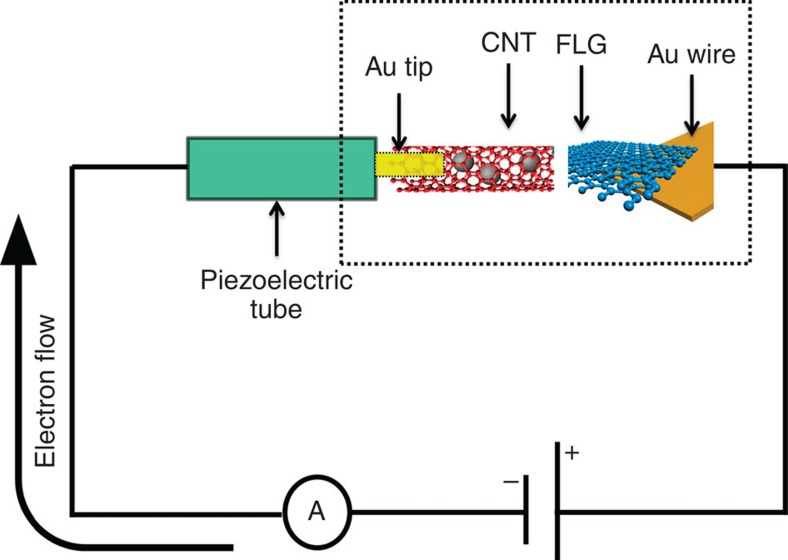
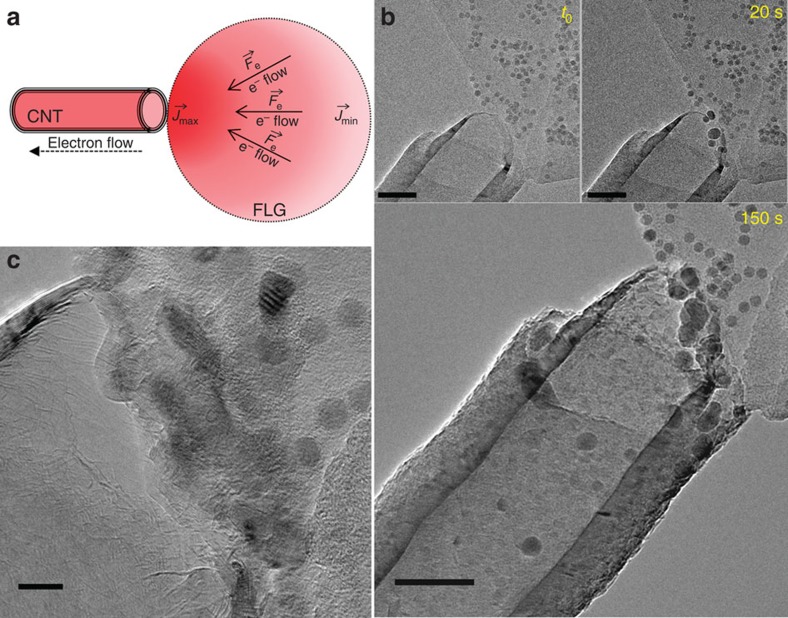
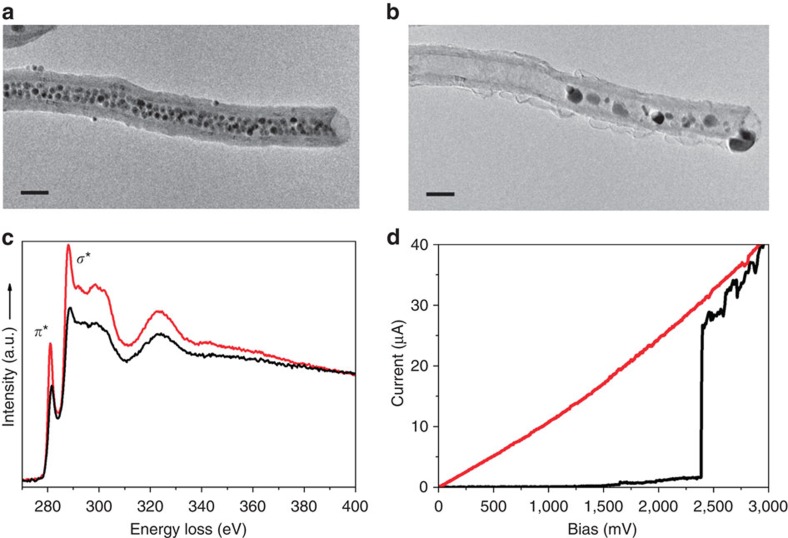
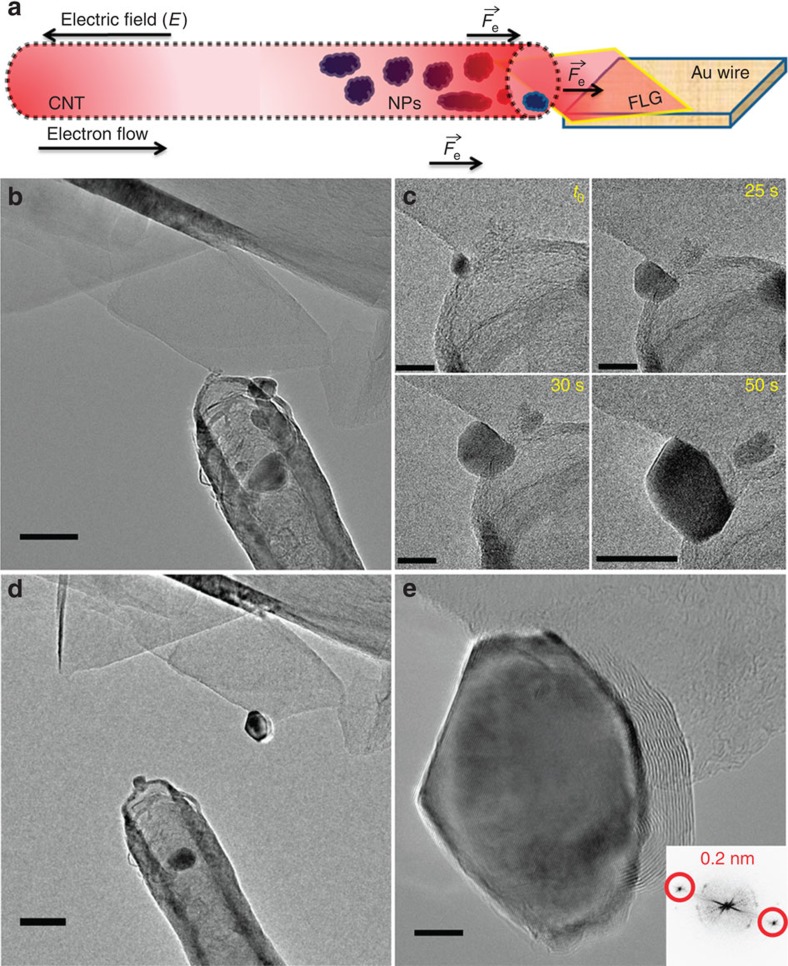
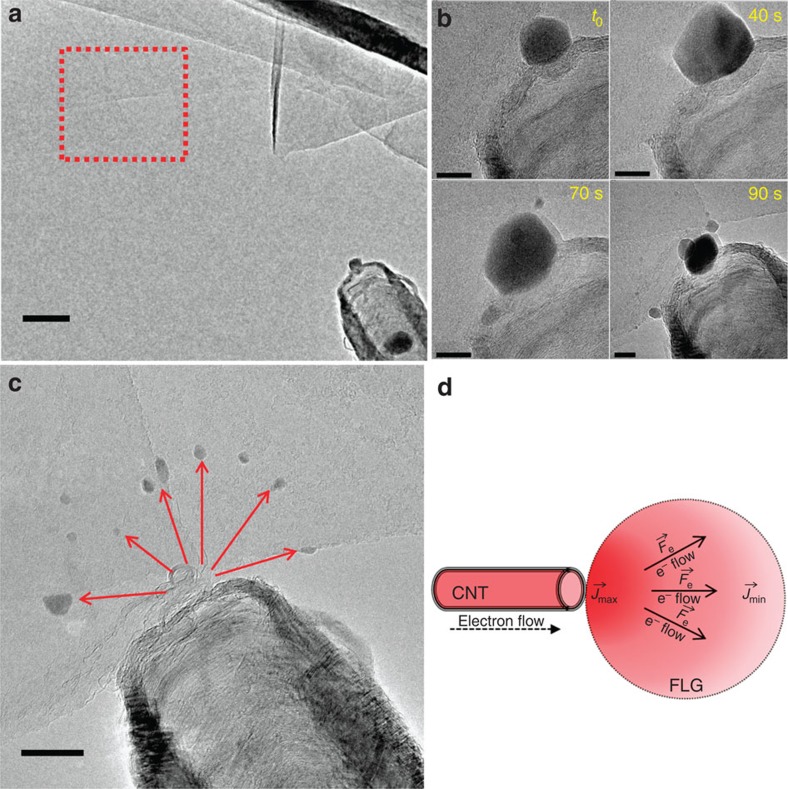
Graphene and carbon nanotubes are envisaged as suitable materials for the fabrication of the new generation of nanoelectronics. The controlled patterning of such nanostructures with metal nanoparticles is conditioned by the transfer between a recipient and the surface to pattern. Electromigration under the impact of an applied voltage stands at the base of printing discrete digits at the nanoscale. Here we report the use of carbon nanotubes as nanoreservoirs for iron nanoparticles transfer on few-layer graphene. An initial Joule-induced annealing is required to ensure the control of the mass transfer with the nanotube acting as a 'pen' for the writing process. By applying a voltage, the tube filled with metal nanoparticles can deposit metal on the surface of the graphene sheet at precise locations. The reverse transfer of nanoparticles from the graphene surface to the nanotube when changing the voltage polarity opens the way for error corrections.
石墨烯和碳纳米管被设想为用于制造新一代纳米电子器件的合适材料。此类纳米结构与金属纳米粒子的可控图案化取决于受体与待图案化表面之间的转移。在施加电压的影响下进行的电迁移是在纳米尺度上打印离散数字的基础。在此,我们报告了使用碳纳米管作为铁纳米粒子转移到少层石墨烯上的纳米储存器。需要进行初始焦耳诱导退火,以确保通过将纳米管用作写入过程的“笔”来控制质量转移。通过施加电压,填充有金属纳米粒子的管子可以在石墨烯片表面的精确位置沉积金属。当改变电压极性时,纳米粒子从石墨烯表面反向转移到纳米管为纠错开辟了道路。