Saint-Pierre Mathieu D, Pease Christopher, Mithoowani Hamid, Zhang Tinghua, Nicholas Garth A, Laurie Scott A, Wheatley-Price Paul
Department of Medicine, University of Ottawa, 501 Smyth Road, Ottawa, ON, Canada K1H 8L6 ; Department of Medicine, Queen's University, 102 Stuart Street, Kingston, ON, Canada K7L 2V6.
Department of Medicine, University of Ottawa, 501 Smyth Road, Ottawa, ON, Canada K1H 8L6.
Lung Cancer Int. 2015;2015:590148. doi: 10.1155/2015/590148. Epub 2015 Mar 2.
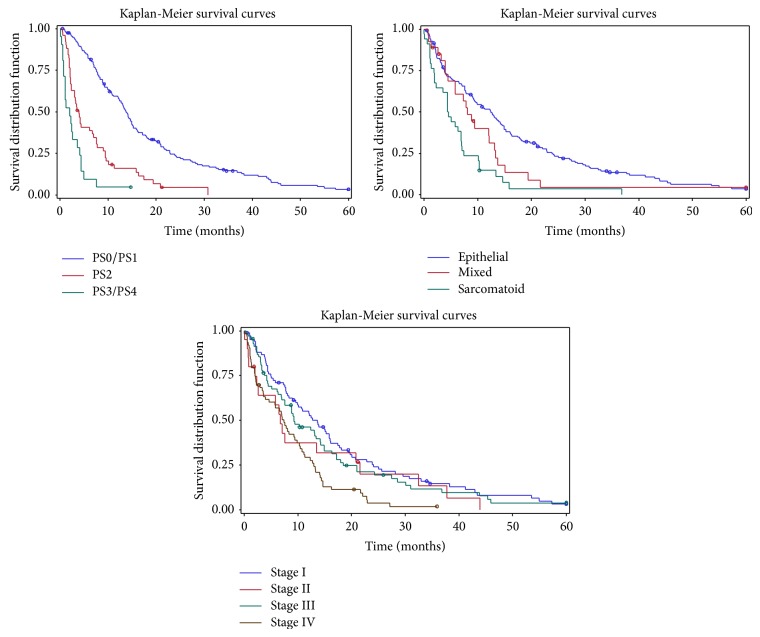
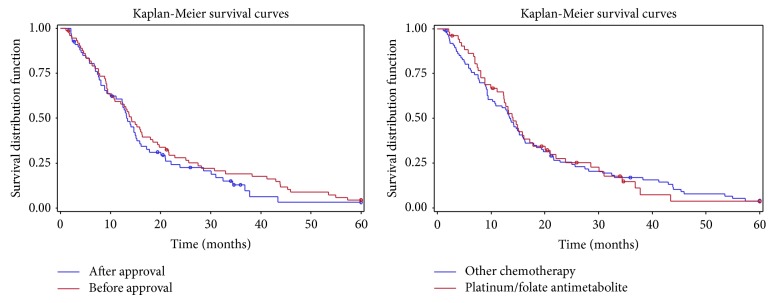
Introduction. Malignant pleural mesothelioma (MPM) is associated with a poor prognosis. Palliative platinum-based chemotherapy may help to improve symptoms and prolong life. Since 2004, the platinum is commonly partnered with a folate antimetabolite. We performed a review investigating if survival had significantly changed before and after the arrival of folate antimetabolites in clinical practice. Methods. All MPM patients from January 1991 to June 2012 were identified. Data collected included age, gender, asbestos exposure, presenting signs/symptoms, performance status, histology, stage, bloodwork, treatment modalities including chemotherapy, and date of death or last follow-up. The primary endpoint was overall survival. Cox models were applied to determine variables associated with survival. Results. There were 245 patients identified. Median overall survival for all patients was 9.4 months. After multivariate analysis, performance status, stage, histology, leucocytosis, and thrombophilia remained independently associated with survival. Among all patients who received chemotherapy, there was no difference in overall survival between the periods before and after folate antimetabolite approval: 14.2 versus 13.2 months (P = 0.35). Specifically receiving combined platinum-based/folate antimetabolite chemotherapy did not improve overall survival compared to all other chemotherapy regimens: 14.1 versus 13.6 months (P = 0.97). Conclusions. In this review, we did not observe an incremental improvement in overall survival after folate antimetabolites became available.
引言。恶性胸膜间皮瘤(MPM)的预后较差。以铂类为基础的姑息化疗可能有助于改善症状和延长生命。自2004年以来,铂类药物通常与一种叶酸抗代谢物联合使用。我们进行了一项综述,以调查在叶酸抗代谢物应用于临床实践前后,患者的生存率是否有显著变化。方法。确定了1991年1月至2012年6月期间所有的MPM患者。收集的数据包括年龄、性别、石棉暴露情况、出现的体征/症状、体能状态、组织学类型、分期、血液检查结果、治疗方式(包括化疗)以及死亡日期或最后一次随访日期。主要终点是总生存期。应用Cox模型来确定与生存相关的变量。结果。共确定了245例患者。所有患者的中位总生存期为9.4个月。多因素分析后,体能状态、分期、组织学类型、白细胞增多症和血栓形成倾向仍与生存独立相关。在所有接受化疗的患者中,叶酸抗代谢物获批前后的总生存期无差异:分别为14.2个月和13.2个月(P = 0.35)。具体而言,与所有其他化疗方案相比,接受铂类/叶酸抗代谢物联合化疗并未改善总生存期:分别为14.1个月和13.6个月(P = 0.97)。结论。在本综述中,我们未观察到叶酸抗代谢物应用后总生存期有进一步改善。