Chen Daoqian, Wang Shiwen, Xiong Binglin, Cao Beibei, Deng Xiping
College of Life Sciences, Northwest A&F University, Yangling, Shaanxi, 712100, China.
State Key Laboratory of Soil Erosion and Dryland Farming on the Loess Plateau, Institute of Soil and Water Conservation, Northwest A&F University, Yangling, Shaanxi, 712100, China.
PLoS One. 2015 Aug 28;10(8):e0137026. doi: 10.1371/journal.pone.0137026. eCollection 2015.
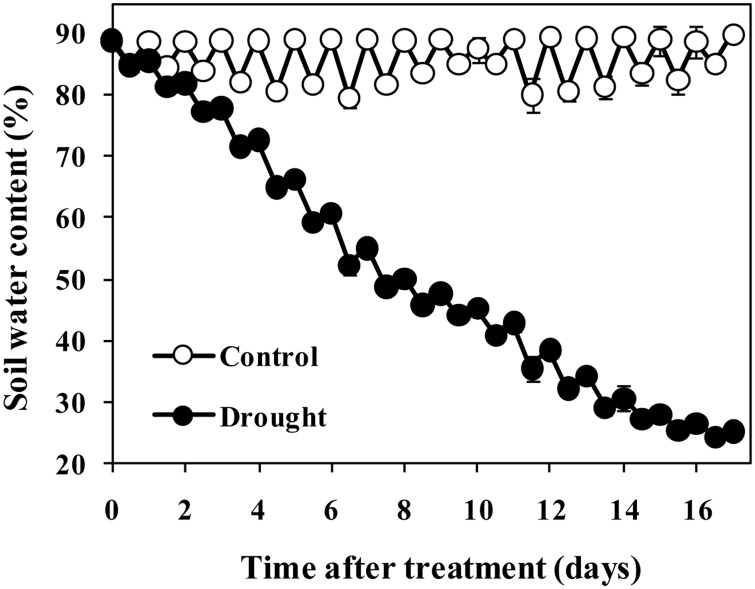
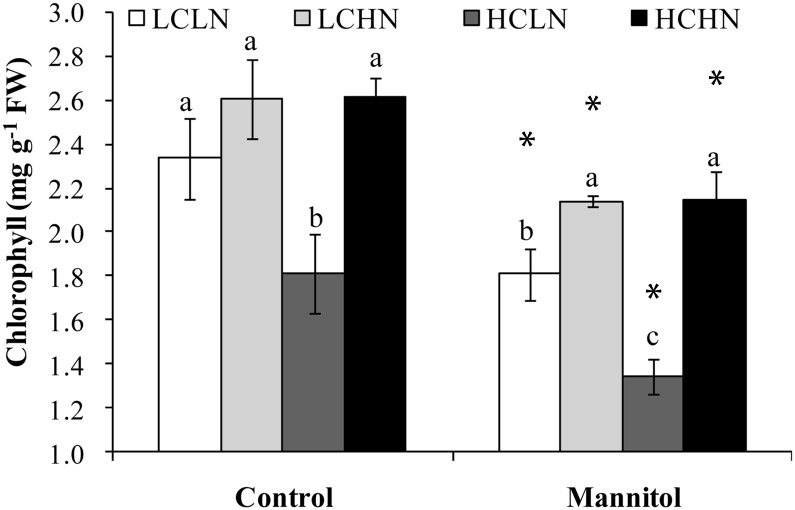
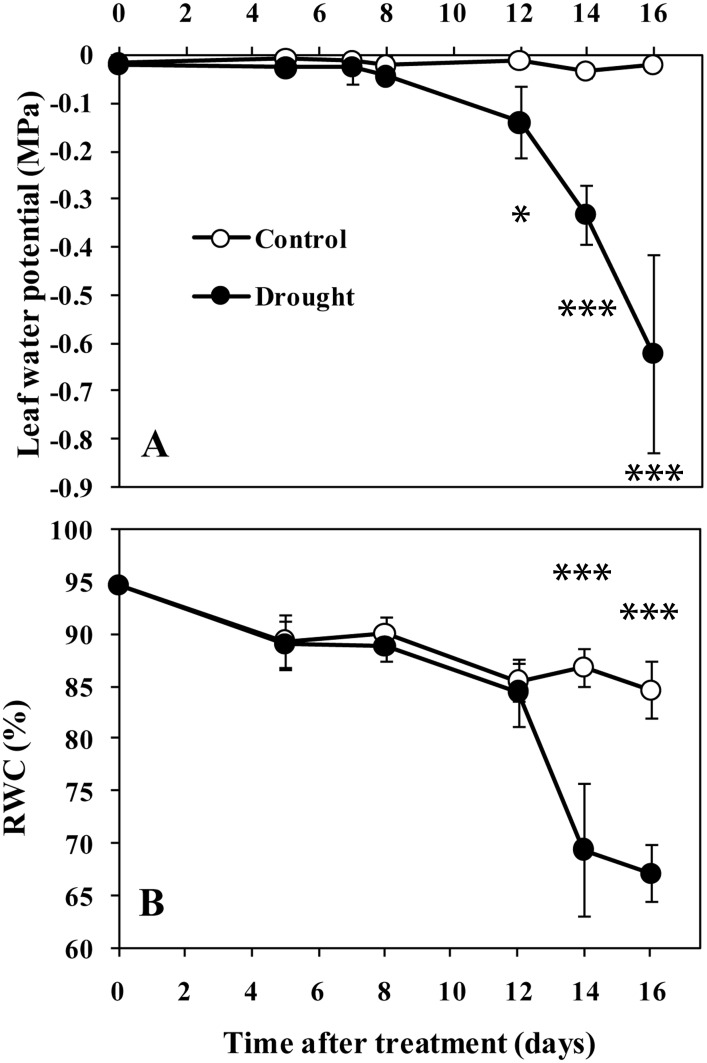
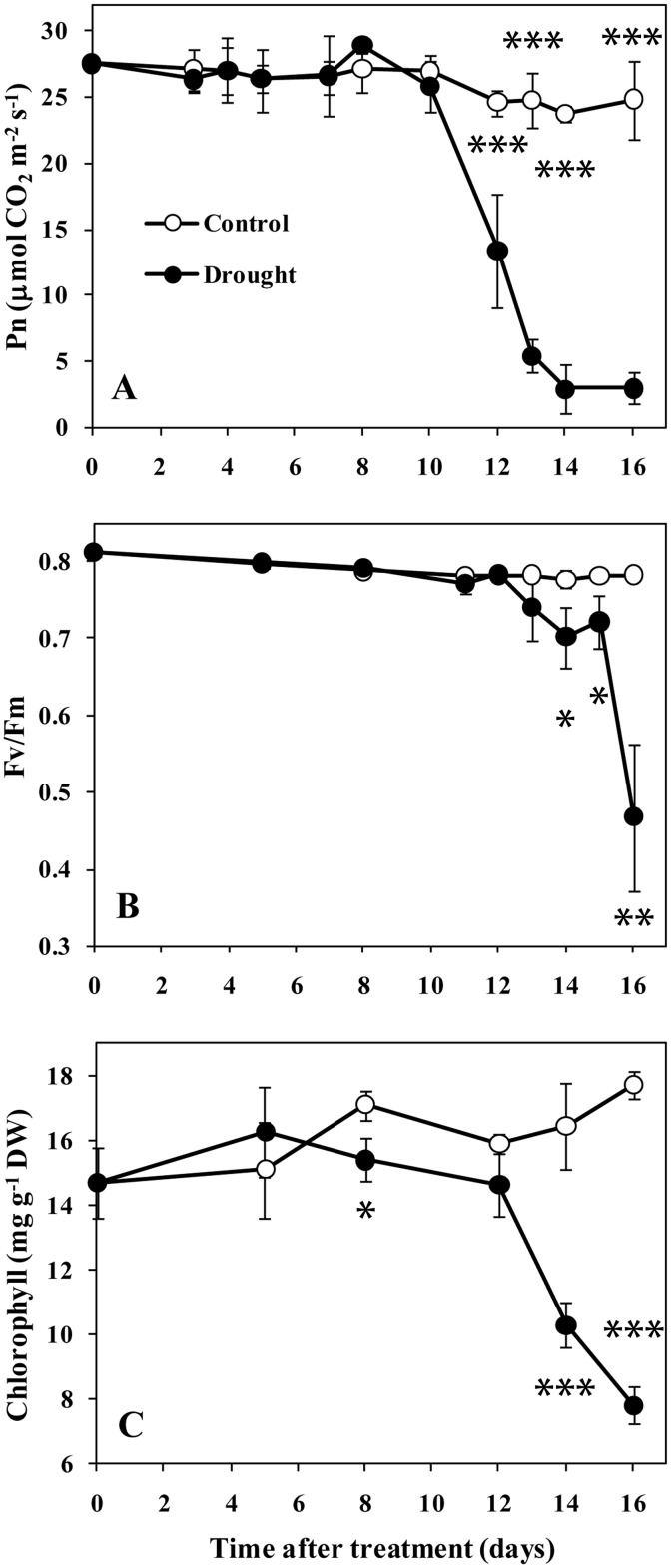
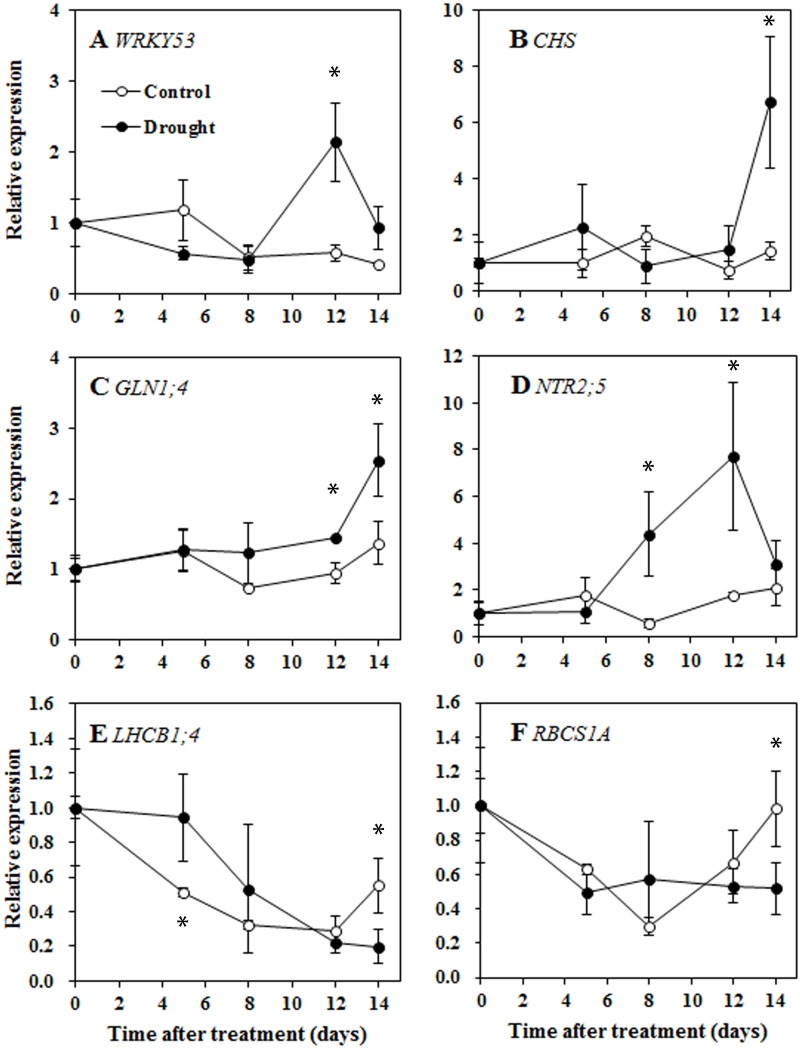
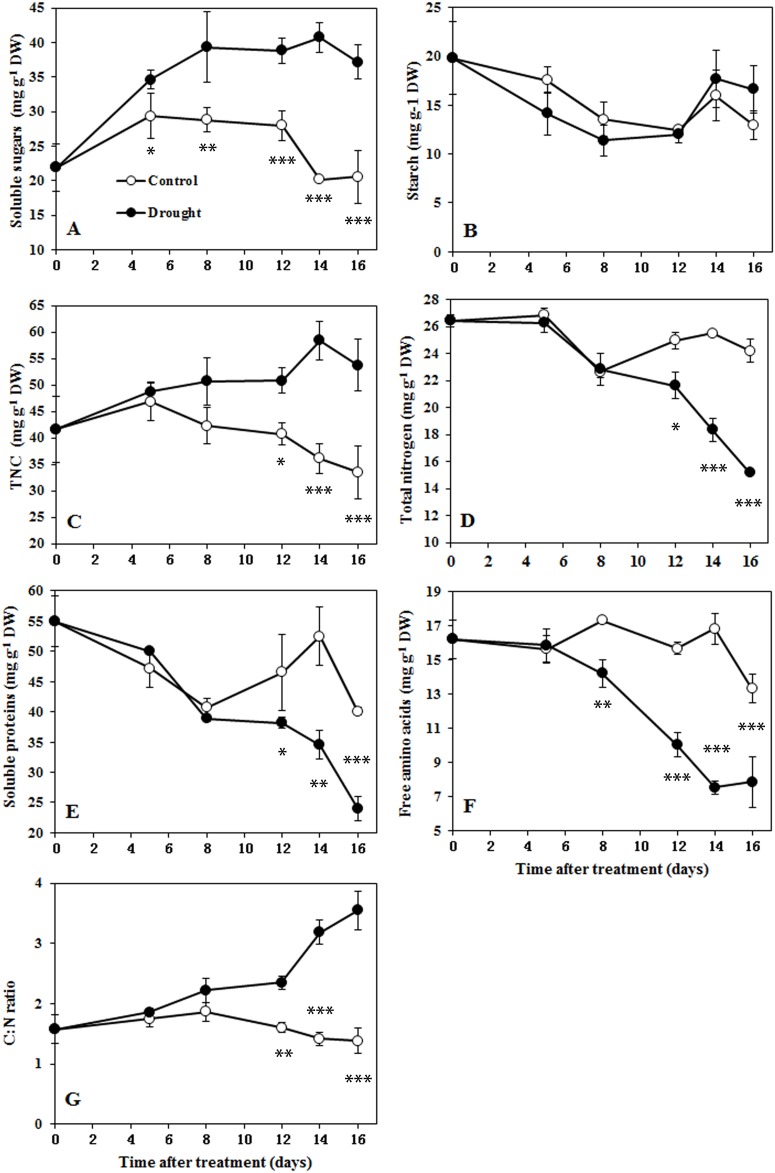
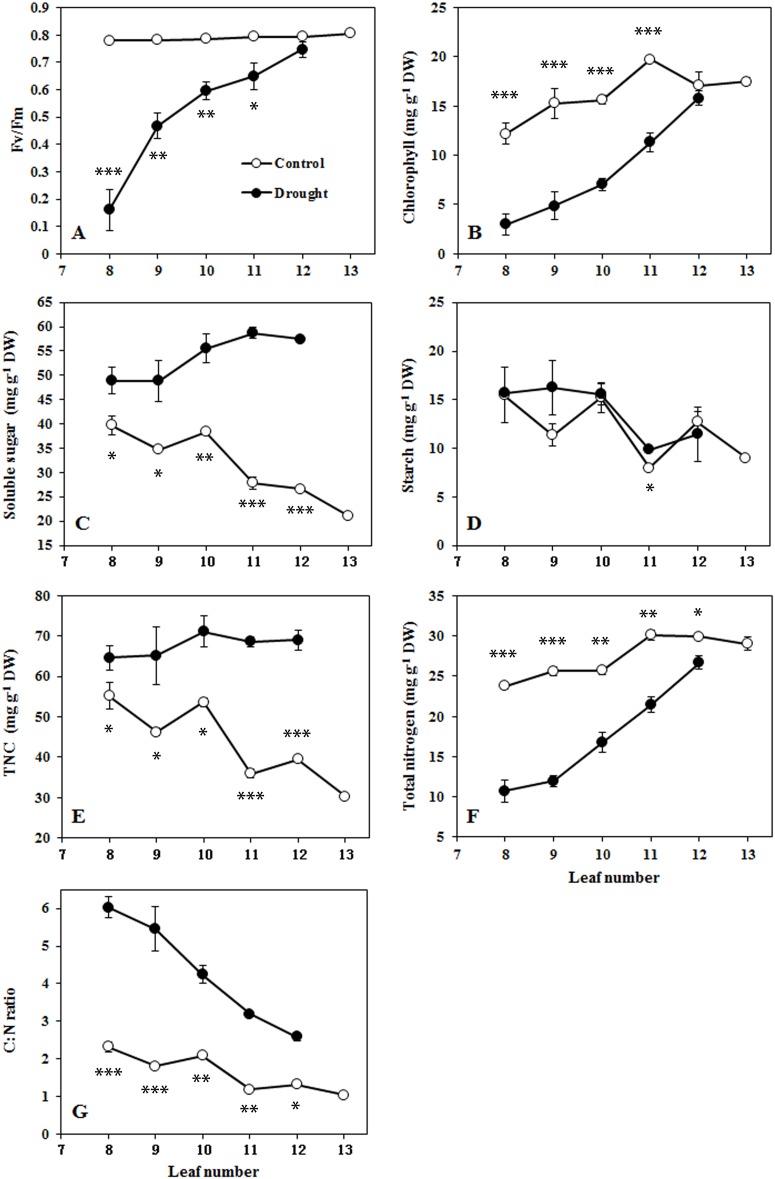
Drought stress triggers mature leaf senescence, which supports plant survival and remobilization of nutrients; yet leaf senescence also critically decreases post-drought crop yield. Drought generally results in carbon/nitrogen imbalance, which is reflected in the increased carbon:nitrogen (C:N) ratio in mature leaves, and which has been shown to be involved in inducing leaf senescence under normal growth conditions. Yet the involvement of the carbon/nitrogen balance in regulation of drought-induced leaf senescence is unclear. To investigate the role of carbon/nitrogen balance in drought-induced senescence, sorghum seedlings were subjected to a gradual soil drought treatment. Leaf senescence symptoms and the C:N ratio, which was indicated by the ratio of non-structural carbohydrate to total N content, were monitored during drought progression. In this study, leaf senescence developed about 12 days after the start of drought treatment, as indicated by various senescence symptoms including decreasing photosynthesis, photosystem II photochemistry efficiency (Fv/Fm) and chlorophyll content, and by the differential expression of senescence marker genes. The C:N ratio was significantly enhanced 10 to 12 days into drought treatment. Leaf senescence occurred in the older (lower) leaves, which had higher C:N ratios, but not in the younger (upper) leaves, which had lower C:N ratios. In addition, a detached leaf assay was conducted to investigate the effect of carbon/nitrogen availability on drought-induced senescence. Exogenous application of excess sugar combined with limited nitrogen promoted drought-induced leaf senescence. Thus our results suggest that the carbon/nitrogen balance may be involved in the regulation of drought-induced leaf senescence.
干旱胁迫会引发成熟叶片衰老,这有助于植物存活及养分的重新分配;然而叶片衰老也会严重降低干旱后作物的产量。干旱通常会导致碳/氮失衡,这在成熟叶片中碳氮比(C:N)升高上有所体现,并且在正常生长条件下,已表明碳氮比参与诱导叶片衰老。然而,碳/氮平衡在干旱诱导的叶片衰老调控中的作用尚不清楚。为了研究碳/氮平衡在干旱诱导衰老中的作用,对高粱幼苗进行了逐步的土壤干旱处理。在干旱过程中监测叶片衰老症状以及由非结构性碳水化合物与总氮含量之比表示的碳氮比。在本研究中,干旱处理开始约12天后出现叶片衰老,表现为包括光合作用降低、光系统II光化学效率(Fv/Fm)和叶绿素含量降低等各种衰老症状,以及衰老标记基因的差异表达。干旱处理10至12天时,碳氮比显著升高。叶片衰老发生在碳氮比更高的较老(下部)叶片中,而碳氮比更低的较年轻(上部)叶片中未发生。此外,进行了离体叶片试验以研究碳/氮有效性对干旱诱导衰老的影响。外源施加过量糖并结合有限氮会促进干旱诱导的叶片衰老。因此,我们的结果表明碳/氮平衡可能参与干旱诱导的叶片衰老调控。