De Paepe Annick L, Crombez Geert, Legrain Valéry
Department of Experimental-Clinical and Health Psychology, Ghent University, Ghent, Belgium.
Institute of Neuroscience, Université catholique de Louvain, Brussels Woluwe, Belgium.
PLoS One. 2015 Aug 28;10(8):e0137120. doi: 10.1371/journal.pone.0137120. eCollection 2015.
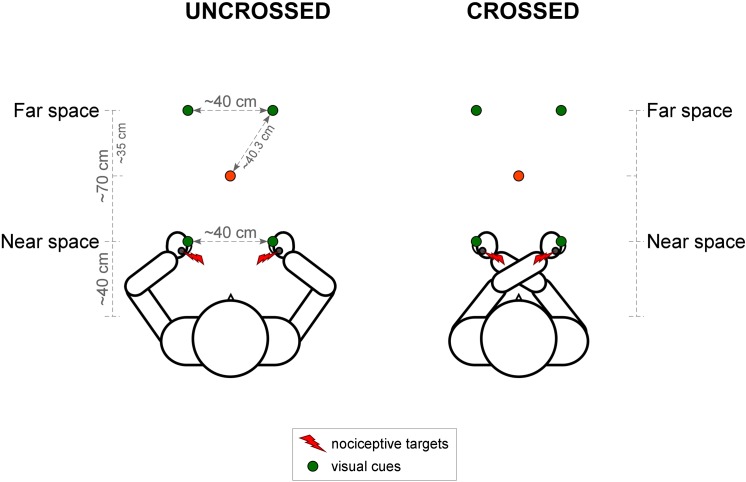
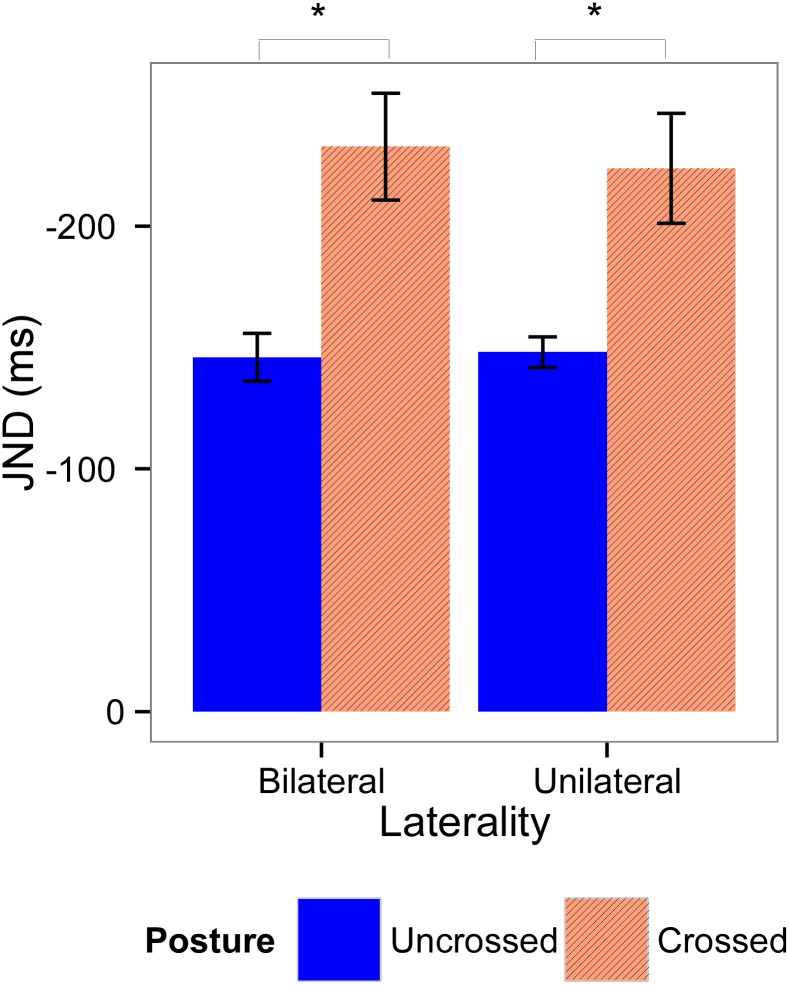
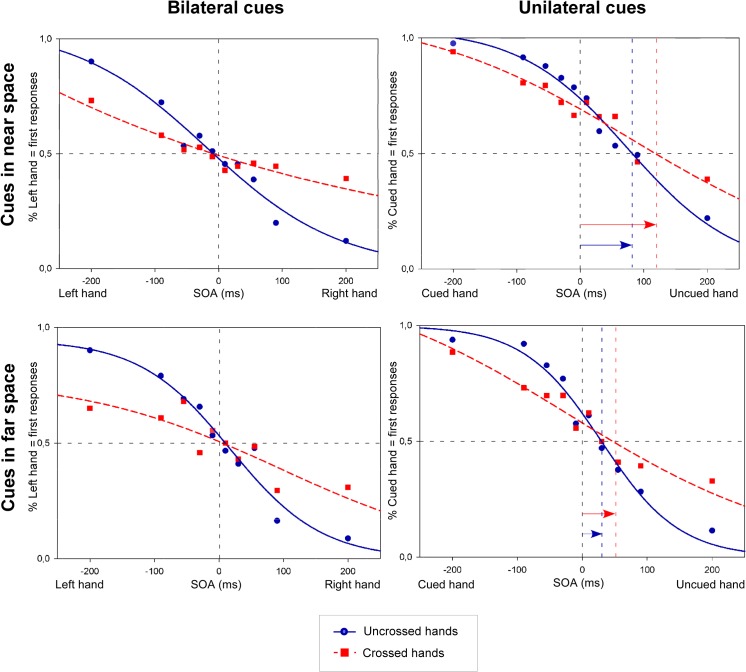
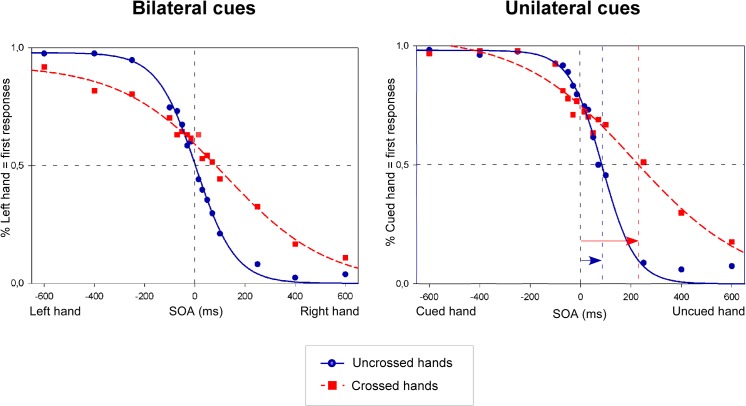
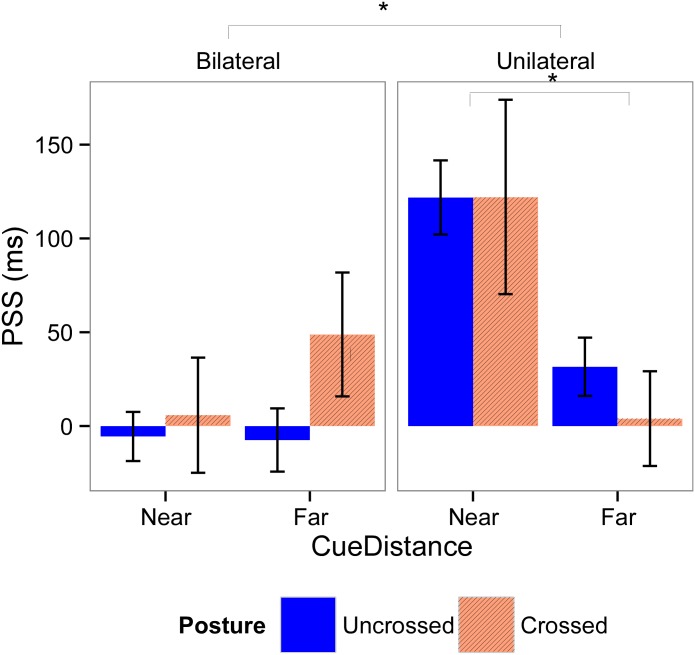
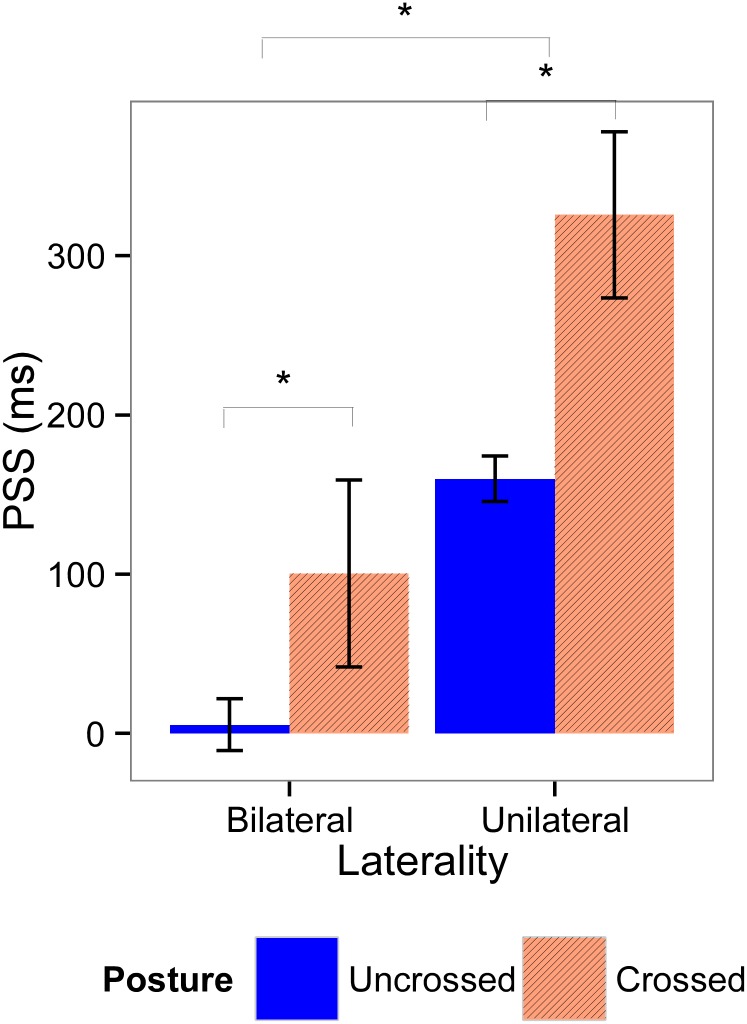
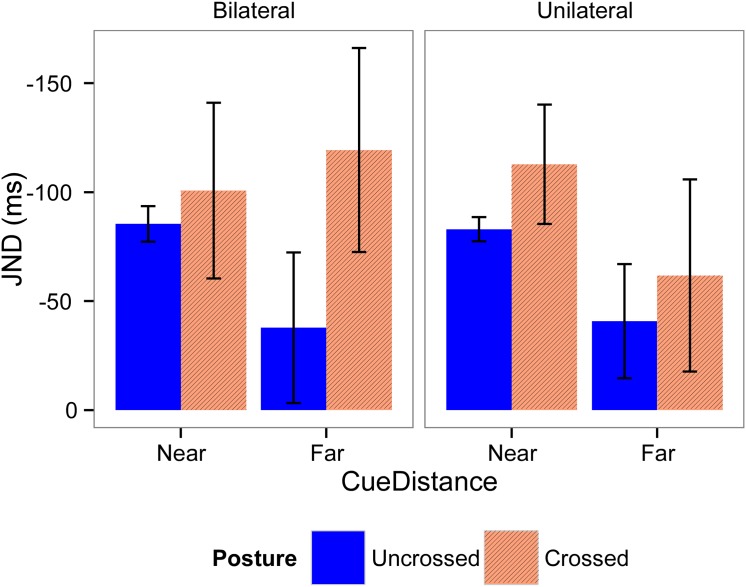
To react efficiently to potentially threatening stimuli, we have to be able to localize these stimuli in space. In daily life we are constantly moving so that our limbs can be positioned at the opposite side of space. Therefore, a somatotopic frame of reference is insufficient to localize nociceptive stimuli. Here we investigated whether nociceptive stimuli are mapped into a spatiotopic frame of reference, and more specifically a peripersonal frame of reference, which takes into account the position of the body limbs in external space, as well as the occurrence of external objects presented near the body. Two temporal order judgment (TOJ) experiments were conducted, during which participants had to decide which of two nociceptive stimuli, one applied to either hand, had been presented first while their hands were either uncrossed or crossed over the body midline. The occurrence of the nociceptive stimuli was cued by uninformative visual cues. We found that the visual cues prioritized the perception of nociceptive stimuli applied to the hand laying in the cued side of space, irrespective of posture. Moreover, the influence of the cues was smaller when they were presented far in front of participants' hands as compared to when they were presented in close proximity. Finally, participants' temporal sensitivity was reduced by changing posture. These findings are compatible with the existence of a peripersonal frame of reference for the localization of nociceptive stimuli. This allows for the construction of a stable representation of our body and the space closely surrounding our body, enabling a quick and efficient reaction to potential physical threats.
为了有效地应对潜在的威胁性刺激,我们必须能够在空间中定位这些刺激。在日常生活中,我们不断移动,以便我们的四肢能够位于空间的另一侧。因此,躯体定位参照系不足以定位伤害性刺激。在这里,我们研究了伤害性刺激是否被映射到一个空间定位参照系中,更具体地说是一个个人周边参照系,该参照系考虑了身体四肢在外部空间中的位置,以及身体附近出现的外部物体。我们进行了两个时间顺序判断(TOJ)实验,在此期间,参与者必须决定两个伤害性刺激中哪一个(分别施加于两只手中的一只)先出现,同时他们的手要么不交叉,要么交叉于身体中线之上。伤害性刺激的出现由无信息视觉线索提示。我们发现,无论姿势如何,视觉线索都会优先感知施加于位于线索提示空间一侧的手上的伤害性刺激。此外,与在参与者手附近呈现线索相比,当线索在参与者手前方较远位置呈现时,线索的影响较小。最后,改变姿势会降低参与者的时间敏感性。这些发现与存在用于定位伤害性刺激的个人周边参照系相一致。这使得能够构建我们身体以及紧邻身体周围空间的稳定表征,从而能够对潜在的身体威胁做出快速而有效的反应。