Thompson John W, Wei Jianqin, Appau Kweku, Wang Huilan, Yu Hong, Spiga Maria G, Graham Regina M, Webster Keith A
Department of Molecular and Cellular Pharmacology and the Vascular Biology Institute, University of Miami Miller School of Medicine, Miami, Florida, United States of America.
Department of Cardiology, Second Affiliated Hospital, College of Medicine, Zhejiang University, Hangzhou, China.
PLoS One. 2015 Aug 28;10(8):e0136847. doi: 10.1371/journal.pone.0136847. eCollection 2015.
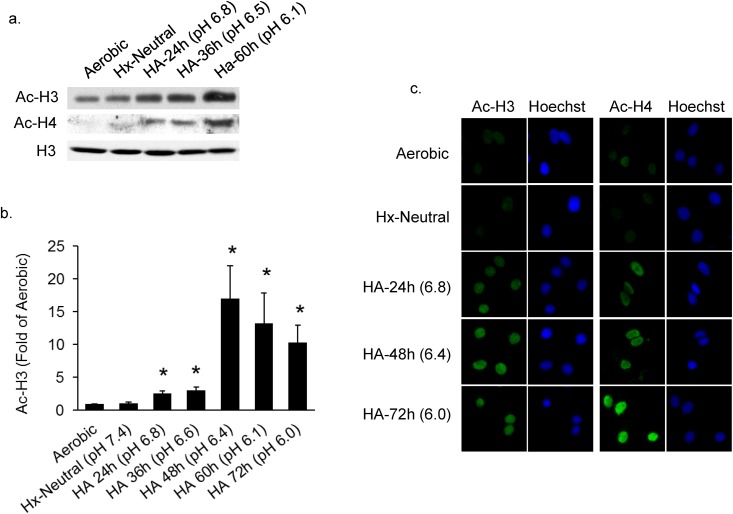
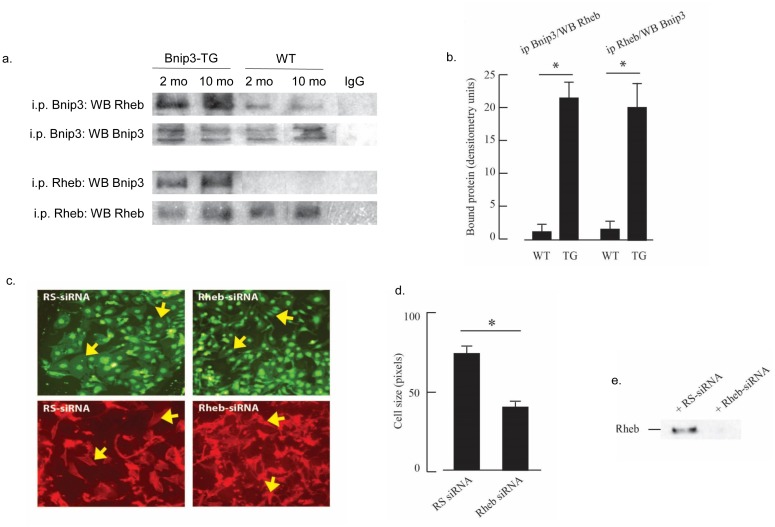
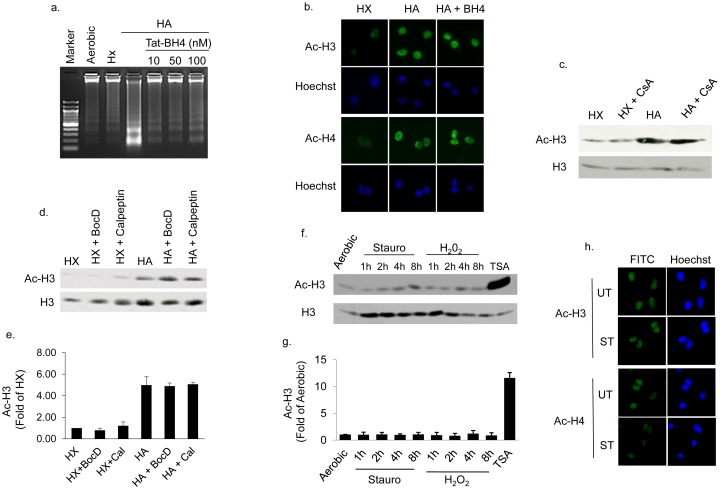
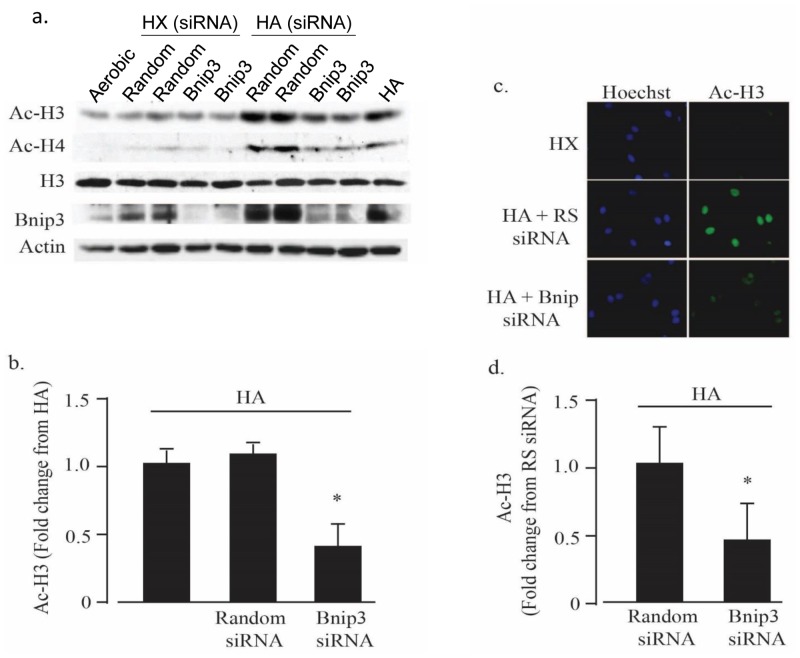
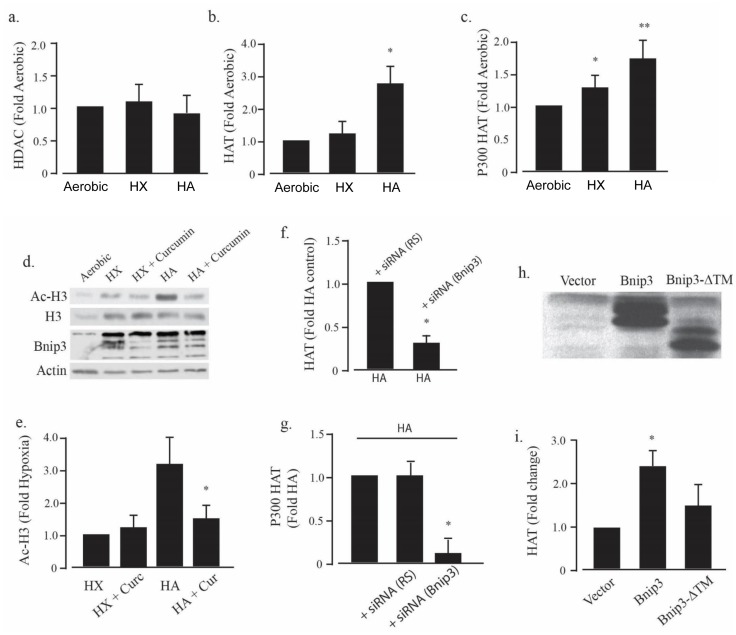
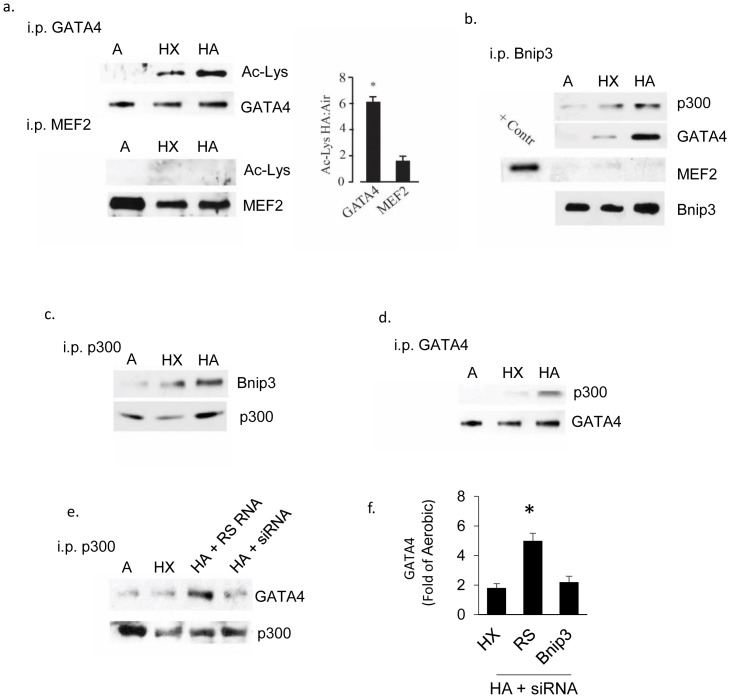
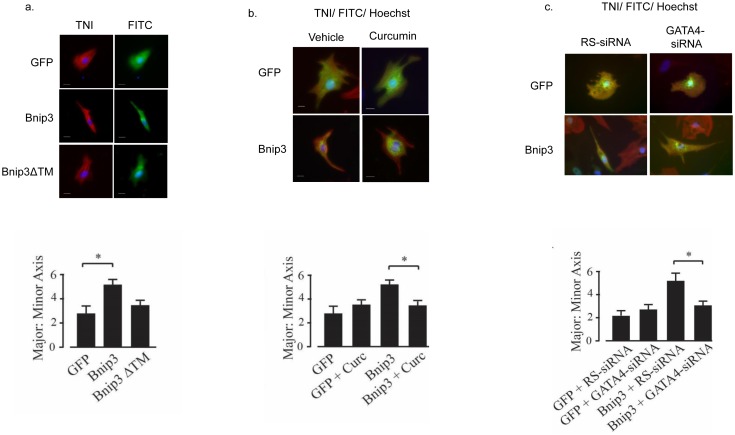
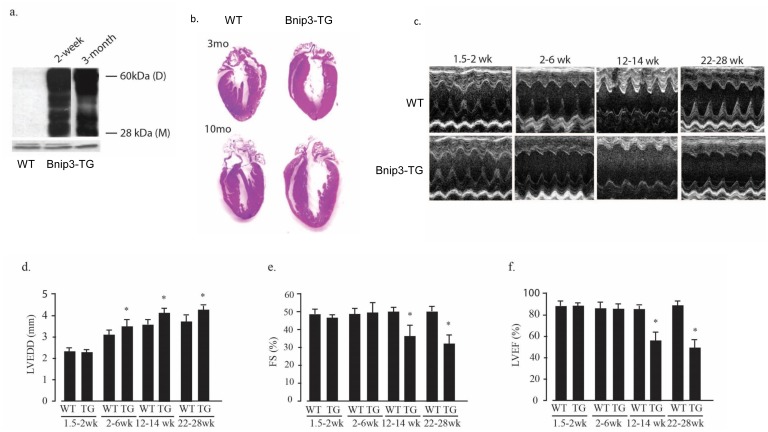
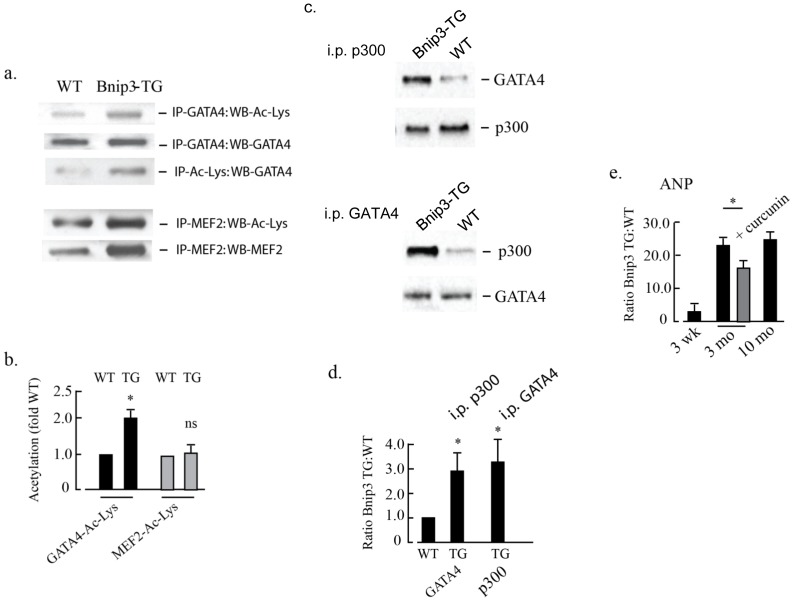
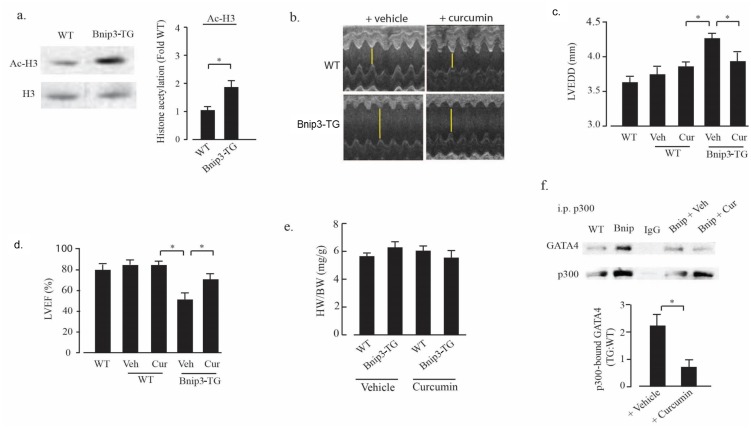
Bnip3 is a hypoxia-regulated member of the Bcl-2 family of proteins that is implicated in apoptosis, programmed necrosis, autophagy and mitophagy. Mitochondria are thought to be the primary targets of Bnip3 although its activities may extend to the ER, cytoplasm, and nucleus. Bnip3 is induced in the heart by ischemia and pressure-overload, and may contribute to cardiomyopathy and heart failure. Only mitochondrial-dependent programmed death actions have been described for Bnip3 in the heart. Here we describe a novel activity of Bnip3 in cultured cardiac myocytes and transgenic mice overexpressing Bnip3 in the heart (Bnip3-TG). In cultured myocytes Bnip3 bound and activated the acetyltransferase p300, increased acetylation of histones and the transcription factor GATA4, and conferred p300 and GATA4-sensitive cellular morphological changes. In intact Bnip3-TG hearts Bnip3 also bound p300 and GATA4 and conferred enhanced GATA4 acetylation. Bnip3-TG mice underwent age-dependent ventricular dilation and heart failure that was partially prevented by p300 inhibition with curcumin. The results suggest that Bnip3 regulates cardiac gene expression and perhaps myocyte morphology by activating nuclear p300 acetyltransferase activity and hyperacetylating histones and p300-selective transcription factors.
Bnip3是Bcl-2蛋白家族中受缺氧调节的成员,与细胞凋亡、程序性坏死、自噬和线粒体自噬有关。线粒体被认为是Bnip3的主要作用靶点,尽管其作用可能扩展到内质网、细胞质和细胞核。Bnip3在心脏中由缺血和压力过载诱导产生,可能导致心肌病和心力衰竭。在心脏中,Bnip3仅被描述为具有依赖线粒体的程序性死亡作用。在此,我们描述了Bnip3在培养的心肌细胞和心脏中过表达Bnip3的转基因小鼠(Bnip3-TG)中的一种新活性。在培养的心肌细胞中,Bnip3结合并激活乙酰转移酶p300,增加组蛋白和转录因子GATA4的乙酰化,并引起对p300和GATA4敏感的细胞形态变化。在完整的Bnip3-TG心脏中,Bnip3也结合p300和GATA4并增强GATA4的乙酰化。Bnip3-TG小鼠出现年龄依赖性心室扩张和心力衰竭,姜黄素对p300的抑制作用可部分预防这种情况。结果表明,Bnip3通过激活核p300乙酰转移酶活性以及使组蛋白和p300选择性转录因子过度乙酰化来调节心脏基因表达,可能还调节心肌细胞形态。