Queiroz Adriano, Medina-Cleghorn Daniel, Marjanovic Olivera, Nomura Daniel K, Riley Lee W
Division of Infectious Diseases and Vaccinology, School of Public Health, University of California, Berkeley, CA 94720, USA.
Program in Metabolic Biology, Department of Nutritional Sciences and Toxicology, University of California, Berkeley, CA 94720, USA.
Pathog Dis. 2015 Nov;73(8):ftv066. doi: 10.1093/femspd/ftv066. Epub 2015 Aug 28.
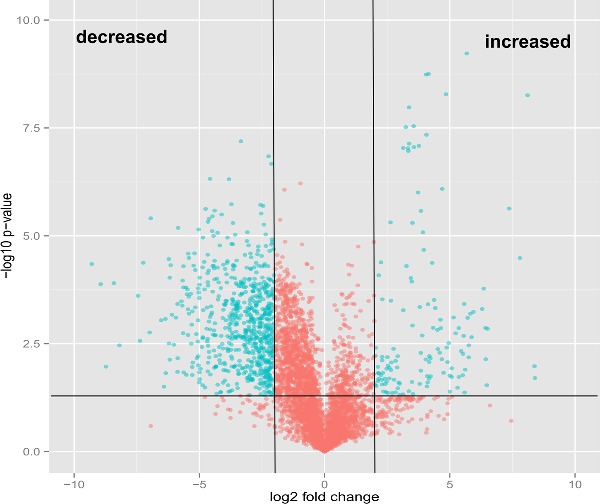
Mycobacterium tuberculosis disrupted in a 13-gene operon (mce1) accumulates free mycolic acids (FM) in its cell wall and causes accelerated death in mice. Here, to more comprehensively analyze differences in their cell wall lipid composition, we used an untargeted metabolomics approach to compare the lipid profiles of wild-type and mce1 operon mutant strains. By liquid chromatography-mass spectrometry, we identified >400 distinct lipids significantly altered in the mce1 mutant compared to wild type. These lipids included decreased levels of saccharolipids and glycerophospholipids, and increased levels of alpha-, methoxy- and keto mycolic acids (MA), and hydroxyphthioceranic acid. The mutant showed reduced expression of mmpL8, mmpL10, stf0, pks2 and papA2 genes involved in transport and metabolism of lipids recognized to induce proinflammatory response; these lipids were found to be decreased in the mutant. In contrast, the transcripts of mmpL3, fasI, kasA, kasB, acpM and RV3451 involved in MA transport and metabolism increased; MA inhibits inflammatory response in macrophages. Since the mce1 operon is known to be regulated in intracellular M. tuberculosis, we speculate that the differences we observed in cell wall lipid metabolism and composition may affect host response to M. tuberculosis infection and determine the clinical outcome of such an infection.
在一个13基因操纵子(mce1)中被破坏的结核分枝杆菌在其细胞壁中积累游离分枝菌酸(FM),并导致小鼠加速死亡。在此,为了更全面地分析其细胞壁脂质组成的差异,我们采用非靶向代谢组学方法比较野生型和mce1操纵子突变株的脂质谱。通过液相色谱 - 质谱联用,我们鉴定出与野生型相比,mce1突变体中有>400种不同的脂质发生了显著变化。这些脂质包括糖脂和甘油磷脂水平降低,以及α-、甲氧基和酮基分枝菌酸(MA)和羟基结核硬脂酸水平升高。该突变体显示出参与脂质运输和代谢的mmpL8、mmpL10、stf0、pks2和papA2基因的表达降低,这些脂质被认为可诱导促炎反应,在突变体中发现其水平降低。相反,参与MA运输和代谢的mmpL3、fasI、kasA、kasB、acpM和RV3451的转录本增加;MA抑制巨噬细胞中的炎症反应。由于已知mce1操纵子在细胞内结核分枝杆菌中受到调控,我们推测我们在细胞壁脂质代谢和组成中观察到的差异可能会影响宿主对结核分枝杆菌感染的反应,并决定这种感染的临床结果。