Rapozzi Valentina, Della Pietra Emilia, Bonavida Benjamin
Department of Medical and Biological Sciences, University of Udine, P.le Kolbe 4, 33100 Udine, Italy.
Department of Microbiology, Immunology and Molecular Genetics, University of California Los Angeles, Los Angeles, CA 90095, USA.
Redox Biol. 2015 Dec;6:311-317. doi: 10.1016/j.redox.2015.07.015. Epub 2015 Jul 31.
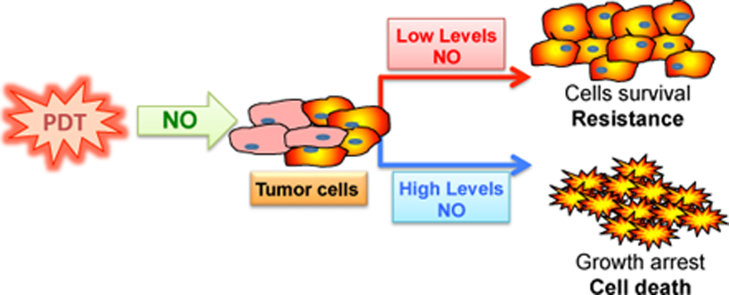
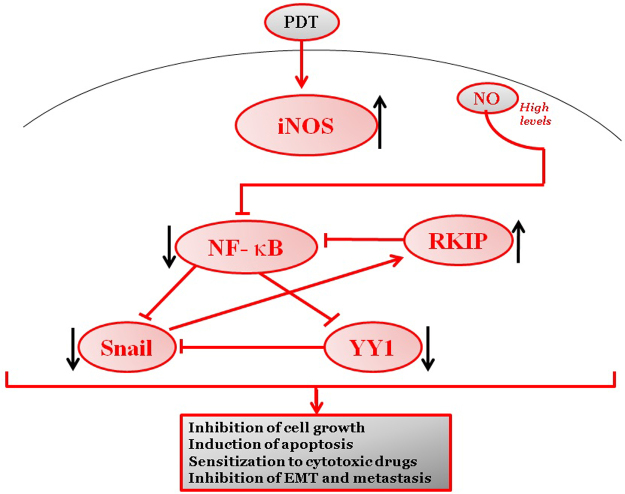
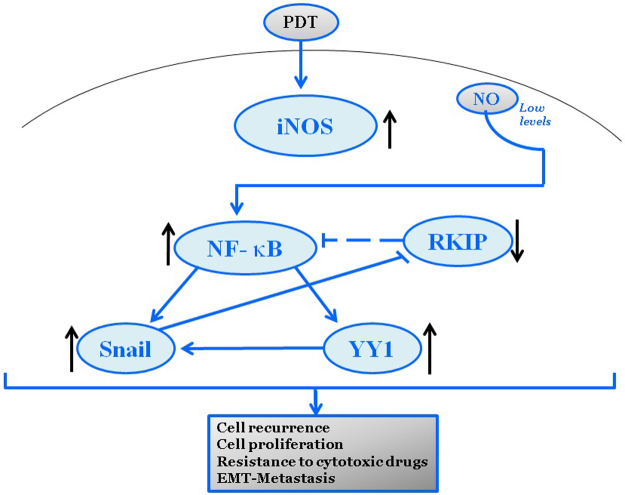
Photodynamic therapy (PDT) against cancer has gained attention due to the successful outcome in some cancers, particularly those on the skin. However, there have been limitations to PDT applications in deep cancers and, occasionally, PDT treatment resulted in tumor recurrence. A better understanding of the underlying molecular mechanisms of PDT-induced cytotoxicity and cytoprotection should facilitate the development of better approaches to inhibit the cytoprotective effects and also augment PDT-mediated cytotoxicity. PDT treatment results in the induction of iNOS/NO in both the tumor and the microenvironment. The role of NO in cytotoxicity and cytoprotection was examined. The findings revealed that NO mediates its effects by interfering with a dysregulated pro-survival/anti-apoptotic NF-κB/Snail/YY1/RKIP loop which is often expressed in cancer cells. The cytoprotective effect of PDT-induced NO was the result of low levels of NO that activates the pro-survival/anti-apoptotic NF-κB, Snail, and YY1 and inhibits the anti-survival/pro-apoptotic and metastasis suppressor RKIP. In contrast, PDT-induced high levels of NO result in the inhibition of NF-kB, Snail, and YY1 and the induction of RKIP, all of which result in significant anti-tumor cytotoxicity. The direct role of PDT-induced NO effects was corroborated by the use of the NO inhibitor, l-NAME, which reversed the PDT-mediated cytotoxic and cytoprotective effects. In addition, the combination of the NO donor, DETANONOate, and PDT potentiated the PDT-mediated cytotoxic effects. These findings revealed a new mechanism of PDT-induced NO effects and suggested the potential therapeutic application of the combination of NO donors/iNOS inducers and PDT in the treatment of various cancers. In addition, the study suggested that the combination of PDT with subtoxic cytotoxic drugs will result in significant synergy since NO has been shown to be a significant chemo-immunosensitizing agent to apoptosis.
光动力疗法(PDT)治疗癌症因其在某些癌症尤其是皮肤癌治疗中取得的成功疗效而受到关注。然而,PDT在深部癌症治疗中的应用存在局限性,且偶尔会出现肿瘤复发的情况。更好地理解PDT诱导细胞毒性和细胞保护作用的潜在分子机制,应有助于开发更好的方法来抑制细胞保护作用并增强PDT介导的细胞毒性。PDT治疗会在肿瘤及其微环境中诱导诱导型一氧化氮合酶(iNOS)/一氧化氮(NO)的产生。研究了NO在细胞毒性和细胞保护中的作用。研究结果表明,NO通过干扰癌细胞中经常表达的失调的促生存/抗凋亡核因子κB(NF-κB)/蜗牛蛋白(Snail)/阴阳1蛋白(YY1)/ Raf激酶抑制蛋白(RKIP)信号通路来发挥其作用。PDT诱导的NO的细胞保护作用是低水平NO激活促生存/抗凋亡的NF-κB、Snail和YY1并抑制抗生存/促凋亡及转移抑制因子RKIP的结果。相反,PDT诱导的高水平NO会抑制NF-κB、Snail和YY1,并诱导RKIP,所有这些都会导致显著的抗肿瘤细胞毒性。使用NO抑制剂左旋硝基精氨酸甲酯(l-NAME)证实了PDT诱导的NO作用的直接作用,它逆转了PDT介导的细胞毒性和细胞保护作用。此外,NO供体二乙三胺 NONOate(DETANONOate)与PDT联合使用增强了PDT介导的细胞毒性作用。这些发现揭示了PDT诱导的NO作用的新机制,并提示了NO供体/iNOS诱导剂与PDT联合应用在各种癌症治疗中的潜在治疗应用。此外,该研究表明,由于NO已被证明是一种重要的化学免疫致敏剂,可诱导细胞凋亡,因此PDT与亚毒性细胞毒性药物联合使用将产生显著的协同作用。