Rauch Cessa, Vries Jan de, Rommel Sophie, Rose Laura E, Woehle Christian, Christa Gregor, Laetz Elise M, Wägele Heike, Tielens Aloysius G M, Nickelsen Jörg, Schumann Tobias, Jahns Peter, Gould Sven B
Molecular Evolution, Heinrich-Heine-University Düsseldorf, Germany.
Population Genetics, Heinrich-Heine-University Düsseldorf, Germany.
Genome Biol Evol. 2015 Aug 29;7(9):2602-7. doi: 10.1093/gbe/evv173.
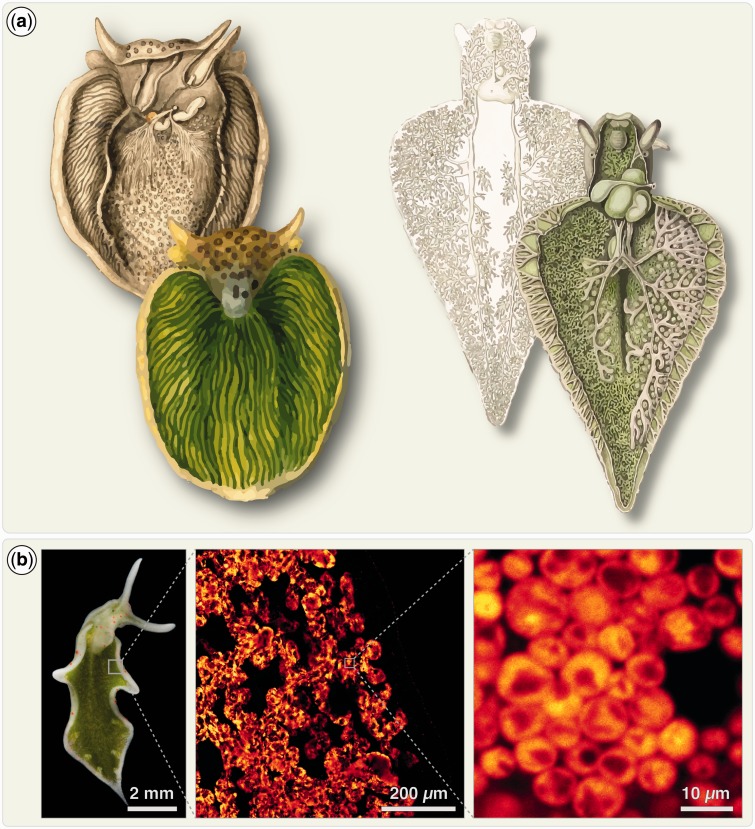
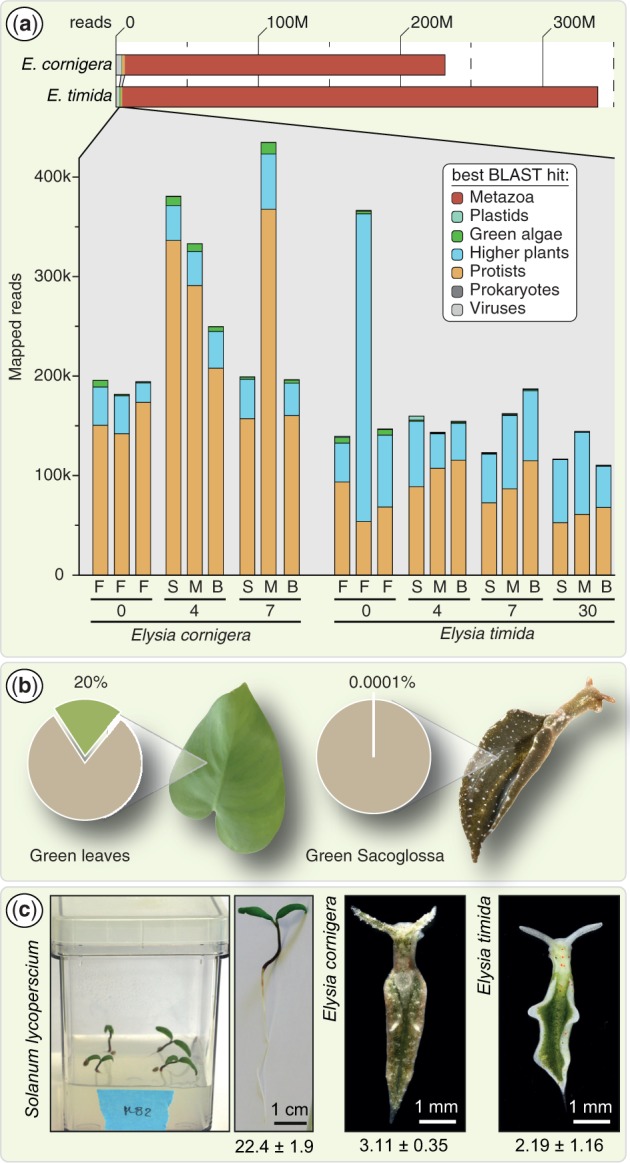
Eukaryotic organelles depend on nuclear genes to perpetuate their biochemical integrity. This is true for mitochondria in all eukaryotes and plastids in plants and algae. Then how do kleptoplasts, plastids that are sequestered by some sacoglossan sea slugs, survive in the animals' digestive gland cells in the absence of the algal nucleus encoding the vast majority of organellar proteins? For almost two decades, lateral gene transfer (LGT) from algae to slugs appeared to offer a solution, but RNA-seq analysis, later supported by genome sequencing of slug DNA, failed to find any evidence for such LGT events. Yet, isolated reports continue to be published and are readily discussed by the popular press and social media, making the data on LGT and its support for kleptoplast longevity appear controversial. However, when we take a sober look at the methods used, we realize that caution is warranted in how the results are interpreted. There is no evidence that the evolution of kleptoplasty in sea slugs involves LGT events. Based on what we know about photosystem maintenance in embryophyte plastids, we assume kleptoplasts depend on nuclear genes. However, studies have shown that some isolated algal plastids are, by nature, more robust than those of land plants. The evolution of kleptoplasty in green sea slugs involves many promising and unexplored phenomena, but there is no evidence that any of these require the expression of slug genes of algal origin.
真核细胞器依赖核基因来维持其生化完整性。所有真核生物中的线粒体以及植物和藻类中的质体都是如此。那么,被一些绿叶海蛞蝓隔离的质体——盗食质体,是如何在缺乏编码绝大多数细胞器蛋白的藻类细胞核的情况下,在动物的消化腺细胞中存活的呢?近二十年来,从藻类到海蛞蝓的横向基因转移(LGT)似乎提供了一种解决方案,但RNA测序分析以及后来对海蛞蝓DNA的基因组测序结果都未能找到任何此类LGT事件的证据。然而,孤立的报道仍不断发表,并被大众媒体和社交媒体广泛讨论,使得关于LGT及其对盗食质体寿命支持的数据显得颇具争议。然而,当我们冷静审视所使用的方法时,就会意识到在解释结果时应谨慎。没有证据表明海蛞蝓中盗食质体的进化涉及LGT事件。基于我们对胚植物质体中光系统维持的了解,我们认为盗食质体依赖核基因。然而,研究表明一些分离的藻类质体本质上比陆地植物的质体更具活力。绿叶海蛞蝓中盗食质体的进化涉及许多有前景且未被探索的现象,但没有证据表明其中任何一种现象需要表达藻类来源的海蛞蝓基因。