Department of Geology, Faculty of Science, University of Malaya Kuala Lumpur, Malaysia ; The Centre for Research in Biotechnology for Agriculture, University of Malaya Kuala Lumpur, Malaysia ; The Centre for Research in Waste Management, University of Malaya Kuala Lumpur, Malaysia ; Faculty of Science and Natural Resources, Universiti Malaysia Sabah Kota Kinabalu, Malaysia.
Department of Geology, Faculty of Science, University of Malaya Kuala Lumpur, Malaysia.
Front Chem. 2015 Aug 11;3:42. doi: 10.3389/fchem.2015.00042. eCollection 2015.
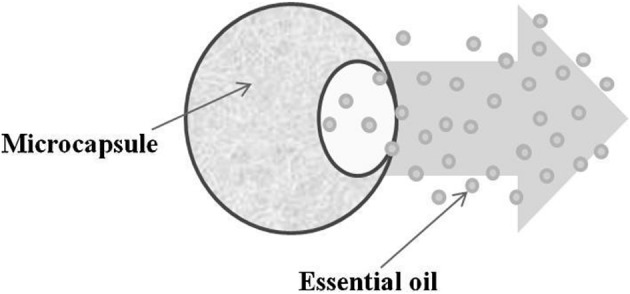
Microencapsulation has become a hot topic in chemical research. Technology mainly used for control release and protection purposes. The sol-gel micro encapsulation approach for fragrance and aroma in porous silica-based materials leads to sustainable odorant and flavored materials with novel and unique beneficial properties. Sol-gel encapsulation of silica based micro particles considered economically cheap as capital investment in manufacturing is very low and environmentally friendly. Amorphous sol-gel SiO2 is non-toxic and safe, whereas the sol-gel entrapment of delicate chemicals in its inner pores results in pronounced chemical and physical stabilization of the entrapped active agents, thereby broadening the practical utilization of chemically unstable essential oils (EOs). Reviewing progress in the fabrication of diverse odorant and flavored sol-gels, shows us how different synthetic strategies are appropriate for practical application with important health and environmental benefits.
微胶囊化已经成为化学研究的热门话题。该技术主要用于控制释放和保护目的。溶胶-凝胶微胶囊化方法可将香味和香气封入多孔硅基材料中,从而得到具有新颖独特有益特性的可持续的香料和调味材料。基于溶胶-凝胶的二氧化硅基微颗粒封装被认为具有经济优势,因为其制造成本非常低,并且对环境友好。无定形的溶胶-凝胶 SiO2 是无毒且安全的,而将精细化学品包埋在其内部孔中会导致包埋的活性剂发生明显的化学和物理稳定化,从而拓宽了对化学不稳定的精油(EOs)的实际应用。回顾不同的香味和调味溶胶-凝胶的制备进展,向我们展示了不同的合成策略如何适合具有重要健康和环境效益的实际应用。