Szczygieł Elżbieta, Zielonka Katarzyna, Mazur Tadeusz, Mętel Sylwia, Golec Joanna
a Jagiellonian University Medical College , Poland.
Int J Occup Saf Ergon. 2015;21(2):207-12. doi: 10.1080/10803548.2015.1028224.
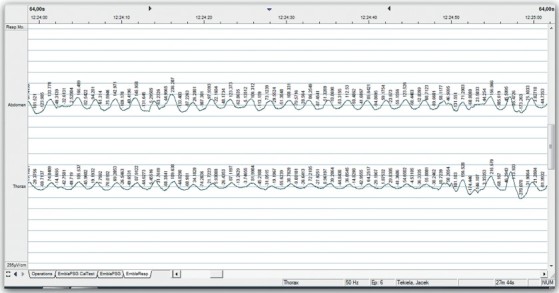
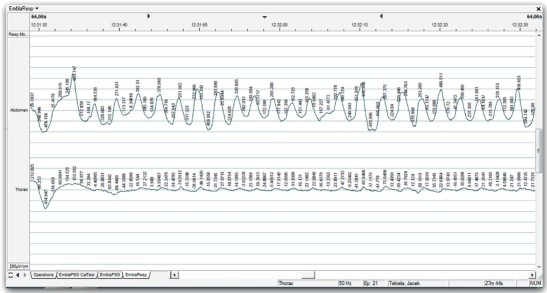
Regardless of the constantly increasing time man is spending in a sitting position, there is still a lack of objective chair quality assessment criteria. The aim of this paper is to find the answer to whether respiratory chest movement measurements can be a chair quality indicator. The study included 34 participants (mean 34.7 years±5.2). Their chest movements were assessed using respiratory inductive plethysmography while sitting on two subsequent chairs. Significant differences in chest movements depending on chair type were observed concerning the breathing duct (upper and lower) and breathing movement amplitude. The amplitude of the upper respiratory track in the first chair was higher (239.4 mV) compared with the second seat (207.3 mV) (p=.018). The analyzed parameters of respiratory chest movement may become a helpful indicator for design and selection of chairs which enable people to both work and relax in the most ergonomic conditions.
尽管人们坐着的时间在持续增加,但目前仍缺乏客观的座椅质量评估标准。本文旨在探究呼吸时胸部运动测量能否作为座椅质量指标。该研究纳入了34名参与者(平均年龄34.7岁±5.2岁)。他们坐在两把相继的椅子上时,使用呼吸感应体积描记法评估其胸部运动。观察到,根据椅子类型不同,在呼吸管道(上、下)和呼吸运动幅度方面,胸部运动存在显著差异。与第二把椅子(207.3 mV)相比,第一把椅子上呼吸道的运动幅度更高(239.4 mV)(p = 0.018)。所分析的呼吸胸部运动参数可能成为设计和选择座椅的有用指标,使人们能够在最符合人体工程学的条件下工作和放松。