Santos-Carballal B, Aaldering L J, Ritzefeld M, Pereira S, Sewald N, Moerschbacher B M, Götte M, Goycoolea F M
Institute of Plant Biology and Biotechnology (IBBP), University of Münster, Schlossgarten 3, D-48149 Münster, Germany.
Organic and Bioorganic Chemistry, Bielefeld University, Universitätsstrasse 25, D-33615 Bielefeld, Germany.
Sci Rep. 2015 Sep 1;5:13567. doi: 10.1038/srep13567.
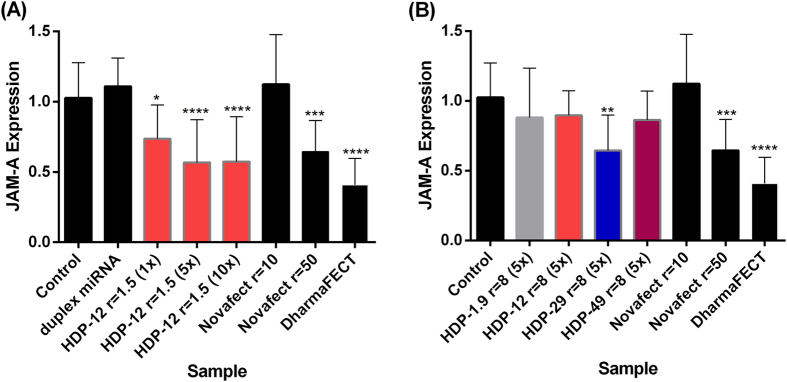
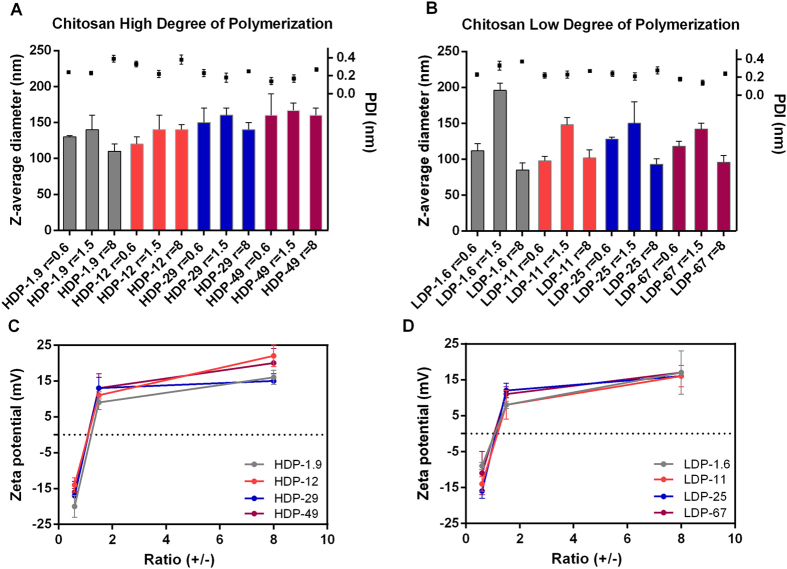
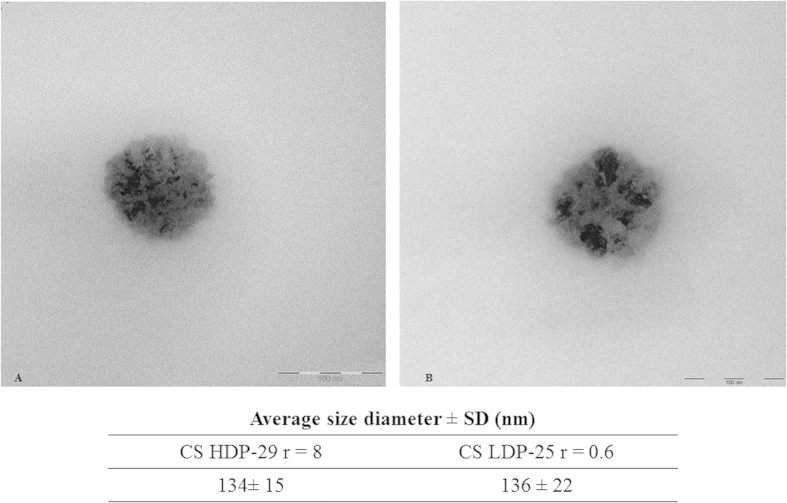
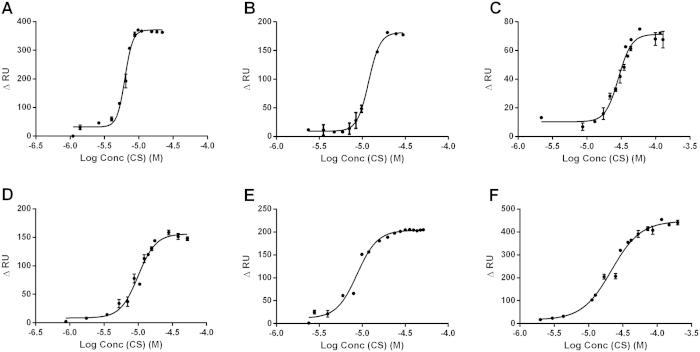
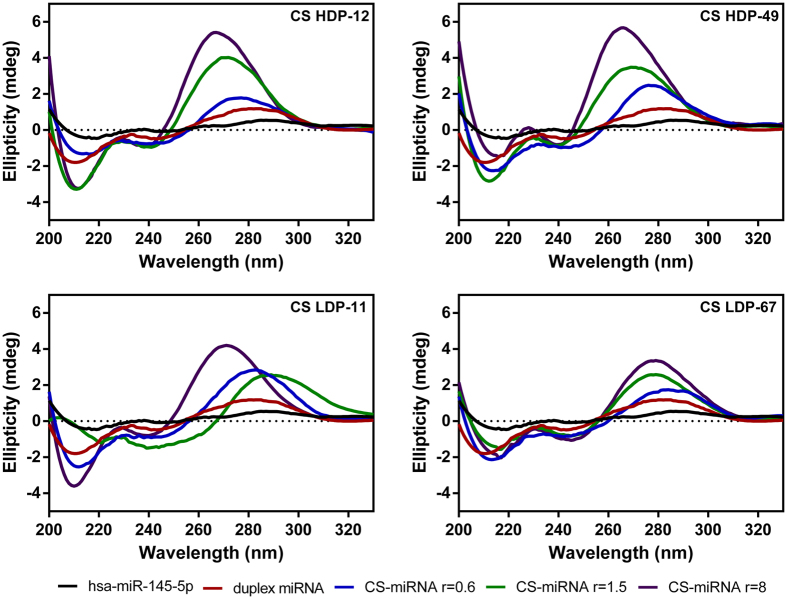
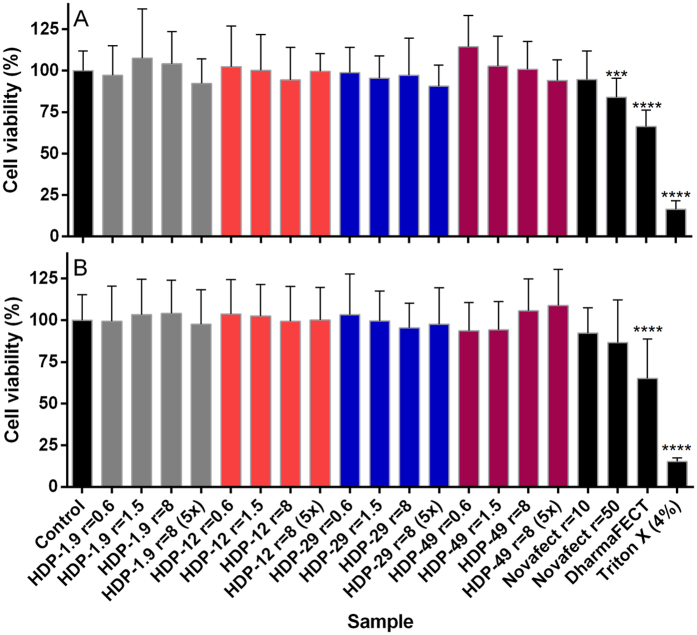
Cancer gene therapy requires the design of non-viral vectors that carry genetic material and selectively deliver it with minimal toxicity. Non-viral vectors based on cationic natural polymers can form electrostatic complexes with negatively-charged polynucleotides such as microRNAs (miRNAs). Here we investigated the physicochemical/biophysical properties of chitosan-hsa-miRNA-145 (CS-miRNA) nanocomplexes and the biological responses of MCF-7 breast cancer cells cultured in vitro. Self-assembled CS-miRNA nanocomplexes were produced with a range of (+/-) charge ratios (from 0.6 to 8) using chitosans with various degrees of acetylation and molecular weight. The Z-average particle diameter of the complexes was <200 nm. The surface charge increased with increasing amount of chitosan. We observed that chitosan induces the base-stacking of miRNA in a concentration dependent manner. Surface plasmon resonance spectroscopy shows that complexes formed by low degree of acetylation chitosans are highly stable, regardless of the molecular weight. We found no evidence that these complexes were cytotoxic towards MCF-7 cells. Furthermore, CS-miRNA nanocomplexes with degree of acetylation 12% and 29% were biologically active, showing successful downregulation of target mRNA expression in MCF-7 cells. Our data, therefore, shows that CS-miRNA complexes offer a promising non-viral platform for breast cancer gene therapy.
癌症基因治疗需要设计出能携带遗传物质并以最小毒性进行选择性递送的非病毒载体。基于阳离子天然聚合物的非病毒载体可与带负电荷的多核苷酸(如微小RNA(miRNA))形成静电复合物。在此,我们研究了壳聚糖-hsa-miRNA-145(CS-miRNA)纳米复合物的物理化学/生物物理性质以及体外培养的MCF-7乳腺癌细胞的生物学反应。使用具有不同乙酰化程度和分子量的壳聚糖,以一系列(+/-)电荷比(从0.6到8)制备了自组装的CS-miRNA纳米复合物。复合物的Z平均粒径<200 nm。表面电荷随壳聚糖用量的增加而增加。我们观察到壳聚糖以浓度依赖的方式诱导miRNA的碱基堆积。表面等离子体共振光谱表明,低乙酰化程度的壳聚糖形成的复合物高度稳定,与分子量无关。我们没有发现这些复合物对MCF-7细胞具有细胞毒性的证据。此外,乙酰化程度为12%和29%的CS-miRNA纳米复合物具有生物活性,显示出在MCF-7细胞中成功下调靶mRNA表达。因此,我们的数据表明,CS-miRNA复合物为乳腺癌基因治疗提供了一个有前景的非病毒平台。