Ray Avijit, Basu Sreemanti, Gharaibeh Raad Z, Cook Lydia C, Kumar Ranjit, Lefkowitz Elliot J, Walker Catherine R, Morrow Casey D, Franklin Craig L, Geiger Terrence L, Salzman Nita H, Fodor Anthony, Dittel Bonnie N
Blood Research Institute, BloodCenter of Wisconsin, Milwaukee, WI 53201;
Bioinformatics Services Division, Department of Bioinformatics and Genomics, University of North Carolina at Charlotte, Charlotte, NC 28223; Department of Bioinformatics and Genomics, University of North Carolina at Charlotte, Charlotte, NC 28223;
J Immunol. 2015 Oct 1;195(7):3071-85. doi: 10.4049/jimmunol.1500153. Epub 2015 Aug 31.
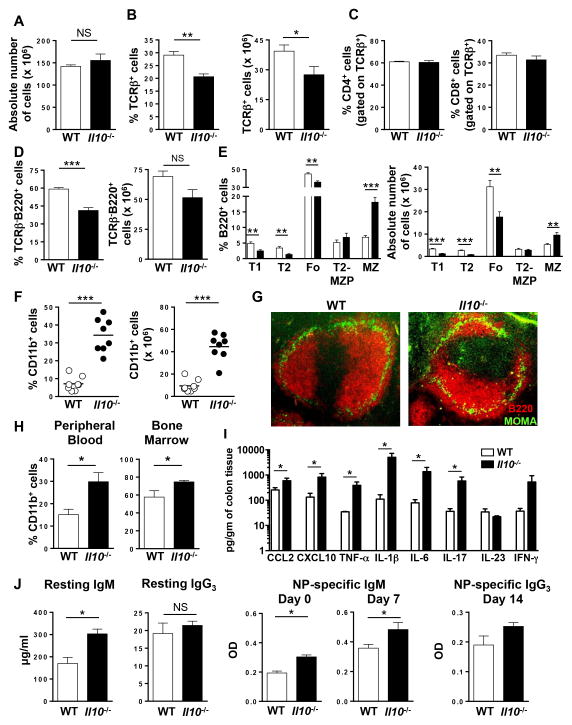
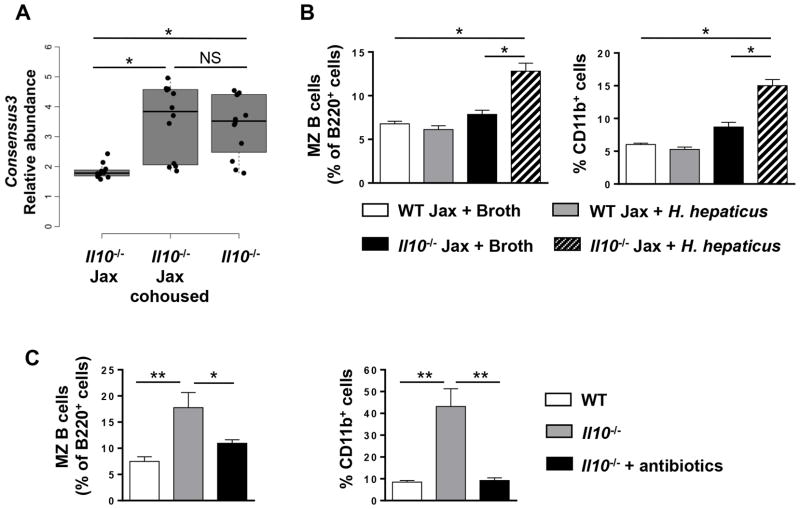
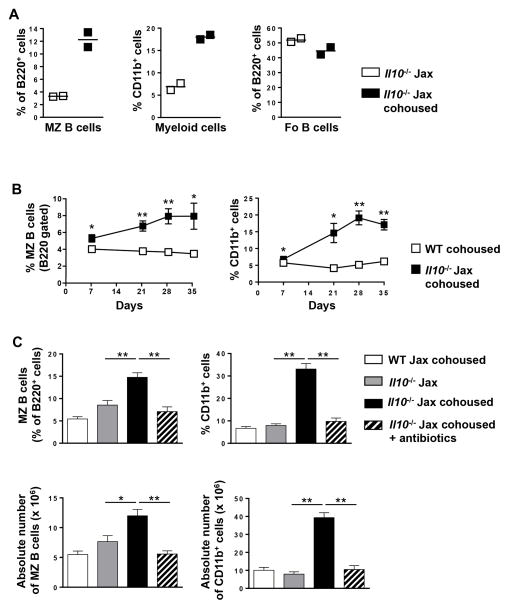
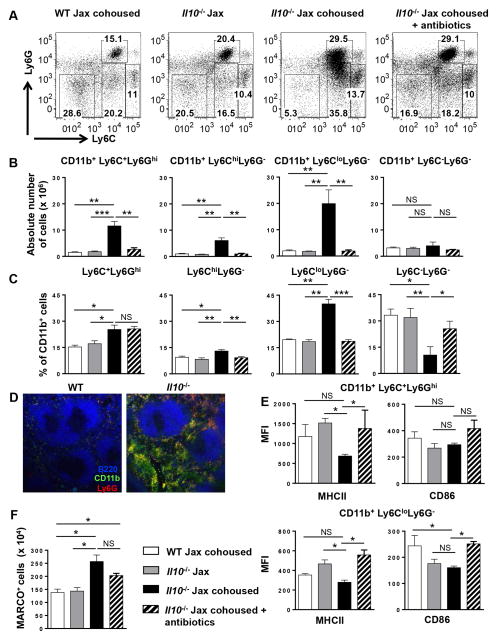
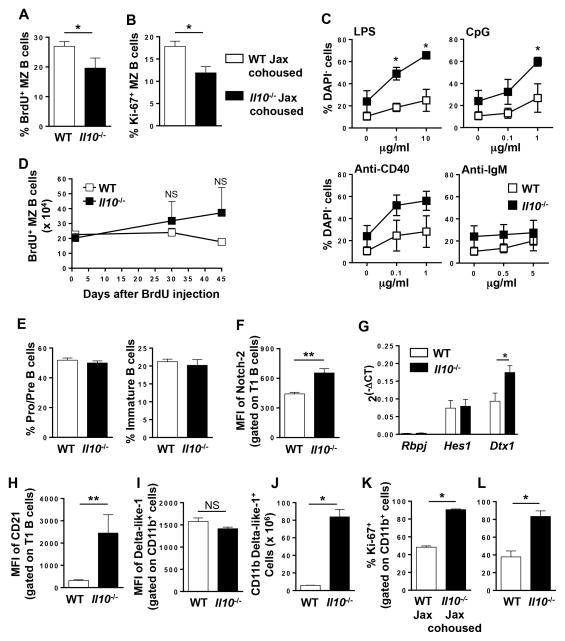
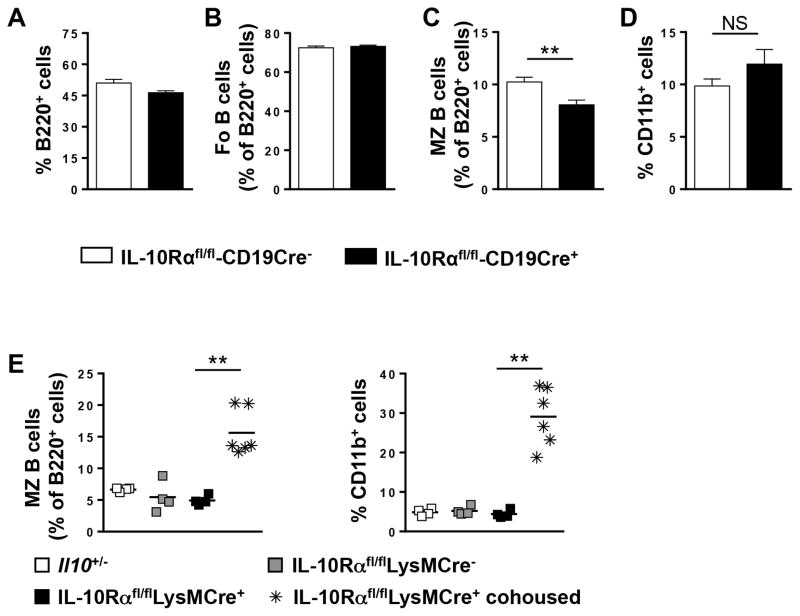
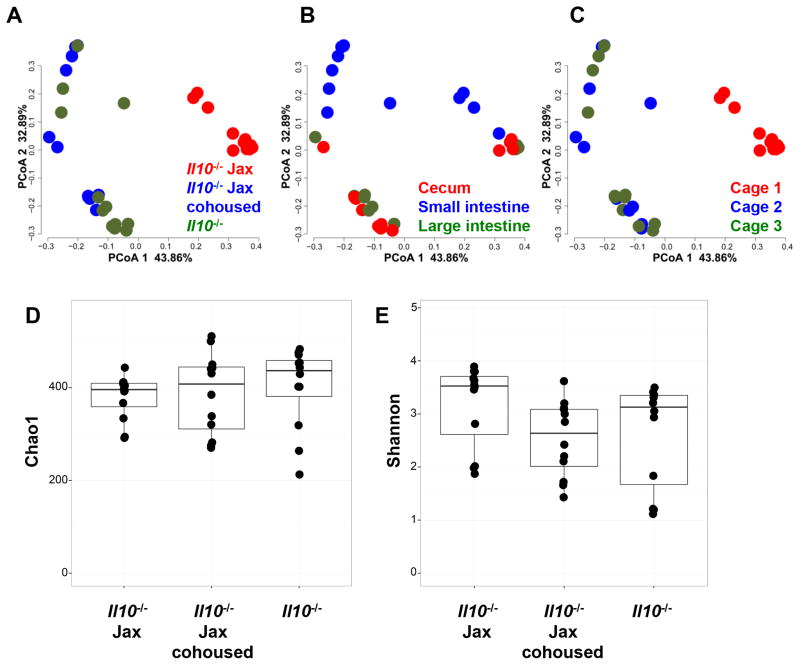
It is clear that IL-10 plays an essential role in maintaining homeostasis in the gut in response to the microbiome. However, it is unknown whether IL-10 also facilitates immune homeostasis at distal sites. To address this question, we asked whether splenic immune populations were altered in IL-10-deficient (Il10(-/-)) mice in which differences in animal husbandry history were associated with susceptibility to spontaneous enterocolitis that is microbiome dependent. The susceptible mice exhibited a significant increase in splenic macrophages, neutrophils, and marginal zone (MZ) B cells that was inhibited by IL-10 signaling in myeloid, but not B cells. The increase in macrophages was due to increased proliferation that correlated with a subsequent enhancement in MZ B cell differentiation. Cohousing and antibiotic treatment studies suggested that the alteration in immune homeostasis in the spleen was microbiome dependent. The 16S rRNA sequencing revealed that susceptible mice harbored a different microbiome with a significant increase in the abundance of the bacterial genus Helicobacter. The introduction of Helicobacter hepaticus to the gut of nonsusceptible mice was sufficient to drive macrophage expansion and MZ B cell development. Given that myeloid cells and MZ B cells are part of the first line of defense against blood-borne pathogens, their increase following a breach in the gut epithelial barrier would be protective. Thus, IL-10 is an essential gatekeeper that maintains immune homeostasis at distal sites that can become functionally imbalanced upon the introduction of specific pathogenic bacteria to the intestinal track.
显然,白细胞介素-10(IL-10)在响应微生物群时对维持肠道内环境稳定起着至关重要的作用。然而,IL-10是否也促进远端部位的免疫内环境稳定尚不清楚。为了解决这个问题,我们研究了在IL-10缺陷(Il10(-/-))小鼠中脾脏免疫细胞群是否发生改变,这些小鼠的动物饲养历史差异与对微生物群依赖性自发性小肠结肠炎的易感性相关。易感小鼠脾脏中的巨噬细胞、中性粒细胞和边缘区(MZ)B细胞显著增加,髓系细胞而非B细胞中的IL-10信号传导可抑制这种增加。巨噬细胞的增加是由于增殖增加,这与随后MZ B细胞分化增强相关。同笼饲养和抗生素治疗研究表明,脾脏免疫内环境稳定的改变依赖于微生物群。16S rRNA测序显示,易感小鼠的微生物群不同,细菌属幽门螺杆菌的丰度显著增加。将肝螺杆菌引入不易感小鼠的肠道足以驱动巨噬细胞扩增和MZ B细胞发育。鉴于髓系细胞和MZ B细胞是抵御血源性病原体的第一道防线的一部分,肠道上皮屏障破坏后它们的增加具有保护作用。因此,IL-10是维持远端部位免疫内环境稳定的关键守门人,当特定病原菌引入肠道时,远端部位的功能可能会失衡。