Tipton Shane, Sutherland John, Schwarzkopf Ran
Department of Orthopaedic Surgery, University of California Irvine, Joint Replacement Service, Orange, CA, USA.
Department of Radiological Sciences, University of California Irvine, Orange, CA, USA.
Geriatr Orthop Surg Rehabil. 2015 Sep;6(3):197-201. doi: 10.1177/2151458515588187.
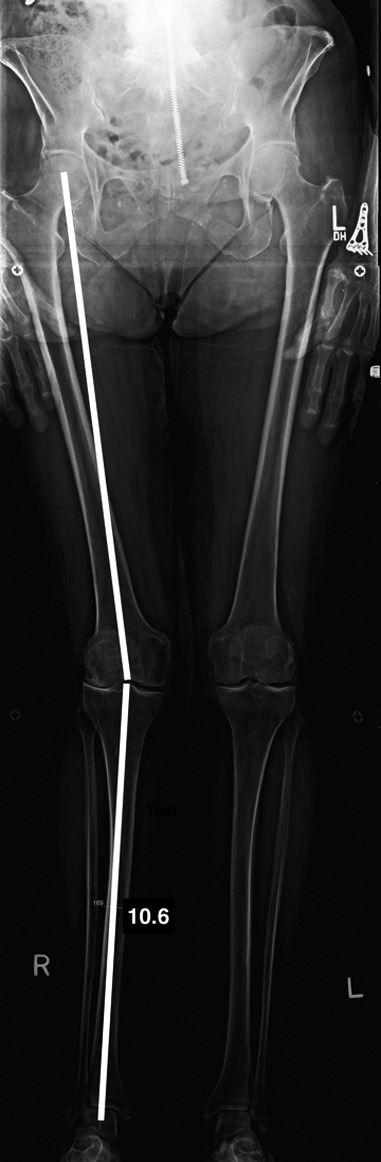
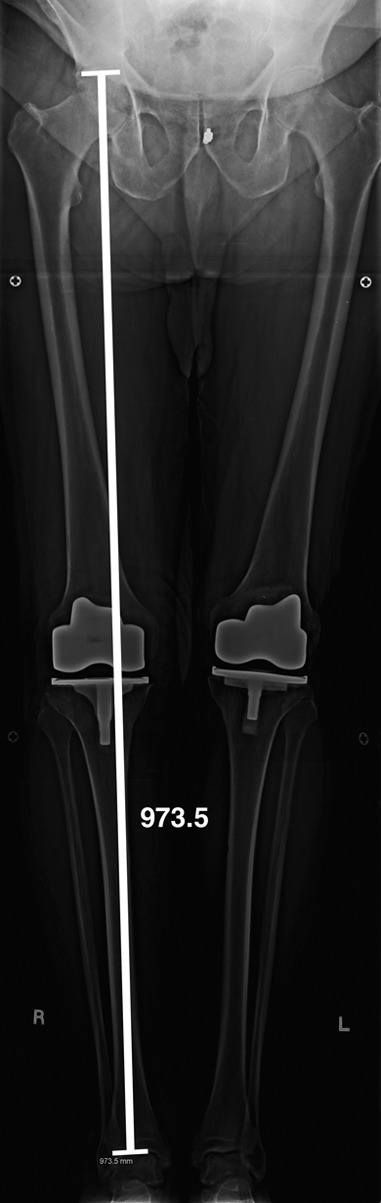
The clinical outcome of total knee arthroplasty (TKA) remains suboptimal in some patients. One of the factors that might hinder improved functionality may be postoperative limb length discrepancy due to increase in limb length of the operative limb. The objective of this cross-sectional prospective study was to examine the extent to which limb length change occurs after TKA and to compare the change in limb length to the degree of valgus or varus joint position preoperatively. The role of body mass index and Kellgren-Lawrence grade in limb length change was also assessed. The data of 137 TKAs were analyzed and separated into categories to compare change in limb length pre- versus postoperatively. In all, 59.1% of patients experienced an increase in limb length with an average increase of 0.438 cm, but overall, there was no statistically significant difference in limb length pre- versus postoperatively (P value 0.598). Similar trends were seen within all other groups. It is the conclusion of this study that limb lengthening after TKA does not frequently occur to a statistically significant extent, regardless of preoperative joint state.
全膝关节置换术(TKA)在某些患者中的临床效果仍不尽人意。可能阻碍功能改善的因素之一可能是手术肢体长度增加导致的术后肢体长度差异。这项横断面前瞻性研究的目的是检查TKA后肢体长度变化的程度,并将肢体长度变化与术前关节内翻或外翻的程度进行比较。还评估了体重指数和Kellgren-Lawrence分级在肢体长度变化中的作用。分析了137例TKA的数据,并将其分类以比较术前和术后肢体长度的变化。总体而言,59.1%的患者肢体长度增加,平均增加0.438厘米,但总体而言,术前和术后肢体长度没有统计学上的显著差异(P值0.598)。在所有其他组中也观察到类似趋势。本研究的结论是,无论术前关节状态如何,TKA后肢体延长在统计学上并不经常发生显著变化。